Proximity sensors are widely utilized in industrial automation, consumer electronics, and safety systems to detect the presence or absence of an object without physical contact. Among various technologies, transistor-based proximity sensors offer a reliable and cost-effective solution. This article explains the fundamental working principle of these sensors, focusing on the role of bipolar junction transistors (BJTs) in their operation.
At the core of a transistor proximity sensor is an oscillator circuit that generates a high-frequency electromagnetic field. Typically, this circuit employs a transistor—often an NPN or PNP bipolar junction transistor—as an active switching or amplifying component. The oscillator consists of a coil (inductor), capacitors, and resistors arranged to form an LC tank circuit. When powered, the transistor amplifies noise or a small signal, initiating and sustaining oscillations. The coil, acting as the sensor's probe, radiates an alternating electromagnetic field into its surroundings.
When no target object is within the detection range, the oscillator operates at its natural resonant frequency, maintaining a steady output. This state corresponds to a logical "off" or "no detection" signal. The key principle involves changes in this electromagnetic field upon the approach of a conductive or metallic target. As the object nears the coil, eddy currents are induced on its surface due to electromagnetic induction. These currents dissipate energy, effectively increasing the load on the oscillator circuit. This energy loss alters the oscillation amplitude or frequency, a phenomenon known as damping.
The transistor plays a critical role in monitoring this change. In many designs, the transistor is part of a feedback loop that sustains oscillations. When damping occurs, the oscillation amplitude drops below a threshold, causing the transistor to switch states—for instance, from saturation to cutoff. This state change is then processed by subsequent circuitry, such as a Schmitt trigger or comparator, to produce a clean, digital output signal (e.g., a voltage shift from high to low). For non-metallic objects, capacitive sensing principles may apply, where the object alters the capacitance in the circuit, similarly affecting transistor behavior.
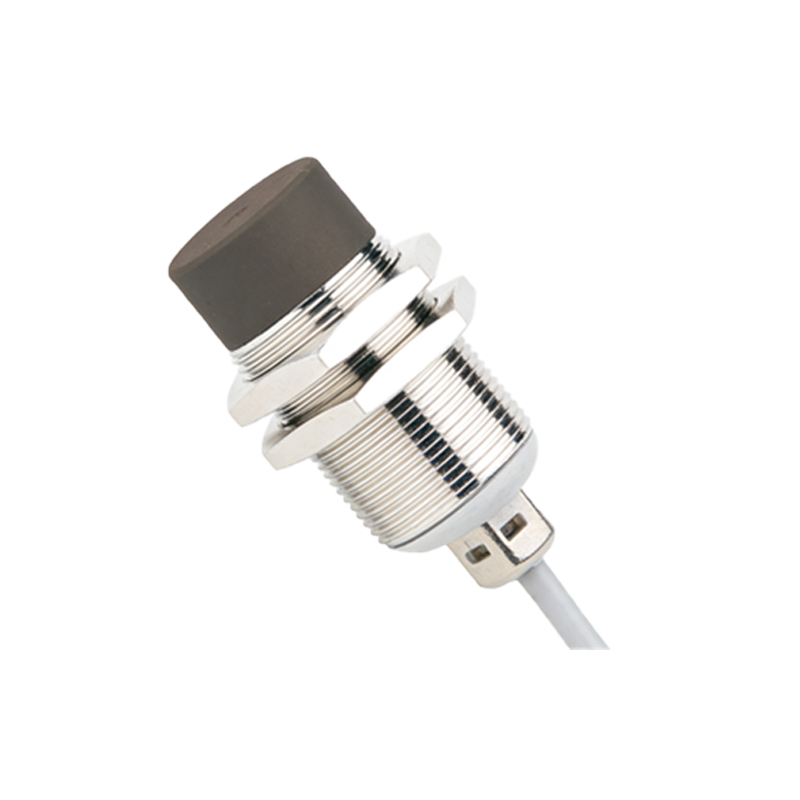
Transistor-based proximity sensors are valued for their simplicity, durability, and fast response times. They consume relatively low power and can operate in harsh environments, resisting dust, moisture, and vibration. Common applications include position sensing in machinery, object counting on conveyor belts, touchless switches, and anti-collision systems in vehicles.
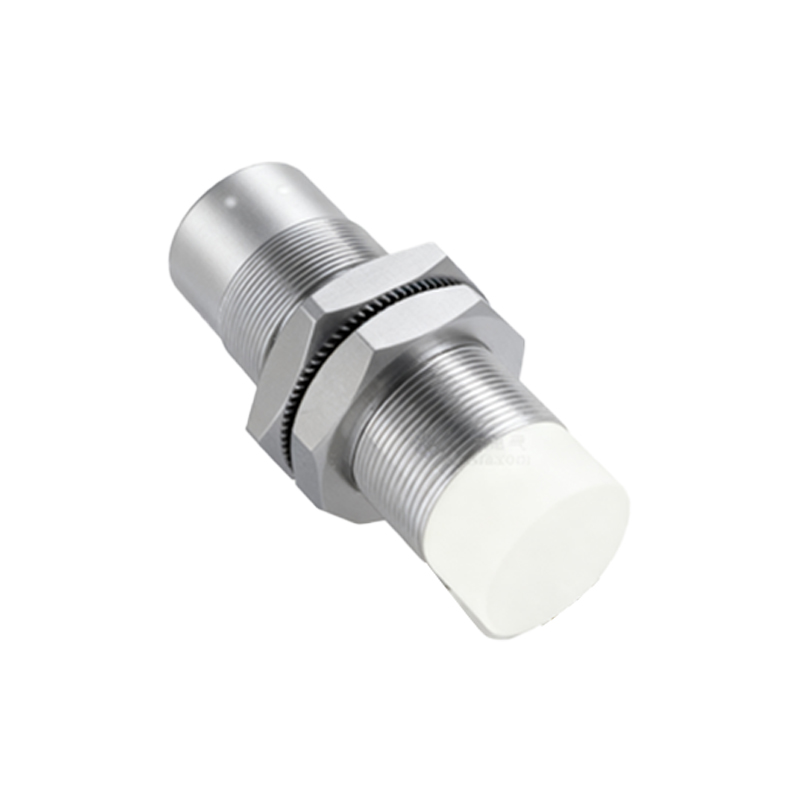
To ensure optimal performance, factors like sensing distance, target material, and environmental interference must be considered. Shielding is often used to minimize false triggers from adjacent metals. Modern variants may integrate additional components like operational amplifiers for enhanced sensitivity or microcontrollers for programmability.
In summary, the operation hinges on a transistor-driven oscillator whose electromagnetic field is disturbed by a nearby object, leading to a detectable electronic switch. This principle enables efficient, non-contact detection, forming the backbone of many automated systems today.