Introduction to Photoelectric Sensing in AS/RS
In the high-stakes environment of modern automated warehouses and distribution centers, precision and reliability are non-negotiable. At the heart of this operational excellence, particularly within Automated Storage and Retrieval Systems (AS/RS) like stacker cranes, lies a seemingly simple yet profoundly critical component: the photoelectric sensor. These devices serve as the primary "eyes" of the system, providing the essential feedback necessary for safe, accurate, and efficient material handling. Unlike mechanical limit switches, photoelectric sensors offer non-contact detection, which translates to minimal wear, reduced maintenance, and enhanced longevity in demanding 24/7 operational cycles. Their ability to detect objects regardless of material composition—be it metal, plastic, or cardboard—makes them uniquely versatile for the diverse payloads handled by modern stacker cranes.
Core Functions and Operational Principles
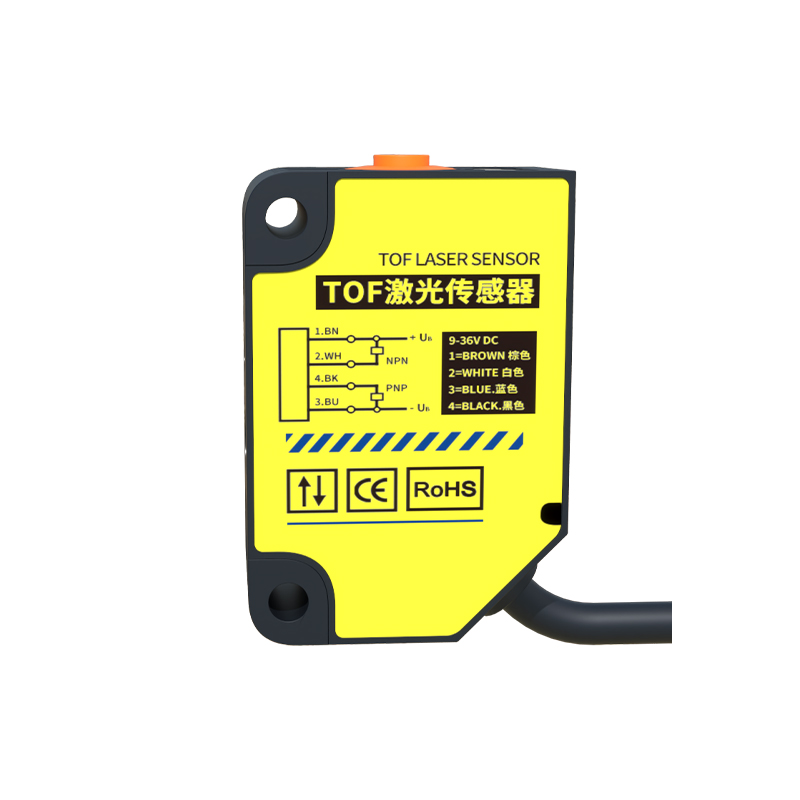
Photoelectric sensors operate on a fundamental principle: they emit a beam of light (visible red, infrared, or laser) and detect changes in the received light signal. In stacker crane applications, three primary sensing modes are employed. Through-beam sensors, consisting of separate emitter and receiver units, offer the longest sensing range and highest reliability, ideal for position verification at aisle ends. Retro-reflective sensors use a reflector to bounce the beam back to the receiver, commonly used for detecting the presence of a load on the crane's fork or platform. Diffuse reflective sensors detect light reflected directly from the target object itself, perfect for close-range tasks like pallet positioning or height detection. The choice of mode is dictated by the specific functional requirement, environmental conditions, and required sensing distance.
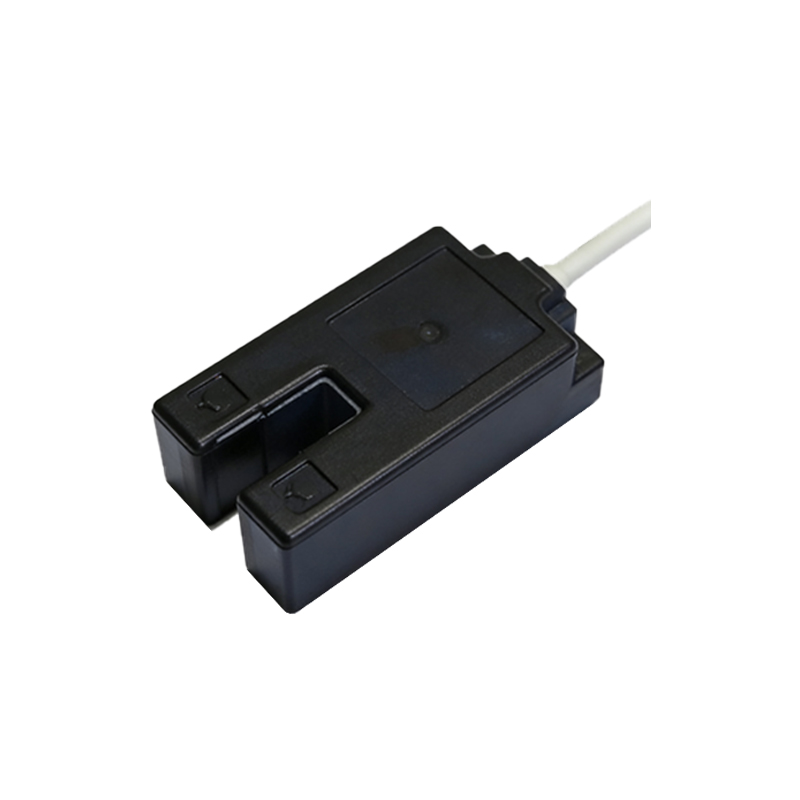
Key Application Points on a Stacker Crane
The integration of photoelectric sensors is strategic across the stacker crane's anatomy. Firstly, Travel End Detection: Sensors at both ends of the horizontal (X-axis) runway prevent over-travel and collisions, acting as primary safety limits. Secondly, Lifting Height Control: Vertical (Z-axis) mast movement is precisely bounded by sensors defining the upper and lower limits, ensuring the crane does not exceed its mechanical range. Thirdly, Fork Operation and Load Handling: Sensors verify if the forks are in their fully retracted or extended position and, crucially, confirm the presence or absence of a load on the forks before initiating movement. This prevents costly accidents like dropping a pallet or attempting to retrieve from an empty location. Finally, Bin and Pallet Detection: As the crane approaches a storage location, sensors accurately identify the target bin or pallet's position, enabling precise alignment for pickup or deposit operations.
Enhancing Safety and Preventing Collisions
Safety is the paramount concern in any automated system. Photoelectric sensors form a critical layer in the safety interlock system of a stacker crane. They are not merely for operational efficiency but are vital for personnel and asset protection. Area monitoring sensors can create an invisible "light curtain" around hazardous zones, instantly halting crane movement if an obstruction or person is detected. Anti-collision systems between multiple cranes operating in the same aisle rely on sophisticated photoelectric or laser-ranging sensors to maintain a safe separation distance. Furthermore, the constant verification of load presence acts as a primary check; moving without a confirmed secure load is prohibited by the control logic, directly informed by sensor status.
Impact on System Accuracy and Throughput
The accuracy provided by photoelectric sensors directly correlates to system throughput and inventory integrity. Precise positioning eliminates "shimming" or repeated adjustment maneuvers, drastically reducing the cycle time for each store/retrieve command. High-resolution sensors enable the crane to position itself within millimeter tolerances, which is essential for handling standardized pallets and containers in high-density storage racks. This precision ensures that goods are stored in the correct designated locations, maintaining accurate digital-to-physical inventory records. Reduced positioning errors also mean less mechanical stress on the crane's structure and the storage racking, leading to lower long-term operational costs.
Selection Criteria and Maintenance Considerations
Selecting the right photoelectric sensor requires careful analysis. Key factors include the required sensing range, the size and material of the target objects, environmental conditions (dust, moisture, ambient light interference), and the required response speed. In dusty warehouse environments, sensors with high ingress protection (IP67 or higher) and dirt-repellent lenses are mandatory. Regular maintenance, though minimal, involves periodic lens cleaning to ensure optical clarity and functional checks to verify alignment and switching performance. Modern sensors with IO-Link capability offer advanced diagnostics, providing real-time data on signal strength, contamination levels, and operating temperature, enabling predictive maintenance rather than reactive repairs.
Future Trends and Integration with Industry 4.0
The role of photoelectric sensors is evolving beyond simple binary detection. Integration with Industry 4.0 frameworks is a growing trend. Smart sensors now provide not just a "yes/no" signal but also analog distance information, which can be used for more nuanced control. Their integration into the Industrial Internet of Things (IIoT) allows for continuous performance monitoring and data logging, facilitating system optimization and early fault detection. Furthermore, advancements in laser sensor technology and the emergence of vision-based sensors are providing even greater precision and the ability to perform basic identification tasks, pushing the stacker crane towards greater autonomy and intelligence within the smart warehouse ecosystem.