Introduction to Capacitive Sensing Technology
Capacitive proximity sensors operate on a fundamental principle of physics: the ability to detect changes in capacitance. Unlike their inductive counterparts that only sense metals, capacitive sensors can detect a wide range of materials, including liquids, powders, plastics, wood, and glass. At the heart of an M18 capacitive sensor is an oscillator circuit. The sensor face and the surrounding guard ring form an active electrode system. When a target object enters the sensing field, it alters the dielectric constant, causing a change in the oscillator's amplitude. This change is evaluated by the subsequent circuitry, triggering a solid-state output switch. The M18 designation refers to the standardized 18mm cylindrical threaded housing, a common form factor prized for its robustness and ease of installation in industrial environments. This size offers an optimal balance between sensing range, physical durability, and mounting flexibility.
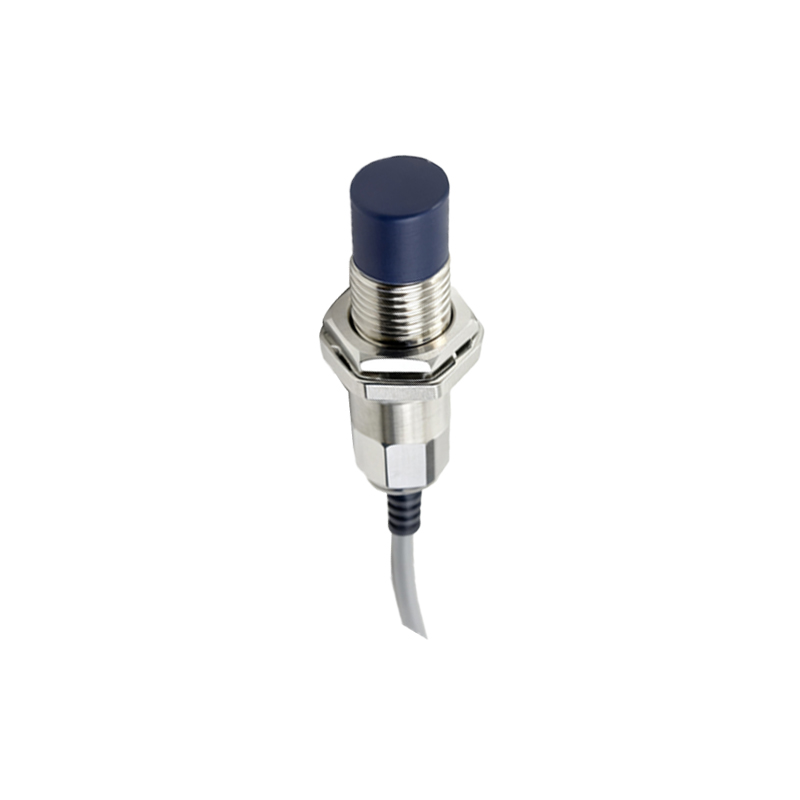
Key Features and Technical Specifications
The performance of an M18 capacitive sensor is defined by several critical specifications. The sensing range, typically between 2mm to 15mm for standard models, is a primary consideration. It is crucial to note that this nominal range is calibrated for a mild steel target; for other materials, a reduction factor must be applied. The sensor's housing is usually constructed from nickel-plated brass, stainless steel, or PBT plastic, offering IP67 or IP69K ingress protection ratings for resistance to dust, water, and high-pressure washdowns. Output configurations are versatile, including NPN (sinking), PNP (sourcing), NO (normally open), and NC (normally closed) options, allowing seamless integration with PLCs (Programmable Logic Controllers) and other control systems. Many modern models feature adjustable sensitivity via a potentiometer, enabling fine-tuning to ignore background interference or detect specific material levels through non-metallic container walls.
Typical Industrial Applications and Use Cases
The unique ability to detect non-metallic substances makes the M18 capacitive sensor indispensable across numerous sectors. In packaging and bottling lines, they reliably detect the presence of plastic or glass containers, liquid levels in transparent bottles, and the fill level of powders in bags. Within the food and beverage industry, their hygienic designs are used for monitoring product presence on conveyor belts, controlling silo and hopper levels for ingredients like flour or sugar, and ensuring correct cap placement. Woodworking and paper processing plants utilize these sensors for stack height monitoring, sheet counting, and glue bead detection. A particularly valuable application is liquid level control inside non-metallic tanks, where the sensor can be mounted externally, providing a non-invasive, maintenance-free solution for monitoring water, chemicals, or aggressive fluids.
Installation and Mounting Best Practices
Correct installation is paramount for reliable operation. The M18 threaded barrel allows for easy mounting in a standard 18mm drilled hole, secured with locknuts. A critical rule is to maintain adequate clearance around the sensing face. Manufacturers specify minimum lateral and frontal clearance distances to prevent the metallic mounting surface itself from influencing the sensing field—a phenomenon known as "shielding." Flush-mountable models are designed for embedded installation in metal, while non-flush types offer longer sensing ranges but require free space around the active area. When detecting materials inside a container, the sensor must be calibrated to account for the container wall thickness and material. The sensitivity should be adjusted so the sensor triggers on the material inside but not on the empty container wall, often requiring an initial setup with the container both empty and full.
Advantages Over Other Sensor Types
The primary advantage of the capacitive M18 sensor is its material versatility. Where photoelectric sensors can be foiled by color or transparency, and inductive sensors are blind to non-metals, capacitive sensors provide a consistent solution. They are generally unaffected by target color, surface texture, or reflectivity. They perform well in environments with light dust, steam, or minor contaminant buildup on the lens, conditions that often obstruct photoelectric beams. For level detection, they offer a more cost-effective and simpler alternative to ultrasonic sensors in many applications, especially with non-metallic vessels. Their solid-state design ensures long operational life with no moving parts, and their robust housing withstands significant mechanical shock and vibration common in industrial settings.
Troubleshooting Common Issues
Even robust sensors can encounter issues. Intermittent operation or false triggering is often traced to environmental factors. Condensation, oil film, or material buildup on the sensing face alters the dielectric constant and must be cleaned regularly. Electrical interference from nearby motors, frequency drives, or high-current cables can be mitigated by using shielded cables, ensuring proper grounding, and maintaining distance from noise sources. If a sensor fails to detect a