Introduction to Capacitive Proximity Sensors
Capacitive proximity sensors are versatile electronic devices widely used in industrial automation for detecting both metallic and non-metallic objects. Operating on the principle of capacitance change, these sensors generate an electrostatic field. When an object enters this field, it alters the capacitance, triggering the sensor's output. Unlike inductive sensors, capacitive variants can detect materials such as plastics, liquids, and powders, making them essential in diverse applications like level detection, material handling, and packaging. Their ability to sense through non-metallic barriers adds to their flexibility, though environmental factors like humidity and temperature can influence performance. Understanding their core functionality is crucial for selecting the right configuration—normally open (NO) or normally closed (NC)—to ensure optimal system integration and reliability.
Normally Open (NO) Configuration Explained
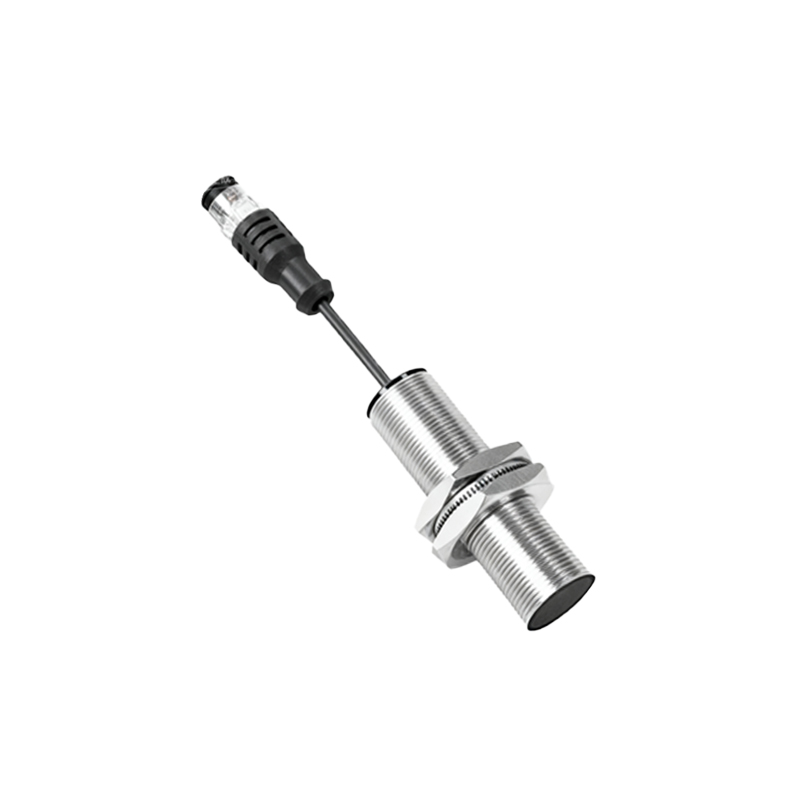
In a normally open (NO) capacitive proximity sensor, the output circuit remains open or inactive when no target object is within the sensing range. This means the sensor does not conduct electricity in its default state, and the output signal is typically low or off. When an object approaches and enters the detection zone, the capacitance change causes the internal switch to close, activating the output. The output signal then becomes high or on, allowing current to flow to connected devices like PLCs, relays, or indicators. NO configurations are commonly preferred in safety-critical applications where an inactive state indicates normal conditions, such as in conveyor systems that stop when an object is detected. They are also favored for energy efficiency, as power consumption is minimal during idle periods. Engineers often choose NO sensors for straightforward logic control, where a detected object directly triggers an action without additional circuitry.
Normally Closed (NC) Configuration Explained
Conversely, a normally closed (NC) capacitive proximity sensor has its output circuit closed or active by default when no target is present. In this state, the output signal is high or on, allowing continuous current flow. When an object enters the sensing field, the switch opens, deactivating the output and changing the signal to low or off. NC configurations are particularly useful in fail-safe systems, where a break in the circuit—such as from sensor failure or obstruction—must immediately halt operations to prevent hazards. For instance, in machinery guarding or emergency stop circuits, an NC setup ensures that any fault or detection event interrupts power, enhancing safety. While NC sensors may consume more power in standby mode, their reliability in monitoring system integrity makes them ideal for high-risk environments. Selecting NC over NO often depends on specific safety protocols and the need for constant monitoring without false triggers.
Key Differences Between NO and NC Sensors
The primary distinction between NO and NC capacitive proximity sensors lies in their default output states and operational logic. NO sensors are "off" until detection, while NC sensors are "on" until detection. This difference impacts wiring, control logic, and application suitability. In terms of electrical characteristics, NO sensors typically have lower standby power consumption, whereas NC sensors may draw more current but offer inherent fail-safe benefits. From a design perspective, NO configurations simplify circuits for direct activation, while NC setups require careful planning to avoid unintended shutdowns. Compatibility with existing systems also varies: NO sensors align well with positive logic controls, while NC sensors integrate seamlessly into safety loops that demand constant verification. Engineers must evaluate factors like response time, which is generally similar for both, and environmental interference, as NC sensors might be more prone to false openings from noise. Ultimately, the choice hinges on whether the application prioritizes energy savings or safety assurance.
Applications and Selection Guidelines
Capacitive proximity sensors with NO or NC configurations serve distinct roles across industries. NO sensors are prevalent in counting, filling, and automation tasks where detection initiates a process—for example, in bottling plants that trigger filling when a bottle is sensed. They are also used in touch-sensitive interfaces and proximity switches for consumer electronics. NC sensors, on the other hand, dominate safety and monitoring applications, such as in elevator doors that must stop if an obstacle is detected, or in liquid level control to prevent overflows. When selecting between NO and NC, engineers should assess the system's fail-safe requirements, power constraints, and control logic. Consider the sensor's sensing range, material compatibility, and environmental ratings (e.g., IP67 for dust and water resistance). Testing in real-world conditions is advisable to ensure reliability. By matching the configuration to the operational needs, users can enhance efficiency, reduce downtime, and comply with industry standards like IEC 60947-5-2 for proximity devices.
Maintenance and Troubleshooting Tips
Proper maintenance of capacitive proximity sensors, whether NO or NC