Introduction to Inductive Proximity Sensors
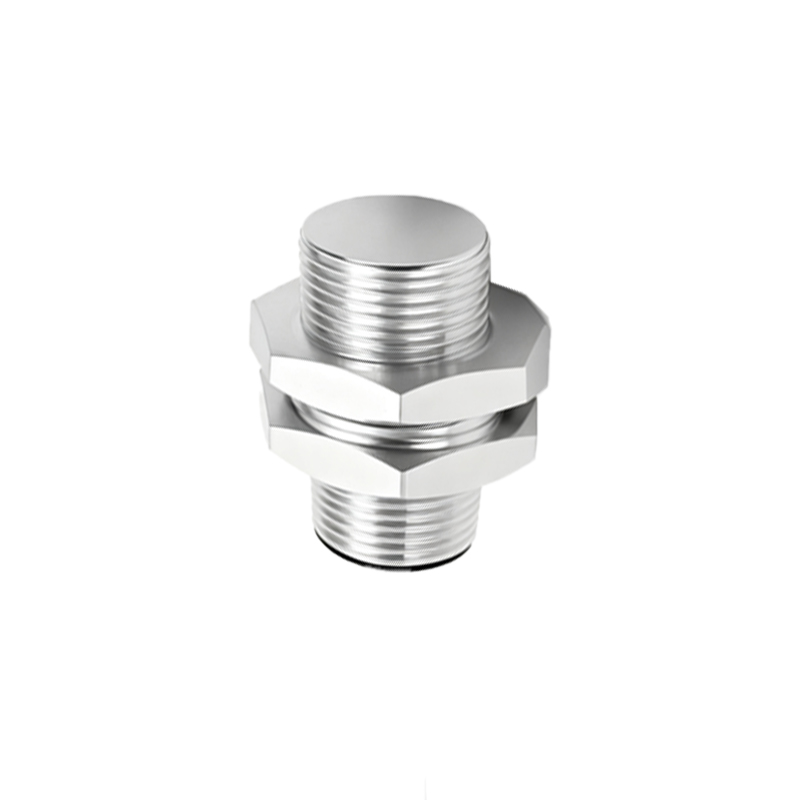
Inductive proximity sensors are fundamental components in modern industrial automation, renowned for their reliability, robustness, and non-contact detection capabilities. These sensors operate on the principle of electromagnetic induction to detect the presence or absence of metallic objects without any physical contact. The core of the sensor consists of a coil wound around a ferrite core, an oscillator, a signal evaluation circuit, and an output switching stage. When an alternating current flows through the coil, it generates an oscillating electromagnetic field that radiates from the sensor's active face. This field is the key to the sensor's detection mechanism. The absence of moving parts makes them exceptionally durable, suitable for harsh industrial environments with high levels of dust, moisture, and vibration. Their primary function is to provide a precise and repeatable switching signal when a metallic target enters their sensing range, making them indispensable for tasks like counting, positioning, and end-of-travel detection in machinery.
Underlying Electromagnetic Principle
The operational principle is rooted in Faraday's law of electromagnetic induction and the behavior of eddy currents. The internal oscillator generates a high-frequency alternating current that passes through the coil, creating a dynamic magnetic field. When a conductive, ferromagnetic metal object (such as steel or iron) enters this alternating magnetic field, electromagnetic induction occurs. According to Lenz's law, the changing magnetic flux induces circulating currents, known as eddy currents, on the surface of the target object. These eddy currents, in turn, generate their own opposing magnetic field, which interacts with the original field from the sensor coil. This interaction results in a change in the impedance of the coil. For non-ferrous metals like aluminum or copper, the effect is similar, though the sensing distance is typically shorter due to lower permeability and higher resistivity, which affects the eddy current generation.
Oscillator Damping and Signal Evaluation
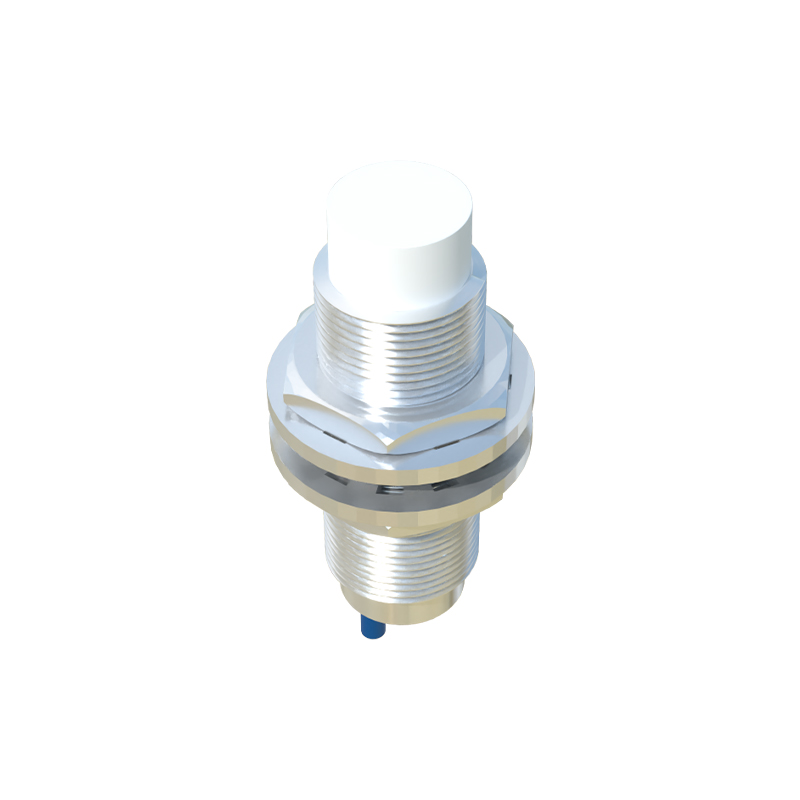
The induced eddy currents cause a phenomenon known as "oscillator damping." The energy loss due to the eddy currents effectively loads the oscillator circuit, causing a reduction in the amplitude of its oscillations. This damping effect is directly proportional to the distance and the size/material of the target object. The sensor's integrated evaluation circuit continuously monitors the amplitude of the oscillator's signal. A threshold value is pre-set within the circuit. When the amplitude drops below this threshold—indicating that a target is within the nominal sensing range—the evaluation circuit triggers a change in the output state. This process is extremely fast, allowing for high switching frequencies, which is critical for detecting objects on fast-moving production lines.
Key Components and Sensor Design
A typical inductive proximity sensor comprises several critical components housed in a robust casing, often made of nickel-plated brass, stainless steel, or PBT plastic. The coil and ferrite core form the sensing element. The ferrite core concentrates the magnetic flux lines, shaping the sensing field. The oscillator circuit, usually based on a Colpitts or Hartley design, generates the high-frequency field (typically in the range of 100 kHz to 1 MHz). The demodulator and amplifier process the damped signal from the oscillator. Finally, the output stage provides the switching signal, which can be a transistor (PNP/NPN), analog (4-20 mA, 0-10V), or a relay output. The design also includes shielding. A shielded (flush-mountable) sensor has a metal ring around the coil, concentrating the field forward, allowing it to be mounted flush in metal without false triggering. An unshielded (non-flush) sensor has a wider, more extended sensing field.
Factors Influencing Sensing Performance
Several critical factors determine the performance and selection of an inductive proximity sensor. The nominal sensing distance (Sn) is a key specification, defined under standard conditions with a standard target (usually a 1mm thick square of mild steel). Real-world sensing distance can be affected by the target material's properties: permeability, resistivity, size, and shape. A larger target or one with higher permeability (like iron) increases the effective sensing range. The temperature coefficient indicates how the sensing distance varies with ambient temperature. Repeatability refers to the sensor's ability to consistently detect a target at the same point. Hysteresis is a built-in feature that prevents output chatter when a target is at the edge of the sensing range; the switch-on point and switch-off point are slightly different. Environmental factors like adjacent metals, strong electromagnetic fields, and chemical exposure must also be considered during installation.
Common Industrial Applications
Due to their non-contact nature and durability, inductive proximity sensors have vast applications across all industrial sectors. In automotive manufacturing, they are used for robot arm positioning, part