Introduction to Proximity Sensors
Proximity sensors are non-contact devices designed to detect the presence or absence of an object within a specific sensing range without any physical contact. They are fundamental components in industrial automation, robotics, automotive systems, and consumer electronics, providing reliable and fast object detection. By emitting a field or beam, these sensors can sense when a target enters their field, triggering an output signal. This capability makes them ideal for applications requiring high-speed counting, precise positioning, or safety monitoring where contact is impractical or could cause wear and damage. Their robustness, long operational life, and immunity to environmental factors like dust and oil contribute to their widespread adoption across various sectors.
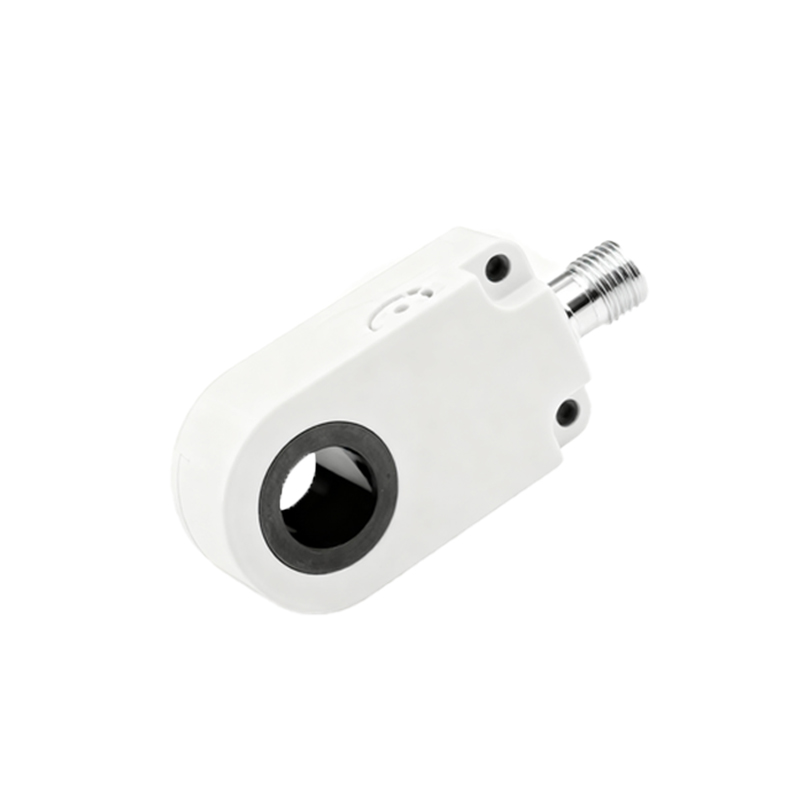
Inductive Proximity Sensors
Inductive proximity sensors are specifically used for detecting metallic objects. Their operation is based on the principle of electromagnetic induction. The sensor generates an oscillating electromagnetic field from its coil and oscillator circuit. When a conductive metal target enters this field, eddy currents are induced on the metal surface. This causes a change in the oscillation amplitude, which is detected by the sensor's circuitry, leading to a change in the output state. These sensors are highly reliable for detecting ferrous metals like steel and iron, and some types can also detect non-ferrous metals like aluminum, copper, and brass, though typically at a reduced sensing range. Common applications include part detection on conveyor belts, limit switching in machine tools, and position sensing in metal fabrication equipment. They are known for their high switching frequency, resistance to harsh industrial environments, and insensitivity to non-metallic materials.
Capacitive Proximity Sensors
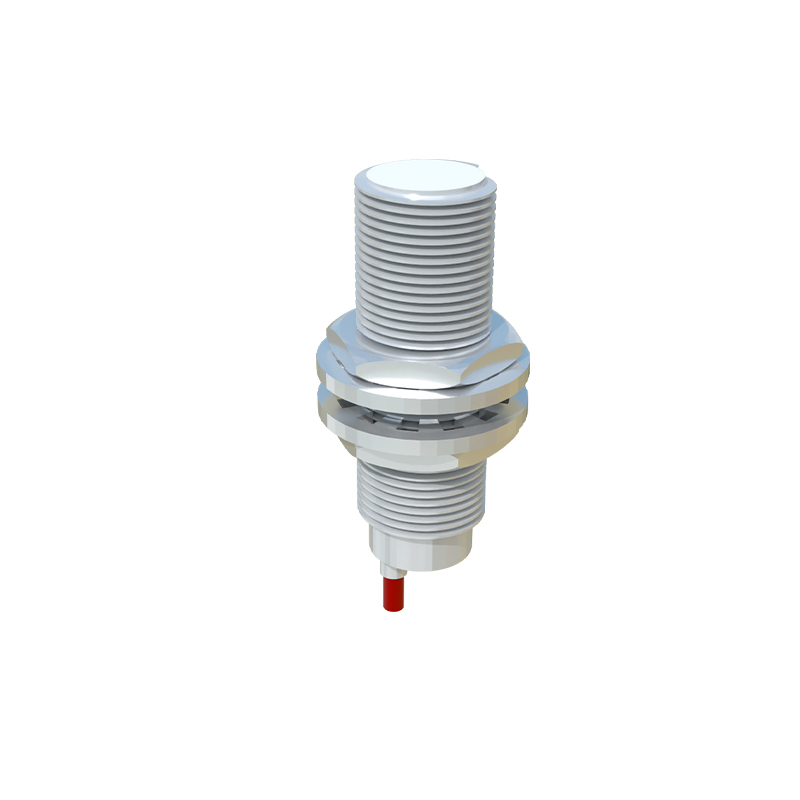
Capacitive proximity sensors can detect both metallic and non-metallic objects, including liquids, powders, plastics, and wood. They operate by generating an electrostatic field. The sensor acts as one plate of a capacitor, with the target object acting as the other plate. As an object approaches the sensor's active face, it alters the capacitance of the circuit. When this change reaches a predetermined threshold, the sensor triggers its output switch. This makes them extremely versatile. They are commonly used for level detection of liquids, granules, or powders in tanks and silos, detecting filled or empty bottles on production lines, and sensing non-metallic materials like glass or wood. Some models can even detect objects through thin non-metallic walls. A key consideration is their sensitivity to environmental factors like humidity and temperature, which may require calibration for consistent performance.
Ultrasonic Proximity Sensors
Ultrasonic proximity sensors measure distance to an object by using sound waves beyond the human hearing range. They operate on the time-of-flight principle. The sensor emits high-frequency ultrasonic pulses from a transducer. These pulses travel through the air, hit a target object, and reflect back to the sensor. The control electronics calculate the distance based on the time elapsed between emission and reception of the echo. They are excellent for detecting objects of virtually any material, shape, color, or transparency, as long as the surface can reflect sound. Typical applications include distance measurement, presence detection in challenging environments (e.g., with dust or fog), liquid level control, and loop control in automated guided vehicles (AGVs). While highly effective, their performance can be affected by factors like air turbulence, temperature gradients, and very soft or absorbent surfaces.
Photoelectric Sensors
Photoelectric sensors use light beams to detect objects. They consist of a light emitter (usually an LED) and a receiver. When the emitted light beam is interrupted or reflected by an object, the change in light intensity at the receiver is processed to switch the output. There are three main operating modes: through-beam, retro-reflective, and diffuse reflective. Through-beam models have separate emitter and receiver units, offering the longest sensing ranges and highest reliability. Retro-reflective types use a single unit and a reflector, bouncing the beam back. Diffuse reflective sensors detect light reflected directly off the target itself. They are capable of detecting small objects, offer very long sensing ranges compared to inductive or capacitive types, and can sense objects regardless of material composition. Applications are vast, including object counting on high-speed packaging lines, break detection in web processes, and registration mark sensing in printing.
Magnetic Proximity Sensors (Reed Switches)
Magnetic proximity sensors, often based on reed switches or Hall-effect chips, detect the presence of a magnetic field, typically from a permanent magnet attached to the target. A reed switch consists of two ferromagnetic reeds sealed in a glass tube. When an external magnetic field of sufficient strength is applied, the reeds attract each other and make contact, closing the circuit. Hall-effect sensors produce a voltage output proportional to the magnetic field strength. These sensors are simple