In the realm of industrial automation and process control, precise and reliable level measurement is a critical parameter. Among the various technologies available, the laser level sensor stands out for its exceptional accuracy, versatility, and non-contact operation. This article delves into the working principles, common applications, and key benefits of this advanced sensing technology.
At its core, a laser level sensor operates on the principle of time-of-flight or phase-shift measurement. The device emits a focused pulse or modulated beam of laser light towards the surface of the material being measured. This light beam travels at a known, constant speed. Upon striking the material's surface, the beam is reflected back to a detector within the sensor. The onboard electronics precisely calculate the time delay between the emission and reception of the light pulse. Since the speed of light is a constant, this time measurement is directly proportional to the distance between the sensor and the material's surface. By knowing the fixed installation height of the sensor, the system can accurately determine the material level within a tank, silo, or container.
The non-contact nature of laser measurement is one of its most significant advantages. Unlike float switches or capacitive probes that must touch the medium, the laser beam operates from a distance. This eliminates issues related to material buildup, corrosion, mechanical wear, and contamination. It makes laser sensors ideal for measuring aggressive, abrasive, sticky, or extremely hot and cold substances that could damage contact-based sensors. Furthermore, the highly focused laser beam allows for precise targeting, even in vessels with internal obstructions like agitators or heating coils, by aiming between them.
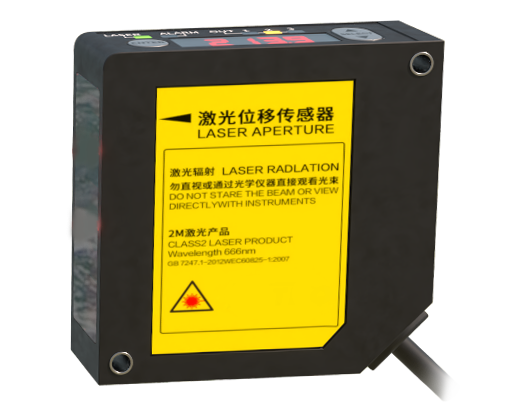
Laser level sensors find applications across a diverse range of industries. In the chemical and pharmaceutical sectors, they are used to monitor levels of powders, granules, and aggressive liquids. The food and beverage industry utilizes them for ingredients like flour, sugar, or liquids in mixing tanks, where hygiene and non-contact are paramount. In water and wastewater treatment, they measure sludge levels and clarifier interfaces. Bulk solid handling in cement, plastics, or mining relies on laser sensors for inventory management of silos containing materials like limestone, plastic pellets, or coal. Their high precision also makes them suitable for applications in restricted spaces or for measuring very small distances.
Several key advantages define the value proposition of laser level technology. The primary benefit is high accuracy, often within a few millimeters, which is superior to many ultrasonic or radar methods, especially at short ranges. They offer excellent resolution, capable of detecting minute level changes. Laser sensors typically have a very fast response time, making them suitable for dynamic processes with rapidly changing levels. Their installation is generally straightforward, requiring only a single mounting point without the need for complex calibration with the material's properties, as is often necessary with radar sensors. Modern laser sensors are also robust, designed with industrial-grade housings to withstand harsh environments involving dust, moisture, and vibration.
When selecting a laser level sensor, several factors must be considered. The type of material surface is crucial; dark, absorbent, or rough surfaces may reflect less light, potentially reducing the effective range or requiring a sensor with higher output power. The presence of heavy dust, steam, or foam in the application environment can attenuate the laser beam. The required measurement range and the necessary beam angle are also critical specifications. For challenging conditions, some sensors incorporate special algorithms or multiple echo processing to filter out false signals from internal structures.
In conclusion, laser level sensors represent a sophisticated and highly effective solution for demanding level measurement tasks. Their combination of pinpoint accuracy, non-contact operation, and application flexibility makes them an indispensable tool in modern industrial settings. By providing reliable, continuous data, they enhance process efficiency, safety, and inventory control. As technology advances, these sensors continue to evolve, offering even greater performance and integration capabilities for the smart factories of the future.