Defining the Core Technologies
To address the question of whether an electromagnetic railgun is a proximity sensor, we must first clarify the fundamental principles of each technology. An electromagnetic railgun is a linear motor device that accelerates a conductive projectile to extremely high velocities using electromagnetic forces. It operates on the Lorentz force principle, where a large electrical current passes through a pair of parallel rails and the armature between them, generating a magnetic field that propels the projectile. In contrast, a proximity sensor is a non-contact electronic device designed to detect the presence or absence of an object within a specific range without physical contact. It functions by emitting an electromagnetic field or a beam of radiation and monitoring changes in the field or return signal. The primary purpose of a railgun is kinetic energy projection for applications like military weaponry or space launch systems, while a proximity sensor's role is detection and measurement for automation, safety, and control systems.
Operational Mechanisms and Objectives
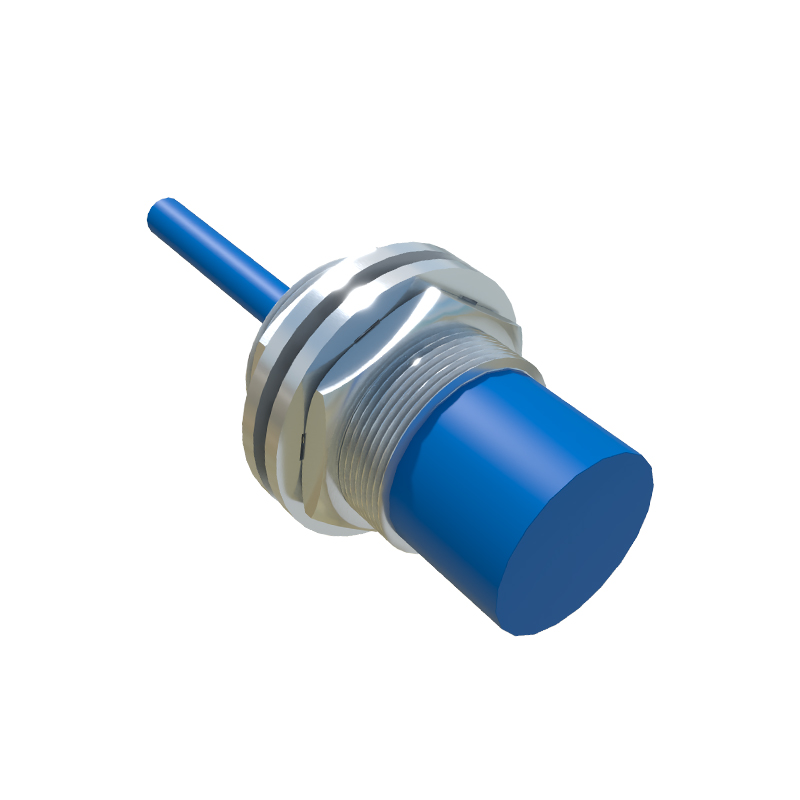
The operational mechanisms of electromagnetic railguns and proximity sensors highlight their distinct engineering objectives. A railgun system involves high-power pulse-forming networks, energy storage units like capacitors or compulsators, and robust rail materials to withstand immense thermal and mechanical stresses. Its goal is to achieve maximum muzzle velocity and kinetic energy transfer to a target, focusing on propulsion and impact. Proximity sensors, such as inductive, capacitive, or photoelectric types, utilize oscillators, sensing coils, or optical components to detect objects based on changes in inductance, capacitance, or light reflection. Their objective is precise, reliable detection for tasks like object counting, position verification, or limit switching in industrial environments. The railgun is an actuator that delivers force, whereas the proximity sensor is a sensor that gathers data.
Key Design Parameters and Applications
Examining design parameters further distinguishes these technologies. Electromagnetic railguns require megajoule-level energy inputs, with designs prioritizing current density, rail geometry, and thermal management to minimize erosion and maximize efficiency. Applications are predominantly in defense (e.g., naval artillery, anti-missile systems) and aerospace (e.g., satellite deployment), where high-velocity projection is critical. Proximity sensors, on the other hand, emphasize sensitivity, response time, and detection range, typically operating at low power levels. They are ubiquitous in manufacturing automation, robotics, automotive systems, and consumer electronics for functions like touchless switches, material handling, and collision avoidance. The divergence in scale and purpose underscores that railguns are macro-scale kinetic systems, while proximity sensors are micro-scale detection devices.
Sensor Integration in Railgun Systems
While an electromagnetic railgun itself is not a proximity sensor, modern railgun systems may incorporate proximity sensors as ancillary components for enhanced functionality. For instance, proximity sensors could be used to monitor the position of the projectile within the breech or barrel, ensuring proper alignment before firing. They might also detect the presence of foreign objects near the rails to prevent damage or accidents. In automated loading mechanisms, sensors can verify ammunition placement. However, these sensors are separate from the railgun's core propulsion mechanism; they serve a supportive role in system control and safety. Thus, the railgun utilizes sensors but does not function as one.
Industry Terminology and Classification
In electrical and industrial engineering terminology, classification is based on primary function. The electromagnetic railgun falls under categories like "directed energy weapons," "electromagnetic launchers," or "pulsed power devices." Proximity sensors are classified under "industrial sensors," "non-contact detectors," or "automation components." Standards organizations, such as IEEE or IEC, define these separately, with railguns covered in standards for high-power electronics and sensors in measurement and control protocols. Misclassifying a railgun as a sensor would lead to confusion in technical specifications, procurement, and system integration, as their performance metrics—such as velocity versus detection range—are incomparable.
Conclusion on Technological Identity
In summary, an electromagnetic railgun is not considered a proximity sensor. It is a distinct electromechanical system designed for high-velocity propulsion, leveraging electromagnetic forces for kinetic energy transfer. Proximity sensors are detection devices that identify object presence without contact, serving informational and control purposes. Although railgun systems may integrate proximity sensors for operational support, the railgun's core identity remains that of an actuator or launcher. Understanding this distinction is crucial for engineers in fields like defense, automation, and electronics to ensure appropriate technology selection and application. As both technologies advance, their roles will continue to evolve, but their fundamental definitions will remain separate in industry practice.