Introduction to the GS6D1311 Photoelectric Sensor
The GS6D1311 represents a significant advancement in through-beam photoelectric sensing technology, designed for demanding industrial environments. This sensor system comprises a dedicated transmitter and receiver pair, operating on the principle of direct light beam interruption. The transmitter emits a focused beam of modulated infrared or visible red light, which is continuously received by the opposing unit. Any object passing between the two units interrupts this beam, causing an immediate change in the receiver's output state. This fundamental operating principle makes the GS6D1311 exceptionally reliable for precise object detection, counting, and positioning tasks where long sensing distances and high environmental immunity are paramount. Its robust construction and stable performance have established it as a preferred component in logistics, packaging, material handling, and automated assembly lines.
Key Technical Specifications and Performance Parameters
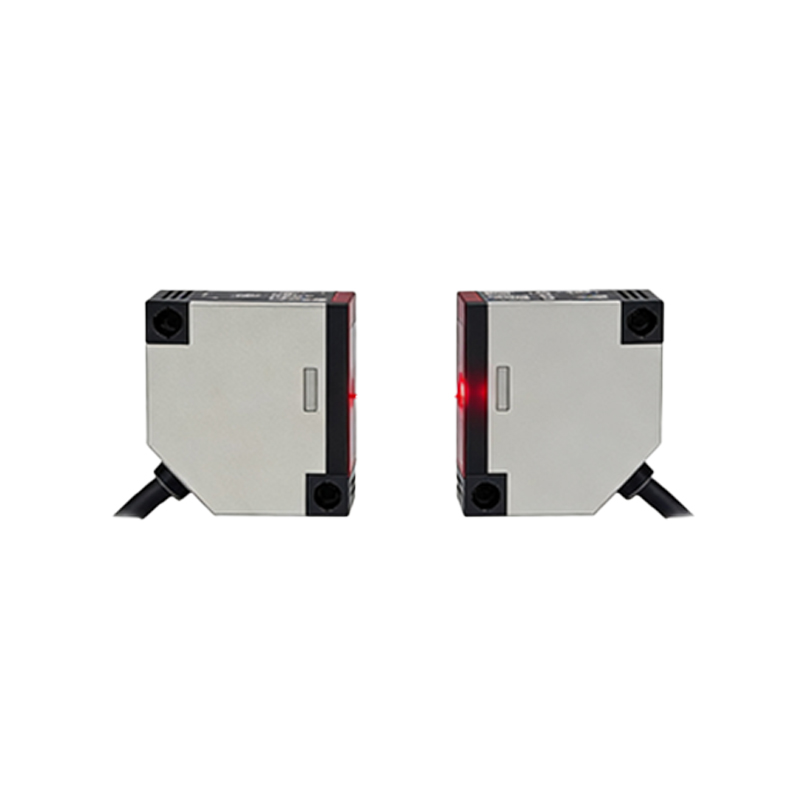
The GS6D1311 is engineered with specifications that cater to a wide range of industrial applications. A standout feature is its exceptional sensing range, capable of reliable detection over distances extending up to 15 meters, depending on the specific model variant and environmental conditions. It typically operates on a standard 12-24V DC supply, ensuring compatibility with most industrial control systems. The output is commonly configured as an NPN or PNP transistor switch, providing a clear on/off signal to programmable logic controllers (PLCs) or other control units. Response time is remarkably fast, often in the microsecond range, allowing for high-speed counting and detection on rapidly moving production lines. Furthermore, the sensor incorporates advanced modulation technology, which enables it to ignore ambient light interference from factory lighting, sunlight, or other optical noise sources, guaranteeing stable operation.
Environmental Robustness and Protection Ratings
Industrial settings pose numerous challenges, including dust, moisture, vibration, and temperature fluctuations. The GS6D1311 is built to withstand these harsh conditions. The housing is typically constructed from high-grade, chemically resistant plastics or metals, offering excellent durability. A critical specification is its Ingress Protection (IP) rating, often reaching IP67. This rating signifies complete protection against dust ingress and the ability to withstand temporary immersion in water. This level of protection allows for installation in washdown areas, outdoor applications, and extremely dusty environments like woodshops or foundries. Additionally, the sensor is designed to operate reliably across a broad temperature range, commonly from -25°C to +55°C, ensuring functionality in both refrigerated warehouses and hot manufacturing plants.
Installation, Alignment, and Configuration Guidelines
Proper installation is crucial for optimal performance of any through-beam sensor. For the GS6D1311, the transmitter and receiver must be mounted securely and precisely aligned on opposite sides of the detection path. Many models feature built-in alignment indicators, such as LED lights that change color or intensity when optimal alignment is achieved, significantly simplifying the setup process. Mounting brackets should be used to prevent misalignment due to vibration or accidental impact. It is essential to ensure the lens surfaces remain clean and free from obstructions. Configuration is typically straightforward, with potentiometers or teach-in buttons available on some models for adjusting sensitivity or setting a timing function, though the basic through-beam mode often requires no adjustment.
Application Scenarios in Modern Automation
The GS6D1311 finds extensive use across diverse automation sectors. In conveyor belt systems, it is indispensable for detecting the presence, passage, or jamming of products, boxes, or pallets. In packaging machinery, it ensures precise carton counting and controls the filling process by detecting product levels. Within the automotive industry, these sensors are used for robot cell safety curtains, part verification on assembly lines, and positioning vehicle bodies. They are also critical in warehouse automation for controlling automated guided vehicles (AGVs) and ensuring proper item placement on storage and retrieval systems. Their long-range capability makes them ideal for monitoring large door openings, overhead crane paths, and perimeter security in industrial compounds.
Maintenance, Troubleshooting, and Best Practices
While designed for longevity, periodic maintenance of the GS6D1311 ensures continued reliability. Routine visual inspections should check for physical damage, accumulated dirt on lenses, and secure cable connections. Cleaning lenses with a soft, lint-free cloth is recommended. Common troubleshooting steps include verifying power supply voltage, confirming correct alignment using the indicator LEDs, and checking for any physical object permanently obstructing the beam. If the sensor fails, systematically swap components (transmitter or receiver) with a known-working unit to isolate the fault. Adhering to best practices—such as using shielded cables in electrically noisy environments and providing surge protection in areas with inductive loads—can prevent most operational issues and extend the sensor's service life significantly.