Introduction to Long Rectangular Proximity Sensors
Long rectangular proximity sensors, often referred to as rectangular inductive or capacitive proximity switches, are specialized non-contact sensing devices widely employed in industrial automation. Their distinctive elongated form factor sets them apart from standard cylindrical sensors, offering unique advantages in specific applications. These sensors detect the presence or absence of metallic objects (in the case of inductive types) or both metallic and non-metallic objects (in the case of capacitive types) without physical contact. The operating principle typically involves generating an electromagnetic or electrostatic field; when a target object enters this field, it causes a detectable change in the sensor's oscillation or capacitance, triggering an output signal. This fundamental capability makes them indispensable for precision detection, positioning, and counting tasks across diverse sectors, including automotive manufacturing, packaging, material handling, and assembly lines. Their robust construction ensures reliable performance even in challenging industrial environments characterized by dust, moisture, and vibration.
Key Advantages and Design Features
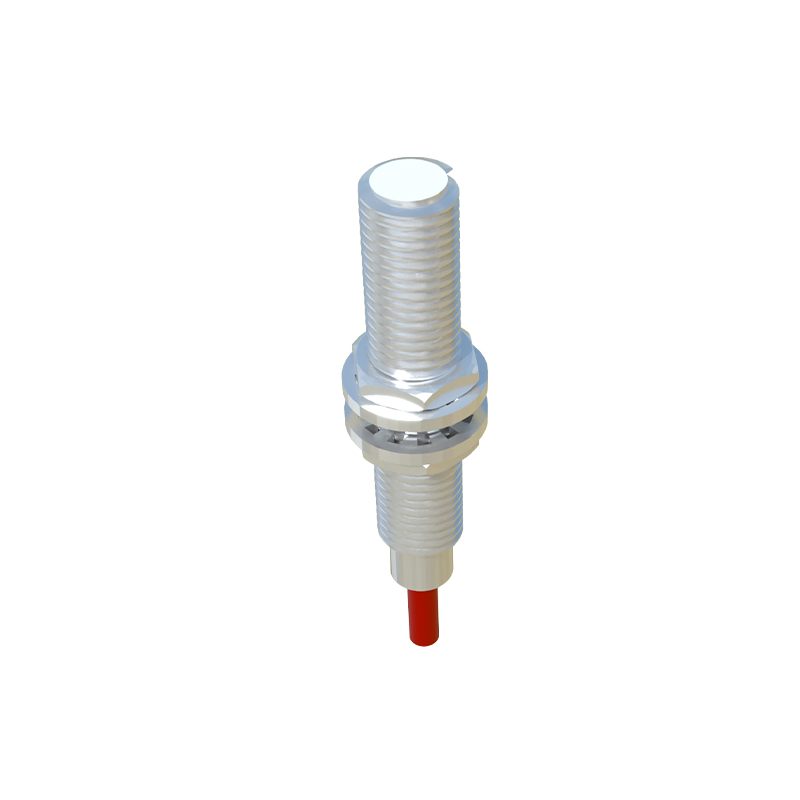
The primary advantage of the long rectangular shape is its extended sensing range along the longer axis. This design allows for the detection of objects over a broader area or the sensing of larger or irregularly shaped targets with a single unit, which can simplify system design and reduce the number of sensors required. Many models feature a sensing face that runs the length of the housing, providing a consistent detection field. They are commonly available in both shielded (flush-mountable) and unshielded (non-flush-mountable) versions. Shielded sensors can be embedded in metal without affecting their sensing characteristics, while unshielded types offer a longer sensing distance. Housing materials like nickel-plated brass, stainless steel, or rugged PBT plastic provide high resistance to mechanical impact, cutting fluids, and chemicals. Furthermore, these sensors often incorporate advanced diagnostics, such as LED status indicators for operational feedback, and offer various output configurations including PNP, NPN, analog, and IO-Link for seamless integration into programmable logic controller (PLC) systems.
Primary Industrial Applications
The application scope for long rectangular proximity sensors is vast. In conveyor systems, they are perfectly suited for detecting the leading or trailing edge of boxes, pallets, or sheets of material, ensuring proper spacing and triggering downstream processes. Their shape is ideal for monitoring the position of machine guards, doors, or slides, providing safety interlock functionality. Within machining centers, they are used for precise tool positioning, workpiece presence verification, and end-of-travel detection for linear actuators. In the packaging industry, they reliably detect the presence of products on filling lines or verify the correct position of labels on continuous webs. Another critical application is level detection within tanks or hoppers, where the sensor's length can be aligned with a specific fill or empty point. Their ability to function without contact eliminates wear and tear, ensuring long-term reliability and minimal maintenance compared to mechanical limit switches.
Selection Criteria and Installation Considerations
Selecting the appropriate long rectangular proximity sensor requires careful analysis of several parameters. First, the sensing technology must be chosen: inductive for metals only, or capacitive for metals, liquids, plastics, and other materials. The required sensing distance, or "switching distance," must be specified, noting that the effective distance can vary based on the target material's size, shape, and composition (e.g., different metals have different correction factors for inductive sensors). Environmental conditions are paramount; sensors must have an ingress protection (IP) rating (e.g., IP67, IP69K) suitable for the presence of dust, water jets, or washdowns. The electrical requirements, including operating voltage (commonly 10-30V DC or 20-250V AC) and output current capacity, must match the control system. During installation, precise alignment relative to the target is crucial for consistent operation. For inductive sensors, maintaining the recommended mounting distance from surrounding metal (as per manufacturer guidelines) prevents false triggering. Proper wiring and shielding are essential to mitigate electrical noise interference in industrial settings.
Future Trends and Conclusion
The evolution of long rectangular proximity sensors is closely tied to Industry 4.0 and the increasing demand for smart factory components. Future trends point toward greater integration of intelligence and connectivity. Sensors with integrated IO-Link communication are becoming standard, enabling the bidirectional exchange of detailed data such as sensor health, temperature, operating hours, and parameter settings with the control system. This facilitates predictive maintenance, remote configuration, and easier device replacement. Furthermore, miniaturization efforts continue, offering the same sensing performance in more compact rectangular housings to fit into increasingly dense machinery. Enhanced sensing technologies are also emerging, providing higher precision and immunity to electromagnetic interference (EMI). In conclusion, the long rectangular proximity sensor is far more