In the realm of advanced sensing and measurement, laser-based technologies have revolutionized how machines perceive and interact with the physical world. Two prominent terms often encountered are "laser sensors" and "LiDAR." While they share a common foundation in laser light, their principles, capabilities, and applications differ significantly. Understanding these distinctions is crucial for engineers, developers, and decision-makers across various industries.
Laser sensors are a broad category of devices that utilize a focused beam of laser light to detect, measure, or identify objects. Their operation is typically based on principles like triangulation, time-of-flight (ToF), or laser reflection intensity. A common example is a laser distance sensor, which emits a laser pulse and calculates distance by measuring the time it takes for the reflection to return (ToF) or by analyzing the angle of the reflected beam (triangulation). These sensors are designed for specific, often singular tasks. They excel in precision measurement of parameters such as distance, thickness, vibration, or presence detection. Their output is usually a simple analog signal, digital value, or switch signal corresponding to the measured parameter. The field of view is typically very narrow, focusing on a single point or a small line. This makes them ideal for integration into factory automation for tasks like precise positioning on an assembly line, monitoring fill levels in containers, or checking part dimensions with micron-level accuracy. They are generally compact, cost-effective for industrial applications, and provide high-frequency, real-time data for closed-loop control systems.
LiDAR, which stands for Light Detection and Ranging, is a more complex and comprehensive technology. It is essentially a laser scanning system. A LiDAR unit rapidly fires thousands, even millions, of laser pulses per second across a wide field of view—often 360 degrees horizontally. By measuring the time-of-flight for each pulse to return from surrounding objects, it constructs a detailed, three-dimensional point cloud map of the environment. Each point in this cloud has precise X, Y, Z coordinates. The core value of LiDAR is not just measuring a single distance but creating a rich, spatial understanding of the surroundings. It captures the shape, contour, and relative position of multiple objects simultaneously. This capability is fundamental for applications requiring environmental modeling and navigation. The most prominent use case is in autonomous vehicles, where LiDAR serves as a primary "eye," constantly scanning to identify cars, pedestrians, curbs, and other obstacles in real-time. Beyond automotive, it is indispensable in topographic surveying, forestry management, archaeology, and the development of augmented reality experiences. Modern LiDAR systems are often integrated with GPS and inertial measurement units (IMUs) to georeference the point cloud data accurately. While historically expensive and bulky, solid-state and MEMS-based LiDARs are reducing size and cost.
The choice between a laser sensor and LiDAR hinges on the application's requirements. If the need is for high-precision, high-speed measurement of a specific target or parameter in a controlled environment, a dedicated laser sensor is typically the superior and more economical choice. Its simplicity, speed, and accuracy are unmatched for point-based tasks. Conversely, if the goal is to map, navigate, or understand a complex, dynamic, and unstructured environment in three dimensions, LiDAR is the necessary technology. Its ability to generate a holistic spatial model is something a single-point laser sensor cannot achieve.
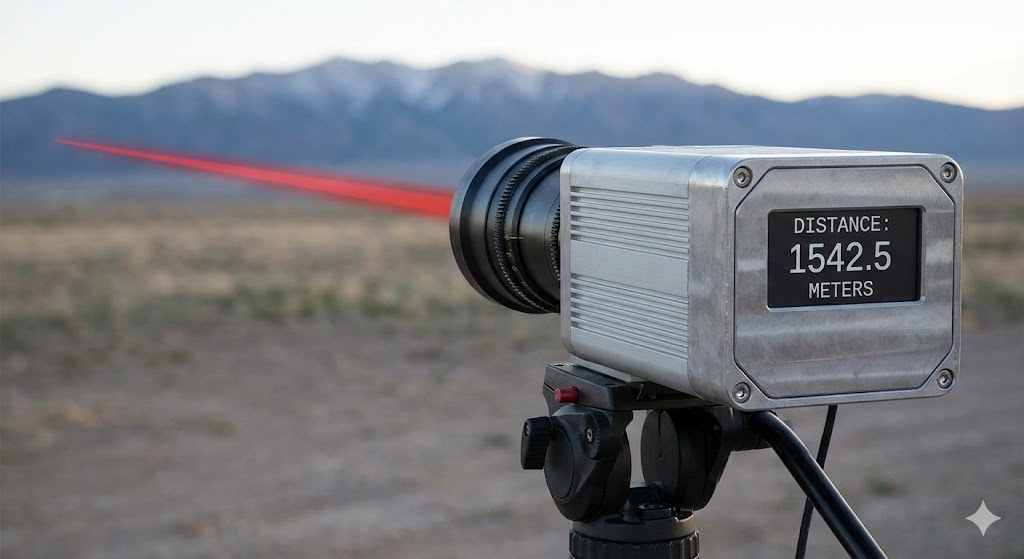
In summary, think of a laser sensor as a highly accurate ruler or caliper, providing an exact measurement at a specific location. LiDAR, on the other hand, is like a rapid, laser-based cartographer that drafts a detailed 3D map of everything in sight. Both are invaluable tools derived from laser technology, but they address fundamentally different problems. As robotics, automation, and smart systems continue to evolve, both laser sensors for precise control and LiDAR for environmental awareness will remain critical, often working in complementary roles within larger technological ecosystems.