Proximity sensors are integral components in modern automation, robotics, and IoT systems, enabling non-contact detection of objects within a defined range. The acquisition method—how a sensor captures and processes data—directly impacts system reliability, accuracy, and efficiency. This guide explores key proximity sensor acquisition techniques, their applications, and best practices for implementation.
Inductive and capacitive sensors are among the most common types. Inductive sensors generate an electromagnetic field to detect metallic objects, making them ideal for industrial environments like assembly lines. Capacitive sensors, by contrast, respond to both conductive and non-conductive materials by measuring changes in capacitance, suitable for liquid level detection or plastic object sensing. The acquisition process for these sensors typically involves oscillation circuits that shift frequency or amplitude upon target presence, converted into digital signals via comparators or ADCs.
Optical proximity sensors, including infrared (IR) and laser variants, rely on light emission and reception. Time-of-flight (ToF) methods measure the delay between transmitted and reflected light to calculate distance, while triangulation uses angular relationships for precise positioning. Photoelectric sensors often employ modulated light signals to reduce ambient interference, with acquisition circuits filtering noise to enhance signal integrity.
Ultrasonic sensors use sound waves beyond human hearing, with acquisition based on echo timing. Pulse-echo techniques involve transmitting a burst and measuring return time, while continuous-wave methods analyze frequency shifts for velocity detection. These sensors excel in harsh conditions where dust, moisture, or variable lighting affect optical alternatives.
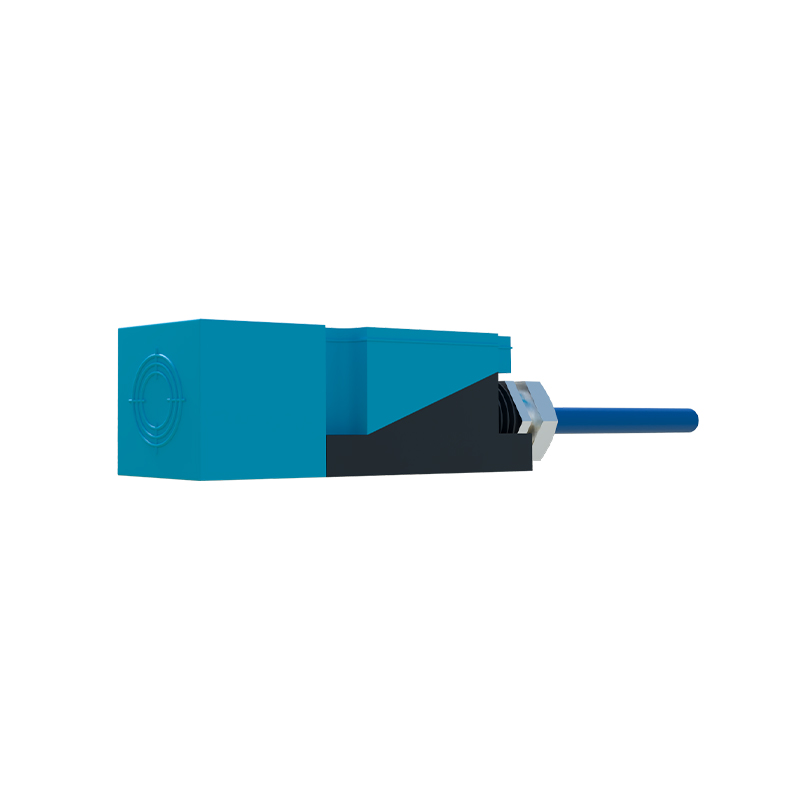
Magnetic proximity sensors, such as Hall-effect or reed switches, detect magnetic fields from permanent magnets or electromagnets. Acquisition hinges on voltage changes in semiconductor elements (Hall-effect) or contact closure (reed switches), offering durability in automotive or security applications.
Signal processing is critical across all methods. Analog signals often undergo amplification, filtering, and threshold comparison before digital conversion. Microcontrollers or dedicated ICs then interpret data, with algorithms for hysteresis preventing false triggers from environmental fluctuations. For instance, a Schmitt trigger circuit can stabilize output in noisy settings.
Integration with systems requires attention to sampling rates, response times, and communication protocols. Fast-moving applications, like conveyor sorting, demand high-speed acquisition with minimal latency, often using parallel processing or dedicated hardware timers. Protocols like IO-Link enable smart sensors to transmit parametric data alongside detection signals, facilitating predictive maintenance.
Calibration and environmental compensation are vital for accuracy. Temperature changes can alter sensor sensitivity—e.g., ultrasonic speed varies with air density. Automatic compensation circuits or software algorithms adjust baselines dynamically. Regular calibration against reference targets ensures long-term consistency, especially in metrology or quality control.
Emerging trends include multi-sensor fusion, where data from inductive, optical, and ultrasonic units combine via algorithms like Kalman filters to improve robustness. AI-driven acquisition adapts thresholds in real-time based on historical patterns, reducing manual tuning. Energy-efficient methods, such as pulsed operation in battery-powered IoT devices, extend operational life without sacrificing performance.
In practice, selecting an acquisition method depends on factors like target material, range, response speed, and cost. For example, inductive sensors suit short-range metal detection with millisecond response, while ToF optical sensors provide sub-millimeter accuracy for robotic navigation. Always consult datasheets for specifications like repeatability, sensing distance, and environmental ratings.
By mastering these acquisition techniques, engineers can optimize sensor deployments for reliability and precision, driving advancements in smart manufacturing, autonomous vehicles, and beyond.