Introduction to Micro-Groove Photoelectric Sensors
Micro-groove photoelectric sensors represent a specialized and compact category within the broader family of photoelectric sensors. These devices are engineered for precision detection in confined spaces where traditional sensors cannot be installed. Their defining characteristic is a narrow, groove-shaped sensing aperture, typically ranging from a few millimeters to a couple of centimeters in width. This unique form factor allows them to detect the presence, absence, or passage of objects through this slot. Commonly found in automation, packaging, printing, and assembly machinery, they excel at tasks like counting, edge guiding, jam detection, and verifying the position of small components, labels, or perforations. Their reliability, non-contact operation, and fast response time make them indispensable in modern industrial control systems.
Core Operating Principle: The Interrupted Light Beam
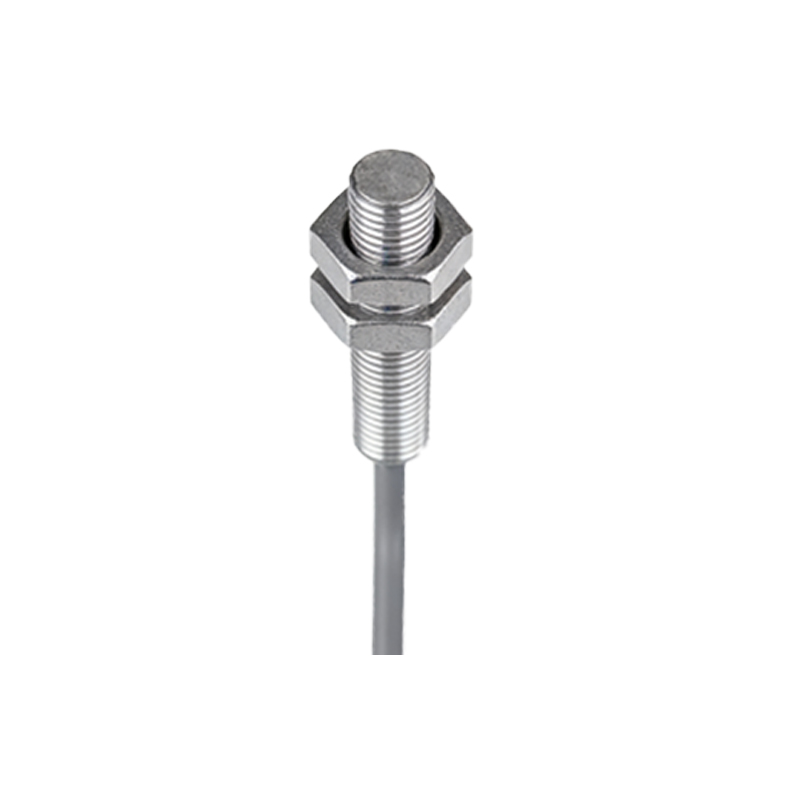
At its most fundamental level, a micro-groove sensor operates on the principle of a through-beam, or opposed-mode, photoelectric system. The sensor housing contains two key optical components facing each other across the groove: an emitter and a receiver. The emitter, usually a light-emitting diode (LED), generates a constant beam of modulated light. Common light sources include visible red, infrared, or laser light, chosen for their coherence and environmental resistance. The receiver, positioned directly opposite, is a phototransistor or photodiode designed to detect this specific light signal. In the sensor's normal state, the light beam travels uninterrupted across the groove, and the receiver produces a corresponding output signal. When an object enters the groove, it physically interrupts the light path. The receiver detects this loss of signal, triggering a change in the sensor's electrical output state, which is then communicated to a programmable logic controller (PLC) or other control unit.
Internal Components and Signal Modulation
The sophistication of a micro-groove sensor lies in its internal electronics, which ensure stable operation amidst industrial ambient light interference. The LED emitter does not shine with a constant DC light; instead, it is pulsed at a specific high frequency. The receiver circuit is tuned to respond only to light modulated at this exact frequency. This modulation technique effectively makes the sensor "blind" to ambient light from factory lighting or sunlight, which is not modulated at the same frequency. Furthermore, advanced models incorporate automatic gain control (AGC) to compensate for gradual lens contamination or LED aging, maintaining a consistent sensing performance over time. The housing is precisely molded to align the optics and often includes status LEDs for visual indication of power and output state.
Key Performance Characteristics and Specifications
Several critical parameters define the performance and suitability of a micro-groove sensor for a given application. The sensing gap width and depth are primary physical constraints. The response time, measured in microseconds or milliseconds, determines how fast the sensor can detect objects passing at high speed. The light source type influences spot size and sensing precision; laser models offer a very fine, collimated beam for detecting extremely small objects or precise edges. Output configurations vary, including NPN or PNP transistor outputs (sourcing or sinking), analog outputs for contrast measurement, or push-pull circuits. Environmental ratings, such as IP67 for dust and water resistance, and operating temperature ranges are vital for harsh industrial environments.
Application Examples in Industrial Automation
In practical settings, micro-groove sensors solve numerous detection challenges. In label applicator machines, they detect the gap between labels on a backing paper to trigger the cutting or application arm. Within printing presses, they monitor paper feed by detecting pre-printed registration marks or perforations. On conveyor systems, they count small items like bottles, caps, or electronic components as they pass through the groove. They are also used for thread break detection in textile machinery, where a broken thread fails to interrupt the beam, signaling a fault. Their compact size allows them to be embedded directly into machinery frames, robotic grippers, or tooling fixtures where space is at a premium.
Advantages Over Alternative Sensing Technologies
Compared to other proximity sensing methods, micro-groove photoelectric sensors offer distinct benefits. Unlike mechanical limit switches, they provide non-contact sensing, eliminating wear and tear and allowing for much higher operational speeds. Compared to diffuse-reflective photoelectric sensors, the through-beam design of the micro-groove offers superior reliability and longer sensing ranges relative to its size, as it does not depend on the reflectivity or color of the target object. They are generally more precise and immune to target surface variations than capacitive or inductive proximity sensors. Their primary limitation is the requirement for the object to physically pass through the groove, which defines their application niche.
Installation Considerations and Best Practices
Proper installation is crucial for optimal performance. The sensor must be securely mounted to prevent vibration from misaligning the delicate optical path. The groove must be kept clean from dust, oil, or debris that could accumulate and block the light beam. For transparent or translucent objects, such as glass or clear plastic, special sensors with polarized light filters or high-intensity beams may be required to ensure reliable detection. Alignment is critical; many models feature alignment indicators to simplify setup. Electrical wiring should follow manufacturer guidelines, ensuring correct voltage supply and proper connection of the output load to avoid damaging the internal solid-state switch.
Conclusion: The Role in Precision Automation
Micro-groove photoelectric sensors are a testament to the evolution of precision in industrial automation. By miniaturizing and specializing the through-beam sensing principle into a rugged, groove-shaped package, they enable reliable detection in scenarios where other sensors fail. Their operation, based on the simple interruption of a modulated light beam, is enhanced by sophisticated electronics for stability and noise immunity. As manufacturing demands ever-greater precision, speed, and miniaturization, the micro-groove photoelectric sensor remains a vital component, ensuring the accurate and reliable operation of automated systems across countless industries. Understanding their working principles allows engineers to effectively select, apply, and maintain these devices for optimal system performance.