What Are Proximity Sensors?
Proximity sensors are non-contact electronic devices designed to detect the presence or absence of an object within a specific sensing range without any physical contact. They emit an electromagnetic field or a beam of electromagnetic radiation and look for changes in the field or return signal. The object being sensed is often referred to as the proximity sensor's target. These sensors are fundamental components in modern industrial automation, robotics, and safety systems due to their reliability, long operational life, and ability to function in harsh environments. Unlike mechanical limit switches, proximity sensors have no moving parts, which significantly reduces wear and tear and minimizes maintenance requirements. Their operation is based on various physical principles, primarily inductive, capacitive, ultrasonic, and photoelectric sensing.
Core Working Principles
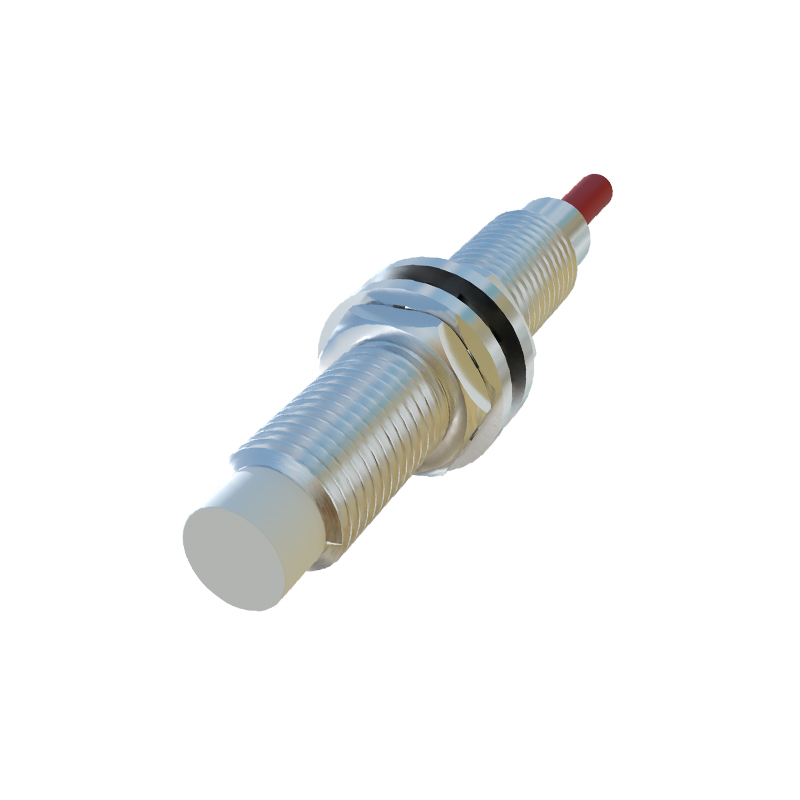
The functionality of a proximity sensor depends on its type. Inductive proximity sensors are the most common in industrial settings for detecting metallic objects. They consist of an oscillator circuit that generates a high-frequency electromagnetic field at the sensing face. When a metal target enters this field, eddy currents are induced on the metal's surface. This causes a load on the oscillator, leading to a reduction in its oscillation amplitude. This change is detected by a threshold circuit, which subsequently switches the sensor's output state. Capacitive proximity sensors can detect both metallic and non-metallic materials like liquids, plastics, or wood. They function by generating an electrostatic field. When any object with a dielectric constant different from air enters this field, it causes a measurable change in the capacitance of the circuit, triggering the output. Photoelectric sensors use a light emitter and receiver; an object is detected when it interrupts or reflects the light beam.
Key Types and Their Characteristics
Understanding the distinct types is crucial for proper application. Inductive Sensors are ideal for short-range detection of ferrous and non-ferrous metals, typically up to 60mm. They are highly resistant to environmental factors like dust, oil, and moisture. Capacitive Sensors have a similar range but can detect almost any material. They are sensitive to changes in humidity and material composition. Ultrasonic Proximity Sensors emit high-frequency sound waves and measure the time for the echo to return. They are excellent for longer ranges (up to several meters) and can detect objects regardless of color, transparency, or material, though they can be affected by temperature and air turbulence. Photoelectric Sensors offer the longest range and high precision. They come in through-beam, retro-reflective, and diffuse-reflective modes, each suited for different detection scenarios involving presence, absence, or positioning.
Critical Selection Criteria
Selecting the right proximity sensor requires careful analysis of several parameters. The sensing distance, or nominal range, is the first consideration and must account for target material, size, and shape. The sensor must be rated for the specific environment, including temperature extremes, presence of chemicals, washdown conditions, and potential for physical impact. The output type is another key decision: NPN (sinking) or PNP (sourcing) transistor outputs for DC sensors, or relay contacts for AC models. The switching frequency defines how quickly the sensor can detect objects passing by, which is vital for high-speed production lines. Finally, housing material (e.g., nickel-plated brass, stainless steel, or PBT plastic) and connection style (pre-wired, quick-disconnect) are chosen based on environmental and installation needs.
Industrial Applications and Use Cases
The applications of proximity sensors span the entire spectrum of industrial automation. On assembly lines, they are used for precise object counting, jam detection, and verifying the presence of components. In machine tools, inductive sensors monitor the position of tool holders, detect broken tools, and ensure workpiece clamping. They are integral to robotic systems for end-of-arm tooling detection and safe positioning within a work cell. Capacitive sensors find use in liquid level control within tanks and detecting fill levels in packaging machinery. Ultrasonic sensors are deployed in material handling for pallet detection and in automated guided vehicles (AGVs) for collision avoidance. Furthermore, their non-contact nature makes them perfect for safety interlocks on machine guards and doors.
Installation and Troubleshooting Tips
Proper installation is paramount for reliable operation. Sensors should be mounted securely to avoid vibration-induced errors. For inductive and capacitive types, it is essential to maintain the recommended lateral and axial clearance from surrounding metal to prevent false triggering—a practice known as providing adequate "flush-mounting" or "non-flush" spacing. Electrical wiring must follow the manufacturer's guidelines, ensuring correct polarity and using shielded cables in electrically noisy environments. Common troubleshooting steps include checking the power supply voltage, verifying the target is within the sensing range and of the correct material, inspecting for accumulated