Introduction to Optical Encoders
An optical encoder is a critical electromechanical device that converts angular or linear position into a digital signal. The 500-line optical encoder, specifically, refers to a rotary encoder that produces 500 pulses per revolution (PPR). This resolution is a common standard in industrial automation, offering a balance between high precision and cost-effectiveness. The core principle involves a light source, a rotating disk with precisely etched lines, and a photodetector. As the disk rotates, the light beam is interrupted by the lines, generating a square wave output. This signal is then interpreted by a controller to determine position, speed, and direction of a motor or shaft.
Key Components and Working Mechanism
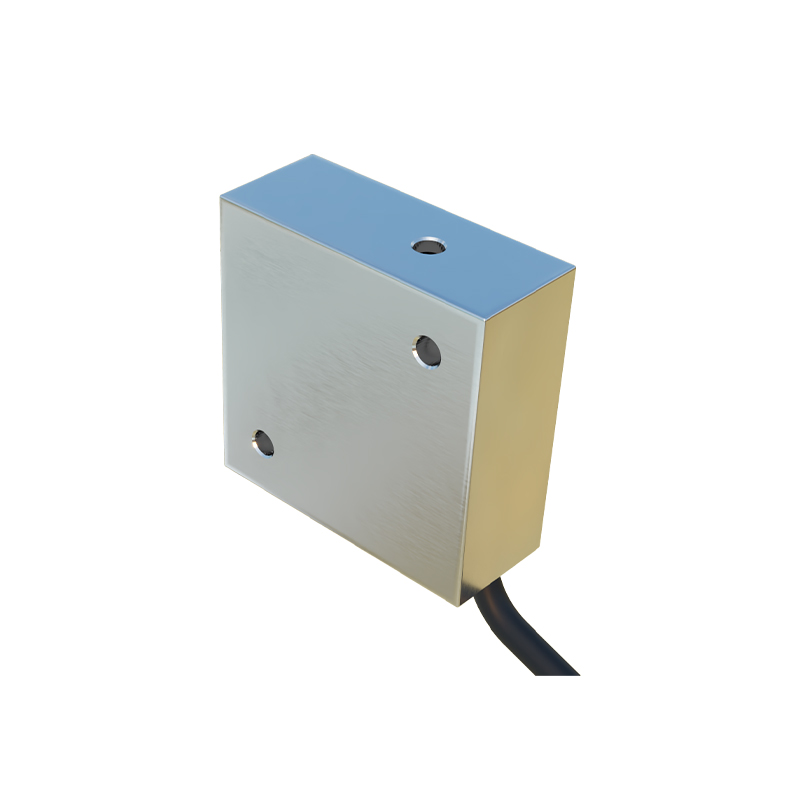
The functionality of a 500-line encoder hinges on its internal components. A light-emitting diode (LED) serves as a stable light source. The code disk, typically made of glass or plastic, has 500 alternating transparent and opaque segments arranged radially. A stationary mask with identical pattern aligns with the disk. On the opposite side, phototransistors or a photodiode array act as the sensor. When the disk rotates, the sensor detects the alternating light pattern, producing two primary output channels: Channel A and Channel B. These channels are electrically 90 degrees out of phase, a configuration known as quadrature output, which enables the determination of rotational direction.
Quadrature Output and Signal Processing
The quadrature signals are the hallmark of incremental encoders like the 500-line model. By analyzing the phase relationship between Channel A and Channel B, the connected motion controller can discern not just speed but also direction. For instance, if Channel A leads Channel B, rotation is clockwise; if Channel B leads A, it is counterclockwise. Furthermore, by employing a technique called 4X decoding (counting both the rising and falling edges of both channels), the effective resolution is multiplied to 2000 counts per revolution (500 lines × 4). This enhanced resolution allows for finer control and more accurate positioning in applications such as CNC machinery and robotic arms.
Advantages of 500-Line Resolution
The choice of 500 PPR is strategic for many mid-range industrial applications. It provides significantly higher accuracy than lower-resolution encoders (e.g., 100 or 200 PPR) while avoiding the excessive cost and potential signal integrity issues associated with very high-resolution models (e.g., 10,000 PPR). This resolution is often sufficient for precise speed regulation in conveyor systems, accurate angular positioning in indexing tables, and reliable feedback in servo motors. Its output frequency at high rotational speeds remains manageable for standard industrial counters and PLCs, ensuring robust performance without overburdening the control system.
Common Industrial Applications
500-line optical encoders are ubiquitous across factory floors. They are integral to servo motor systems, providing the closed-loop feedback necessary for precise torque and velocity control. In packaging machinery, they ensure accurate cut-to-length and filling operations. CNC machine tools rely on them for precise axis positioning and contouring. Other applications include textile machinery for yarn tension control, printing presses for registration control, and automated assembly lines for synchronized motion. Their reliability and precision directly impact product quality, throughput, and overall equipment effectiveness.
Installation Considerations and Environmental Factors
Proper installation is paramount for optimal encoder performance and longevity. Critical factors include precise shaft alignment to prevent bearing stress, secure mounting to minimize vibration, and correct coupling selection to handle potential axial or radial loads. Environmental protection is also crucial. While many industrial encoders feature IP-rated housings for dust and moisture resistance, excessive contaminants like oil, coolant, or metal chips can obscure the optical path. In harsh environments, sealed models or the use of external protective shrouds may be necessary. Temperature stability is another concern, as extreme heat or cold can affect the LED output and electronic components.
Maintenance and Troubleshooting Tips
Optical encoders are generally maintenance-free but can fail due to environmental factors or aging. Common issues include signal loss, erratic counts, or complete failure. Initial troubleshooting should involve checking the power supply voltage and connection integrity. Inspect the lens and code disk for accumulated dirt or damage, cleaning carefully with compressed air or a lint-free swab if needed. Verify the alignment of the mounting and coupling. Using an oscilloscope to observe the A and B channel waveforms can diagnose issues like weak signal amplitude or phase error. Preventive measures include regular visual inspections and ensuring the operating environment stays within the encoder's specified ratings.
Comparison with Magnetic and Capacitive Encoders
While optical encoders dominate high-precision applications, magnetic and capacitive encoders offer alternatives. Magnetic encoders use a magnetized rotor and Hall-effect sensors. They are more resilient in dirty, humid, or high-vibration environments but traditionally offer lower resolution and accuracy compared to optical types. Capacitive encoders employ a patterned rotor and sensor to detect changes in capacitance. They share similar environmental robustness with magnetic encoders and can achieve high resolution. For a 500-line application requiring high accuracy in a relatively clean, controlled environment, the optical encoder remains the preferred choice due to its superior signal fidelity and established industry track record.
Future Trends and Conclusion
The evolution of optical encoder technology continues. Trends include the integration of onboard electronics for smarter, digitized outputs (e.g., BiSS, EnDat, or Ethernet-based protocols), which reduce noise susceptibility in long cable runs. Miniaturization allows for installation in tighter spaces without sacrificing performance. Furthermore, enhanced materials for code disks and LEDs improve longevity and temperature tolerance. The 500-line optical encoder, as a proven and reliable workhorse, will continue to be a cornerstone of industrial motion control. Its optimal blend of precision, reliability, and cost ensures its relevance in the evolving landscape of Industry 4.0 and smart manufacturing, providing the essential feedback that drives automated systems with accuracy and efficiency.