Introduction to Miniature Proximity Sensing
The evolution of industrial automation and compact machinery has driven the demand for increasingly smaller sensing components. Among these, the 3mm diameter proximity sensor represents a pinnacle of miniaturization, offering non-contact detection in spaces where traditional sensors cannot operate. These cylindrical sensors, often housed in robust M3 or M4 threaded barrels, are engineered to detect the presence or absence of metallic objects—typically ferrous metals like steel and iron for inductive types—without any physical contact. Their fundamental operating principle relies on generating an electromagnetic field from an oscillator circuit. When a target object enters this field, it induces eddy currents, causing a change in the oscillation amplitude. This change is detected by the sensor's threshold circuit, which subsequently triggers a solid-state switch to change the output state. The ultra-compact form factor does not compromise their core functionality, making them indispensable in modern high-precision applications.
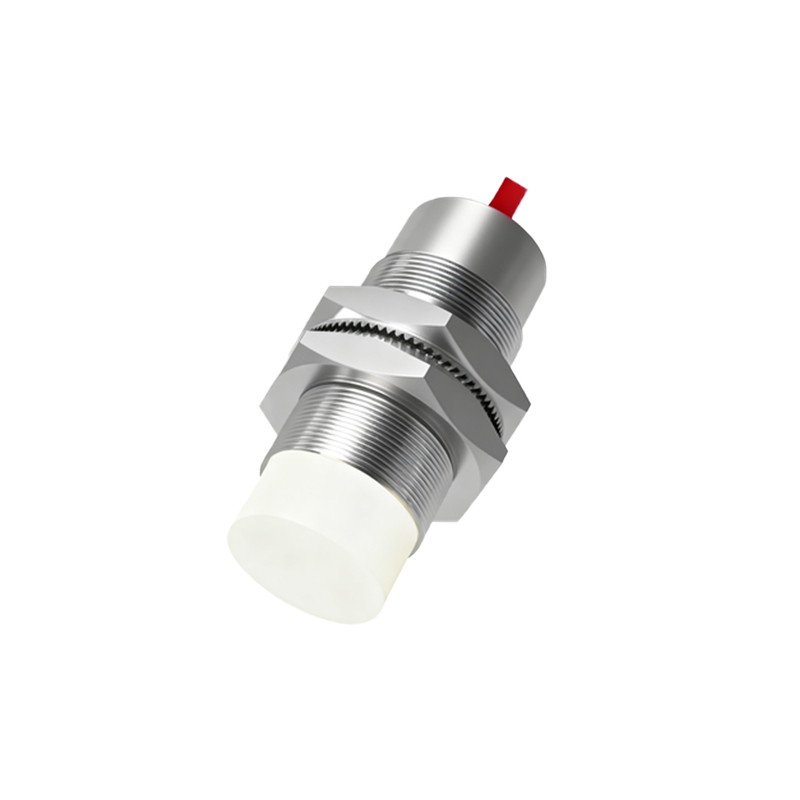
Key Technical Specifications and Operating Principles
Understanding the specifications of a 3mm proximity sensor is critical for successful integration. The sensing distance, or nominal range, for these tiny devices is typically very short, often between 0.5mm to 1.5mm, depending on the target material and sensor design. This short range is a direct consequence of the small coil size within the sensor head. They are predominantly available in two-wire or three-wire DC configurations, with common operating voltages ranging from 10-30V DC. Output types include NPN (sinking) and PNP (sourcing) transistor outputs, with some models offering Normally Open (NO) or Normally Closed (NC) switching logic. A crucial parameter is the switching frequency, which can reach several kilohertz, allowing for the detection of very fast-moving small parts. The housing is usually made of nickel-plated brass or stainless steel, providing resistance to coolants, oils, and minor physical impacts. Despite their size, they are designed to meet IP67 ratings, ensuring reliable operation in dusty or washdown environments.
Primary Applications Across Industries

The application scope for 3mm diameter sensors is vast and targeted. In the electronics manufacturing sector, they are deployed on PCB assembly lines to verify the presence of tiny surface-mount components like chips and capacitors before soldering. The semiconductor industry utilizes them for wafer handling and positioning within fab equipment, where space is at an absolute premium. In miniature robotics and micro-assembly systems, these sensors provide end-of-arm tooling feedback, confirming gripper closure or part acquisition. Watchmaking and medical device assembly lines rely on them for detecting minuscule gears, springs, or surgical tool components. Furthermore, they are integrated into precision CNC machining centers as tool breakage detectors or for confirming the position of micro-drills and engraving tools. Their ability to function reliably in confined spaces makes them the only viable solution for many modern automation challenges.
Critical Selection Criteria and Installation Guidelines
Selecting the correct 3mm sensor requires careful analysis. First, determine the target material: standard inductive sensors detect only metals, with a correction factor for non-ferrous metals like aluminum or copper, which reduces the effective sensing range. For non-metallic targets, a capacitive 3mm sensor would be necessary. The mounting environment is equally important; ensure there is adequate clearance around the sensor to prevent false triggers from adjacent metal structures—a concept known as flush or non-flush mounting compatibility. Electrical compatibility with the controller (PLC) is mandatory, paying close attention to the voltage, current draw, and output type (NPN/PNP). During installation, precise alignment is paramount due to the extremely narrow sensing field. Using the correct mounting hardware and following the manufacturer's specified torque values is essential to avoid damaging the delicate threaded barrel. Proper shielding and routing of the connecting cable away from power lines minimize electrical noise interference.
Advantages, Limitations, and Future Trends
The primary advantage of the 3mm proximity sensor is its ability to enable automation in ultra-compact designs, increasing machine density and functionality without sacrificing reliability. Their solid-state design ensures a long operational life with no moving parts to wear out. However, significant limitations exist. The very short sensing range demands high mechanical precision in machine design and part positioning. They are also generally more sensitive to electrical noise and require careful circuit design. The trend for the future points toward even smarter miniaturized sensors. We anticipate the integration of IO-Link communication into housings this small, providing digital diagnostics, parameter setting, and process data exchange. Enhanced materials for housings and sensing faces will improve resistance to harsher chemicals. Furthermore, the development of hybrid sensors that can