Unmatched Reliability in Harsh Environments
One of the most frequently praised aspects in positive reviews for proximity switch sensors is their exceptional reliability under demanding conditions. Engineers and maintenance personnel consistently highlight how these non-contact sensors perform flawlessly in environments filled with dust, oil, coolant mist, and metal chips. Unlike mechanical limit switches, which suffer from physical wear and contact bounce, inductive and capacitive proximity sensors provide millions of error-free operations. Reviews from automotive assembly lines and metal stamping facilities specifically commend the sensors' robust housing, typically rated IP67 or higher, which protects against washdowns and ingress. This durability translates directly to reduced machine downtime and lower long-term maintenance costs, a point of high value for any operations manager.
Precision and Repeatability for Automated Systems
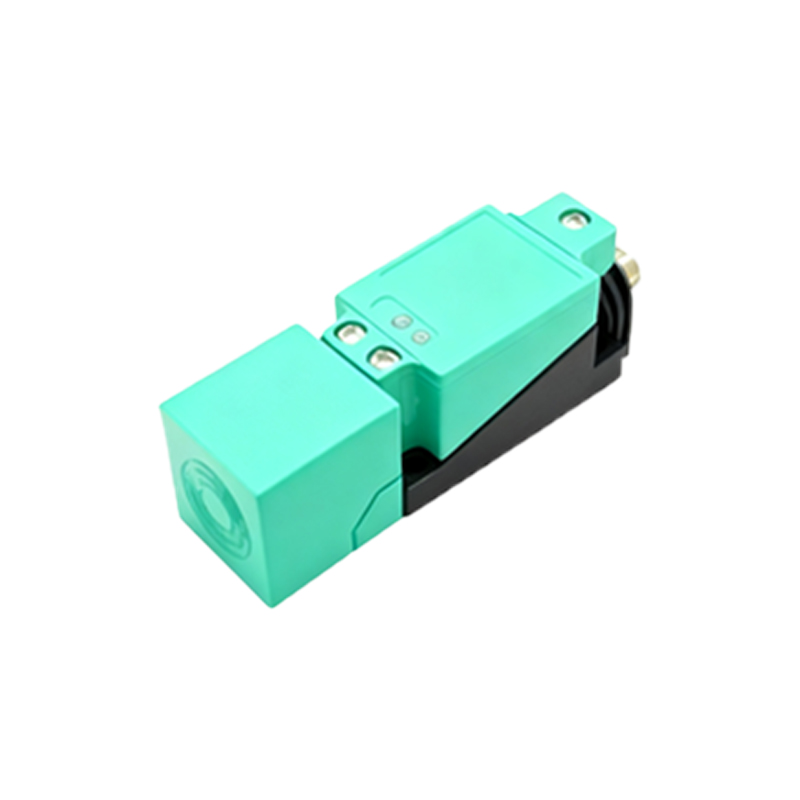
The precision of modern proximity sensors is a cornerstone of positive feedback. High-end models offer repeatability accuracies within micrometers, ensuring consistent part detection and positioning in high-speed automation. User reviews for tubular inductive sensors often detail their success in detecting small metallic components on fast-moving conveyors without a single missed count. Similarly, capacitive sensor reviews praise their ability to detect non-metallic materials like glass, wood, or liquid levels through thin container walls with consistent accuracy. This precision is critical for quality control processes, where a missed detection can lead to significant product waste or machine damage. The ability to fine-tune sensing distance and hysteresis via built-in potentiometers or IO-Link communication is also frequently noted as a major advantage.
Simplified Installation and Wiring
Ease of installation is a practical benefit that generates substantial positive commentary. The standardized form factors (e.g., M8, M12, M18, M30) and pre-wired quick-disconnect cabling systems have revolutionized sensor integration. Reviews from system integrators emphasize how this plug-and-play design drastically reduces machine build and retrofit time. Many sensors now feature universal voltage compatibility (e.g., 10-30V DC or 20-250V AC), eliminating the need for specific power supplies and reducing wiring errors. LED status indicators for power and output switching are universally appreciated, providing immediate visual confirmation of operation and greatly simplifying troubleshooting during commissioning and operation.
Versatility Across Diverse Applications
The sheer versatility of proximity switch sensors is a recurring theme in glowing reviews. Engineers appreciate the wide range of available types: inductive for metals, capacitive for nearly all materials, and ultrasonic for distance measurement and level sensing. Reviews from the packaging industry detail how capacitive sensors reliably detect filled bottles on a line, regardless of label material. In material handling, reviews highlight the use of cylindrical sensors for precise pallet positioning and fork detection. Specialized models, such as analog output sensors for distance-proportional signals or high-temperature sensors for foundry applications, receive particular praise for solving niche but critical problems that alternative technologies cannot address as effectively or cost-efficiently.
Enhanced Diagnostics and Smart Features
The integration of smart features in contemporary proximity sensors is a significant source of positive user experience. Sensors equipped with IO-Link communication are consistently lauded in reviews for providing far more than a simple switching signal. They enable remote parameter configuration, continuous condition monitoring (like operating temperature and signal strength), and detailed diagnostic data. This allows for predictive maintenance, where potential issues can be identified before a failure occurs. Reviews from large-scale plants note that this intelligence helps move from reactive to proactive maintenance schedules, optimizing spare parts inventory and preventing unexpected production stoppages. The ability to store application parameters directly in the sensor's memory, simplifying replacement, is another highly valued smart feature.
Cost-Effectiveness and Return on Investment
Ultimately, the positive reviews consistently circle back to the outstanding cost-effectiveness and rapid return on investment (ROI) provided by quality proximity sensors. While the initial unit cost may be higher than a basic mechanical switch, reviewers from various industries—food & beverage, pharmaceuticals, automotive—calculate ROI based on longevity, reduced downtime, and improved product quality. The elimination of physical contact means no moving parts to wear out, leading to a virtually maintenance-free service life. This results in a lower total cost of ownership over the machine's lifecycle. Reviews often conclude that specifying a reliable, brand-name proximity sensor is not an expense but a strategic investment in production stability and efficiency.