Introduction to Fixed-Distance Photoelectric Sensors
Fixed-distance photoelectric sensors, also known as background suppression or BGS sensors, represent a specialized category within the broader family of photoelectric devices. Unlike standard diffuse sensors, which detect objects based on the amount of reflected light, fixed-distance sensors are engineered to detect objects only within a precisely defined, preset sensing range. This unique capability makes them indispensable in industrial automation for applications requiring reliable detection regardless of an object's color, surface texture, or reflectivity. Their operation hinges on sophisticated optical triangulation principles, allowing them to ignore background objects beyond the set distance. This article delves into the core working principle, components, and operational advantages of these highly reliable sensors.
Core Components and Optical Setup
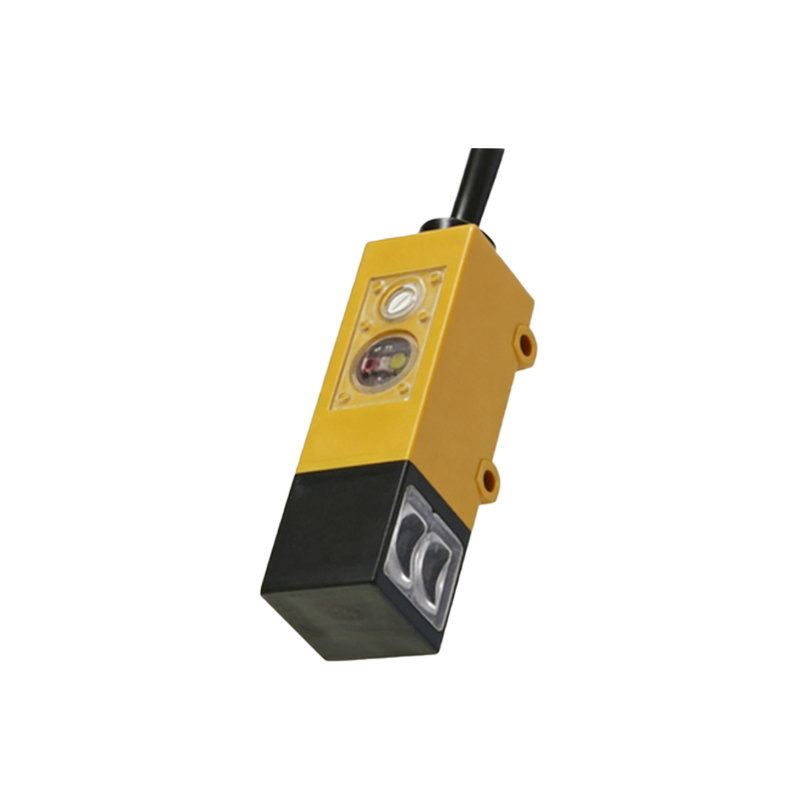
The fundamental architecture of a fixed-distance photoelectric sensor comprises three key components: a light-emitting element, a specialized optical receiver, and a signal processing circuit. The light emitter is typically a focused infrared or visible red LED that projects a concentrated beam of light towards the target area. The receiver is not a simple phototransistor or photodiode; it is a position-sensitive device (PSD) or a compact CMOS/CCD array. This receiver is positioned at a specific angle relative to the emitter, forming the basis of the triangulation method. The optical path is carefully calibrated so that light reflected from objects at the exact preset focal distance converges onto a specific point on the receiver element. The housing incorporates precision lenses for both the transmitter and receiver to shape and focus the light beams accurately.
The Principle of Optical Triangulation
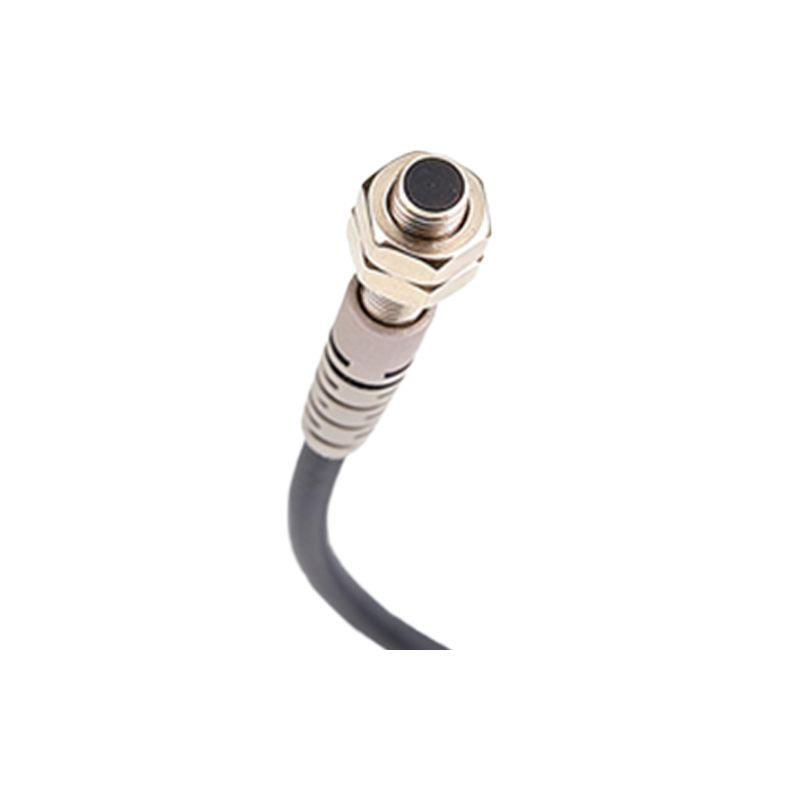
The working principle is fundamentally based on optical triangulation. When the sensor's emitted light beam strikes an object within its field of view, a portion of the light is reflected back towards the sensor. The critical factor is the distance of the object from the sensor face. If the object is located exactly at the preset "fixed distance," the reflected light rays are focused onto a precise, predefined spot on the position-sensitive receiver (PSD or array). This spot corresponds to the sensor's calibrated threshold. If the object is closer than this set distance, the reflected light converges at a point on the receiver that is different from the reference spot. Conversely, if the object is farther away (or if the beam hits the background), the reflected light falls on yet another distinct point on the receiver. The sensor's electronics continuously monitor the position of the reflected light spot on the receiver, not just its intensity.
Signal Processing and Background Suppression
The position-sensitive receiver converts the location of the light spot into an electrical signal. The integrated evaluation circuit compares this signal against the pre-programmed reference point corresponding to the fixed sensing distance. This is where "background suppression" occurs. The circuit is designed to trigger an output signal (ON state) only when the detected light spot position indicates an object is present at or closer than the preset range. Light reflected from objects beyond this range—the background—falls on a different receiver area, and the circuit ignores it, maintaining an OFF output. This intelligent processing allows the sensor to reliably detect a low-reflectivity black object at 10 cm while completely ignoring a highly reflective white wall at 15 cm, a task impossible for standard diffuse sensors.
Key Advantages and Application Benefits
The primary advantage of fixed-distance photoelectric sensors is their immunity to variations in object color, material, and surface finish. Since detection is based on the *position* of the reflected light rather than its *intensity*, a dark, absorbent object at the correct distance is detected as reliably as a bright, shiny one. This eliminates the need for sensitivity adjustments when handling different products on the same line. Furthermore, their ability to ignore the background prevents false triggers from machinery, conveyor frames, or other objects behind the target zone. Common applications include precise object counting on conveyors, detecting presence at a specific point in an assembly process, wafer handling in electronics, and edge detection in packaging, where consistent performance is critical despite changing product appearances.
Configuration and Practical Considerations
Most modern fixed-distance sensors feature a teach-in function for easy setup. A technician simply places a target object at the desired sensing distance and activates the teach mode (via a button or remote input). The sensor then memorizes the light spot position for that exact range as its new switching point. It is crucial to mount the sensor perpendicular to the expected target surface for optimal performance. Environmental factors like dust, fog, or strong ambient light can scatter the beam and potentially affect accuracy, though many models incorporate filters and modulated LED light to mitigate such interference. Understanding the defined sensing window—the precise range where detection occurs—is vital for correct integration into a machine design.
Conclusion
In summary, fixed-distance photoelectric sensors operate on the elegant and robust principle of optical triangulation, using a position-sensitive receiver to discriminate targets based on their precise distance. This technology provides unparalleled reliability in challenging detection scenarios where object properties are inconsistent or where background interference must be eliminated. By delivering consistent switching regardless of color or reflectivity, these sensors enhance the robustness, flexibility, and precision of automated systems, solidifying their role as a key solution for advanced industrial sensing tasks.