Understanding Proximity Sensor Fundamentals
Proximity sensors are non-contact devices designed to detect the presence or absence of an object within a defined sensing range. Their operation hinges on various physical principles, primarily electromagnetic, capacitive, or optical. Inductive sensors, for instance, generate an electromagnetic field and detect eddy current losses caused by metallic targets. Capacitive sensors measure changes in capacitance caused by the presence of any material, while photoelectric sensors use a light beam. The core question of accuracy is not a simple yes or no; it is intrinsically tied to the sensor's type, its specified performance parameters, and the application's environmental conditions. Accuracy in this context typically refers to repeatability, hysteresis, temperature stability, and the sensor's ability to perform consistently against its datasheet specifications.
Defining Accuracy: Repeatability and Hysteresis
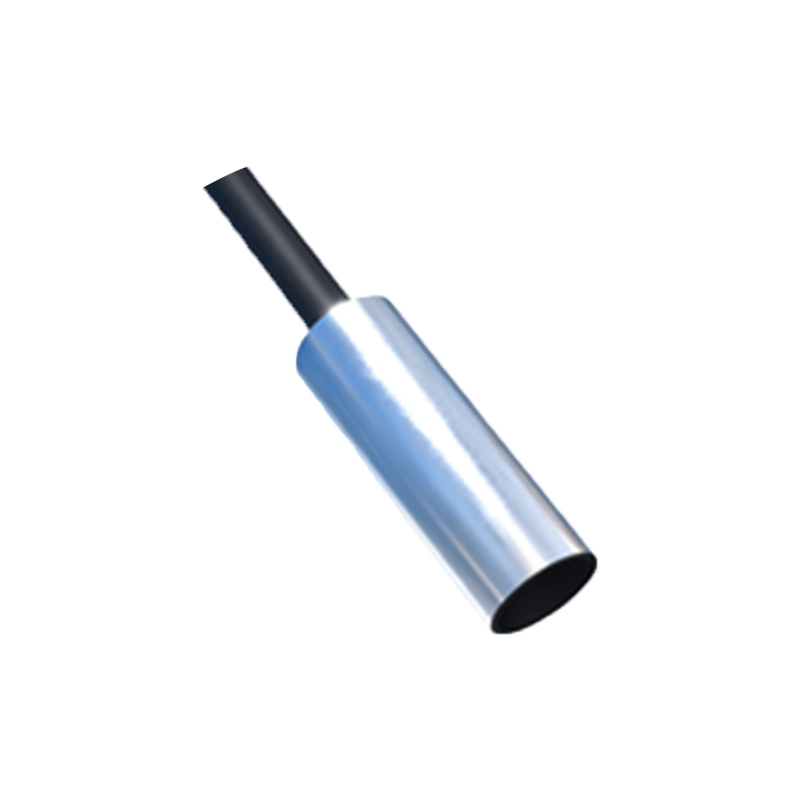
In industrial sensing, "accuracy" is often quantitatively expressed through repeatability and hysteresis. Repeatability is the sensor's ability to produce the same output signal when an object is repeatedly presented to it at the same exact position and under identical conditions. High-quality proximity sensors boast excellent repeatability, often within microns. Hysteresis is the difference between the switch-on point (as the target approaches) and the switch-off point (as the target recedes). This built-in characteristic prevents output chatter when a target is near the sensing threshold. A datasheet will specify a hysteresis value, which is a fixed, predictable error that engineers can account for in system design. Therefore, while hysteresis introduces an offset, it does not imply inaccuracy if it is well-defined and consistent.
Key Factors Influencing Sensing Performance
Several critical factors can degrade the nominal accuracy of a proximity sensor. Temperature variation is a primary concern; extreme heat or cold can shift the oscillator frequency in inductive sensors or affect electronic components, leading to drift in the sensing distance. Electrical noise from nearby motors, drives, or welding equipment can induce false triggering. The target material's properties significantly impact performance. An inductive sensor calibrated for mild steel will have a reduced sensing range for stainless steel, aluminum, or copper. The target's size, shape, and orientation must also meet the sensor's specifications. For capacitive sensors, changes in humidity or the presence of contaminants like oil or dust can alter the dielectric constant, affecting detection.
Datasheet Interpretation and Real-World Tolerance
A sensor's datasheet is the blueprint for its expected performance. The rated sensing distance (Sn) is defined under specific standard conditions (typically a mild steel target of a defined size). The effective sensing distance (Sr) in real applications can be 10-20% less due to manufacturing tolerances and material factors. Engineers must never design at the theoretical limit. A crucial rule is to derate the sensor, using only 60-80% of its nominal sensing range in application layouts. Furthermore, datasheets specify temperature drift coefficients (e.g., ±10% of Sr over a 0-60°C range). Ignoring these parameters is a common source of perceived "inaccuracy." Real-world accuracy is achieved by selecting a sensor with a generous margin and specifications that exceed the application's worst-case requirements.
Comparing Sensor Technologies for Precision Tasks
For high-precision applications, the choice of technology is paramount. Inductive sensors offer superb repeatability and are highly resistant to environmental factors like dirt, but are limited to metals. Within this category, analog-output sensors provide a continuous voltage or current signal proportional to distance, enabling precise position monitoring, not just detection. Capacitive sensors can detect non-metals but are more susceptible to environmental changes. Photoelectric sensors, especially laser-based versions, provide the longest ranges and highest precision for small object detection but require a clean environment free of obscuring dust or fog. For ultimate precision in harsh environments, cylindrical, shielded (flush-mountable) inductive sensors are often preferred due to their immunity to lateral installation effects and surrounding metal.
Calibration, Installation, and Maintenance Best Practices
Accuracy is not solely a product feature; it is a system outcome. Proper installation is critical. Sensors must be mounted securely to prevent vibration-induced movement. Adequate clearance from surrounding metal (as per datasheet guidelines) prevents parasitic effects for inductive sensors. Electrical wiring should be shielded and separated from power lines to minimize noise. While most industrial proximity sensors are not user-calibratable, periodic verification checks against a known standard target are part of robust preventive maintenance. Checking for physical damage, buildup of metallic swarf or other contaminants, and verifying stable power supply voltage are essential routines to maintain long-term accuracy and reliability in automated systems.
Conclusion: Accuracy as a System Engineering Goal
Are proximity sensors accurate? High-quality