In the dynamic landscape of industrial manufacturing, welding remains a cornerstone process, essential for constructing everything from automotive frames to aerospace components. The integration of welding laser sensors has revolutionized this field, offering unprecedented levels of accuracy, control, and productivity. These advanced sensors utilize laser technology to monitor and guide welding operations in real-time, addressing traditional challenges such as joint tracking, seam detection, and quality assurance.
At its core, a welding laser sensor projects a laser line or pattern onto the workpiece. As the welding torch moves along the seam, the sensor captures reflected light, analyzing distortions in the laser pattern to determine the exact position, geometry, and orientation of the joint. This data is processed instantly, allowing automated welding systems to make micro-adjustments to torch position, travel speed, and heat input. The result is a consistently precise weld, even on complex or irregular surfaces where manual operation might falter.
One of the primary applications of welding laser sensors is in robotic welding cells. Here, sensors enable robots to "see" and adapt to variations in part fit-up or thermal distortion during the welding process. For instance, in automotive assembly lines, where thousands of welds are performed daily, even minor misalignments can lead to structural weaknesses. Laser sensors ensure each weld is placed accurately, enhancing joint strength and overall vehicle safety. This adaptive capability reduces the need for costly pre-welding fixtures and extensive reprogramming, streamlining production workflows.
Beyond positioning, these sensors play a crucial role in quality control. By continuously monitoring weld pool characteristics, bead profile, and potential defects like porosity or undercut, laser sensors provide immediate feedback. Operators can intervene promptly if parameters drift outside acceptable limits, minimizing rework and scrap. In high-stakes industries such as shipbuilding or pipeline construction, where weld integrity is critical for safety and longevity, this real-time monitoring is invaluable. It transforms quality assurance from a post-process inspection into an integrated, proactive component of the welding operation.

The evolution of welding laser sensors also supports the trend toward Industry 4.0 and smart manufacturing. Modern sensors can be networked with factory-wide systems, feeding data into centralized platforms for analysis. This connectivity enables predictive maintenance, process optimization, and detailed traceability. Manufacturers can analyze welding data over time to identify patterns, fine-tune procedures, and improve overall equipment effectiveness (OEE). As a result, facilities achieve not only higher quality outputs but also greater operational efficiency and cost savings.
Despite their advantages, implementing welding laser sensors requires consideration. Initial investment costs can be significant, and proper integration demands expertise in both sensor technology and welding processes. Environmental factors like intense arc light, spatter, or fumes may also challenge sensor performance, necessitating robust protective housings and filtering algorithms. However, ongoing advancements in sensor durability, data processing speed, and user-friendly software are steadily lowering these barriers, making the technology accessible to a broader range of manufacturers.
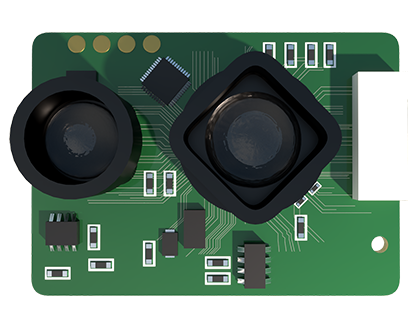
Looking ahead, the future of welding laser sensors is intertwined with developments in artificial intelligence and machine learning. AI-enhanced sensors could learn from vast datasets of welding scenarios, predicting optimal parameters for new materials or joint designs autonomously. This would further reduce setup times and expand the scope of automated welding to more customized, low-volume production runs. Additionally, miniaturization trends may lead to more compact sensor modules, easily integrated into handheld or portable welding equipment, bringing high-precision benefits to field operations and repair work.
In conclusion, welding laser sensors represent a transformative tool in modern fabrication. By delivering real-time, precise measurements and adaptive control, they elevate welding from a manual craft to a highly repeatable, data-driven process. For manufacturers aiming to boost quality, throughput, and competitiveness, investing in this technology is not merely an upgrade but a strategic imperative in an increasingly automated industrial world.