Introduction to Sensor Technologies
In the realm of industrial automation, sensors serve as the critical eyes and touchpoints of machinery, enabling precise control, safety, and efficiency. Among the plethora of sensor types available, proximity sensors and photoelectric sensors stand out as two of the most widely utilized and versatile categories. Each technology operates on distinct physical principles and offers unique advantages tailored to specific application requirements. Understanding the fundamental differences, operational mechanisms, and ideal use cases for proximity and photoelectric sensors is essential for engineers and system integrators tasked with designing robust and reliable automated systems. This article delves into a detailed technical comparison, providing insights to guide optimal sensor selection.
Operating Principles of Proximity Sensors
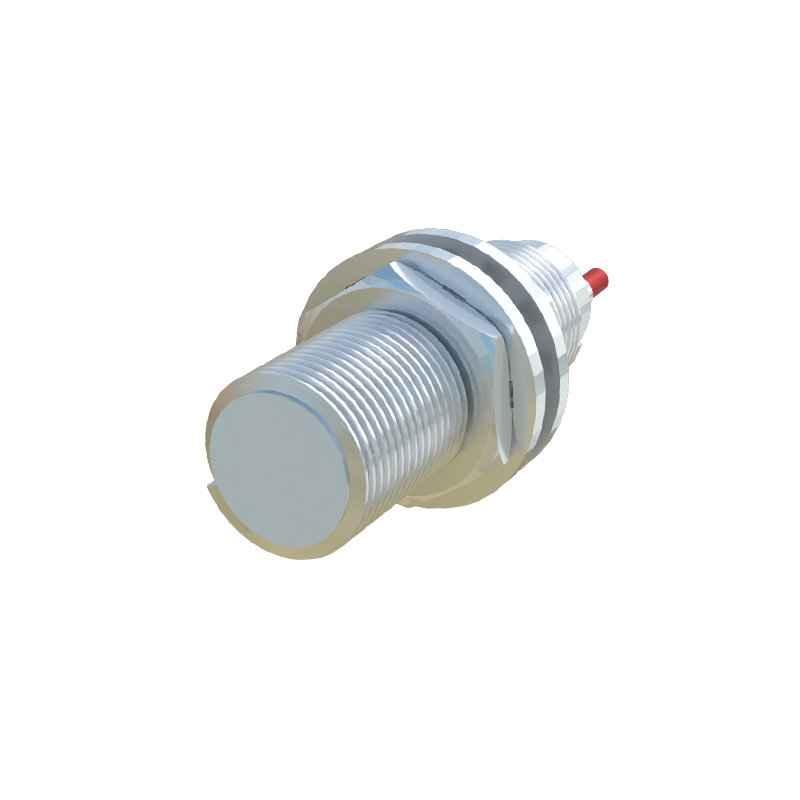
Proximity sensors are non-contact devices designed to detect the presence or absence of a target object within a defined sensing range without physical contact. They primarily function based on electromagnetic fields or capacitive changes. Inductive proximity sensors generate an oscillating electromagnetic field. When a metallic object enters this field, it induces eddy currents within the target, causing a change in the oscillation amplitude. This change is detected by the sensor's circuitry, triggering an output signal. These sensors are exclusively used for detecting ferrous and non-ferrous metals. Capacitive proximity sensors, on the other hand, create an electrostatic field. They can detect a much wider variety of materials, including metals, plastics, liquids, and granular substances, by sensing changes in capacitance caused by the target's dielectric constant. Both types are valued for their robustness, resistance to environmental contaminants like dust and oil, and high-speed switching capabilities.
Operating Principles of Photoelectric Sensors
Photoelectric sensors operate by emitting a beam of light, typically from an LED or laser diode, and detecting changes in the received light intensity. They consist of a transmitter (light source) and a receiver (photodetector). The detection method varies based on the sensor's configuration. The three main types are through-beam, retro-reflective, and diffuse reflective. Through-beam sensors have separate emitter and receiver units placed opposite each other; an object is detected when it interrupts the light beam. This type offers the longest sensing range and highest reliability. Retro-reflective sensors house both emitter and receiver in a single housing, using a reflector to bounce the light back; detection occurs when the beam is blocked. Diffuse reflective sensors also have a combined emitter and receiver but detect light reflected directly off the target object itself, making them suitable for detecting objects at varying distances without a separate reflector. Photoelectric sensors excel at detecting objects regardless of material composition, from transparent glass to opaque metals.
Key Performance Characteristics Comparison
When selecting between proximity and photoelectric sensors, several performance parameters are critical. Sensing range is a primary differentiator. Inductive proximity sensors typically have shorter ranges, from a few millimeters up to about 60 millimeters for larger models. Photoelectric sensors, especially through-beam types, can achieve ranges exceeding 100 meters. Response time is another factor; both sensor families offer very fast response, often in the microsecond range, suitable for high-speed production lines. Environmental robustness differs significantly. Proximity sensors, with their sealed, solid-state construction, are generally more immune to harsh conditions involving dust, mist, vibration, and washdowns. Photoelectric sensors can be affected by ambient light, fog, or heavy dust that obscures the light beam, though many models feature modulated light and filters to mitigate these issues. Finally, target material compatibility is decisive: inductive sensors detect only metals, capacitive sensors detect various materials based on dielectric constant, while photoelectric sensors can detect almost any material that affects a light beam.
Typical Industrial Applications
The choice between sensor technologies is heavily influenced by the specific application. Proximity sensors are the undisputed choice for metal detection tasks in challenging environments. Common applications include counting metal parts on a conveyor, detecting the position of a robotic arm or cylinder, end-of-travel detection in machinery, and in metalworking industries like stamping or CNC machining. Their durability makes them ideal for embedded applications within metal structures. Photoelectric sensors shine in applications requiring longer ranges or detection of non-metallic objects. They are extensively used in packaging lines to detect labels, bottles, and boxes; in material handling for object presence on conveyors; in the food and beverage industry for detecting transparent containers; and for security systems as part of light curtains. Diffuse sensors are often used for object positioning and fill-level detection in tanks.
Selection Guidelines and Best Practices
Selecting the right sensor requires a systematic evaluation of the application requirements. Start by defining the target material: if it is strictly metallic and the environment is dirty or wet, an