Introduction to Proximity Sensor Technology
Proximity sensors are indispensable components in modern industrial automation, providing non-contact detection of metallic and, in some cases, non-metallic objects. Among the various types, inductive proximity sensors are widely used for detecting metallic targets. Within this category, two distinct sensing face designs are prevalent: the M-type (also known as shielded or flush-mountable) and the PMP-type (non-shielded or non-flush-mountable). The fundamental difference lies in their magnetic field configuration and resulting installation characteristics, which dictate their suitability for specific applications.
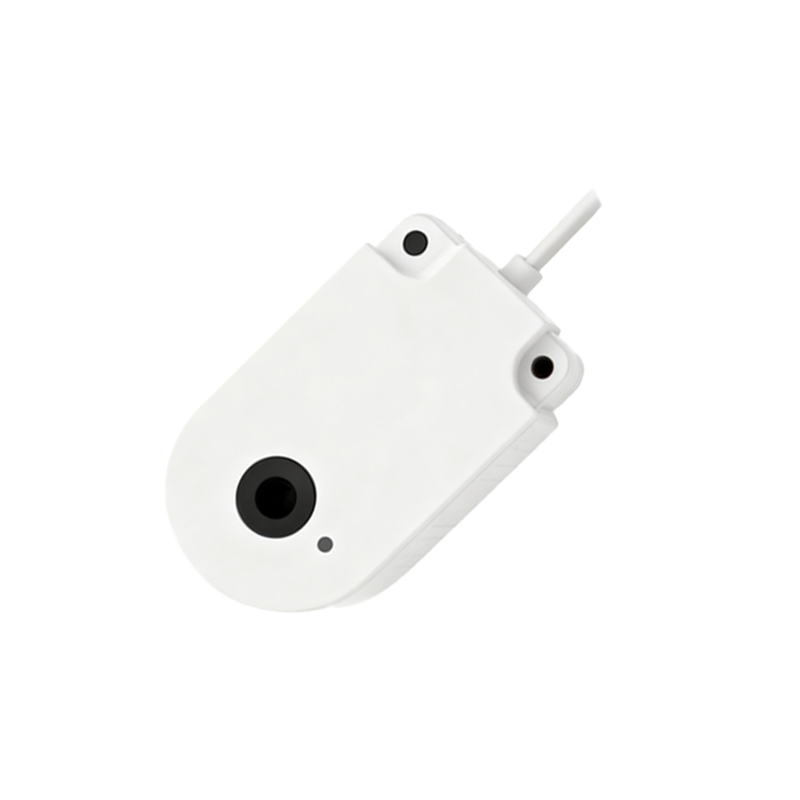
M-Type (Shielded) Proximity Sensor Characteristics
The M-type proximity sensor features a shielded sensing face. This shielding, typically a ferromagnetic metal ring around the active sensing coil, contains the sensor's oscillating magnetic field. This design prevents the magnetic field from extending laterally from the sides of the sensor. Consequently, M-type sensors can be installed flush with, or embedded into, a metal mounting surface without triggering a false detection from that surface. The sensing range is focused directly ahead of the sensor face. A key specification is the "rated operating distance" (Sn), which is standardized. For an M18 sensor, for example, this distance is typically 5mm or 8mm, depending on the model. The shielded design offers excellent resistance to electromagnetic interference from adjacent metallic structures or other sensors.
PMP-Type (Non-Shielded) Proximity Sensor Characteristics
In contrast, the PMP-type proximity sensor has a non-shielded sensing face. It lacks the surrounding ferromagnetic ring, allowing its magnetic field to extend not only forward but also laterally around the sides of the sensor housing. This results in a larger, more diffuse detection zone. However, this characteristic means the sensor cannot be mounted flush in metal. If the sensing face is installed level with a metal surface, the sensor will detect that surface as a permanent target, causing a constant "on" state. Therefore, PMP sensors require a non-metallic surround or must be mounted with a stand-off from any metallic mounting surface. A significant advantage is that for a given housing size, the PMP-type often offers a longer sensing range compared to its M-type counterpart.
Comparative Analysis: Sensing Range and Installation
The most direct comparison is in sensing range. For a standard M18 cylindrical sensor, an M-type might have a sensing distance of 8mm, while a PMP-type of the same physical size could achieve 12mm or 15mm. This makes PMP sensors advantageous where longer reach is needed or where the target size is small. Installation is the other critical differentiator. M-type sensors offer flexible mounting; they can be sunk into a metal bracket, providing a protected, flush installation that is mechanically robust and resistant to physical damage. PMP sensors demand careful planning of the mounting environment to avoid interference from nearby metal, but their lateral field can be beneficial for detecting targets that may not approach directly head-on.
Application-Specific Selection Guidelines
Choosing between M and PMP types depends entirely on the application. Use M-type (shielded) sensors when: mounting in metal is required (e.g., in a machine tool frame, robotic arm, or metal fixture); sensors need to be installed side-by-side without mutual interference; or the application demands a precise, focused sensing field. Opt for PMP-type (non-shielded) sensors when: maximum sensing range from a compact housing is the priority; the target approaches from a slight angle; or the mounting environment is non-metallic (e.g., plastic or composite structures). In conveyor line object detection, for instance, an M-type might be used for precise position verification on a metal chassis, while a PMP-type could detect irregularly passing objects from a longer distance.
Electrical and Performance Considerations
Beyond the mechanical and range differences, electrical performance is generally consistent between the two types, sharing similar output configurations (PNP/NPN, NO/NC), voltage ranges, and switching frequencies. However, the repeat accuracy and temperature stability might have subtle variances due to the different coil designs. Engineers must also consider the "correction factor" for different metals. Both types are primarily tuned for steel (Fe). For detecting stainless steel, brass, or aluminum, the effective sensing distance is reduced, and the reduction factor can differ slightly between M and PMP designs, as stated in the manufacturer's datasheet.