Introduction to Eddy Current Proximity Sensing
Eddy current proximity sensors represent a fundamental category of non-contact sensing technology widely employed in industrial automation and control systems. These devices operate on the principle of electromagnetic induction to detect the presence or absence of metallic objects without any physical contact. Their ability to function reliably in harsh environments—characterized by oil, dust, and vibration—makes them indispensable in modern manufacturing, automotive assembly, and aerospace applications. Unlike capacitive or photoelectric sensors, eddy current sensors specifically target conductive materials, offering high precision and repeatability for position, displacement, and vibration measurement tasks. The core of their operation lies in generating a high-frequency electromagnetic field and analyzing the interaction with a target material.
Core Working Principle and Physics
The operation of an eddy current proximity sensor is grounded in Faraday's Law of electromagnetic induction and Lenz's Law. The sensor contains a coil wound around a ferrite core, which is energized by a high-frequency alternating current. This current generates an oscillating magnetic field that extends from the sensor's active face. When a conductive target, such as steel, aluminum, or copper, enters this magnetic field, circulating currents—known as eddy currents—are induced on the surface of the target. These eddy currents, in turn, generate their own opposing magnetic field, which interacts with the sensor's original field. This interaction alters the impedance of the sensor's coil. The integrated electronics within the sensor continuously monitor this change in impedance, amplitude, or frequency of the oscillation. A significant change is processed to trigger a switching output or provide an analog signal proportional to the distance to the target.
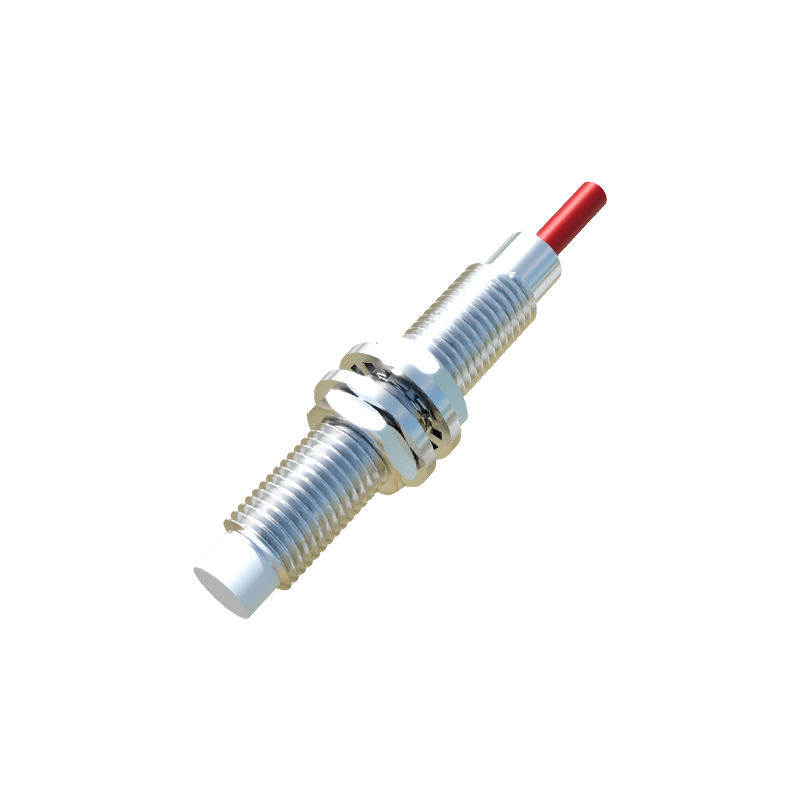
Key Components and Sensor Construction
A typical eddy current proximity sensor comprises several critical components housed in a robust casing, often made of stainless steel or nickel-plated brass. The primary element is the sensing coil and its ferrite core, which determines the sensor's electromagnetic characteristics and sensing range. This assembly is connected to an oscillator circuit that generates the high-frequency field. Following this is a demodulator or signal conditioning circuit that converts the complex changes in the coil's electrical parameters into a usable DC voltage or current signal. Finally, an output stage, which can be a solid-state switch (PNP/NPN), analog output (4-20 mA, 0-10V), or even a digital IO-Link interface, delivers the measurement result to the control system. The design often includes shielding to make the sensor insensitive to adjacent metals and environmental factors.
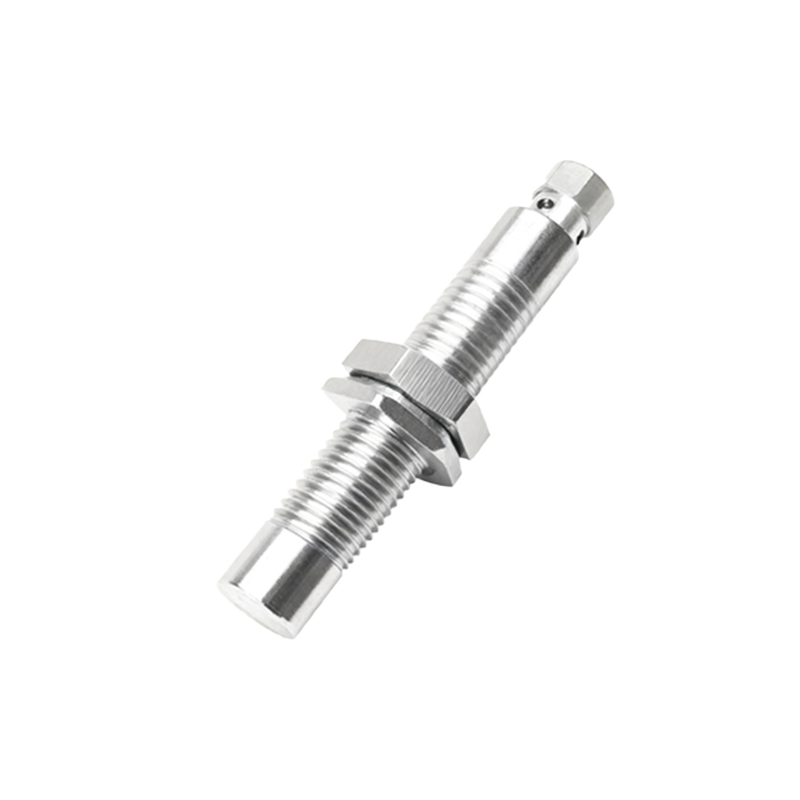
Performance Characteristics and Advantages
Eddy current sensors offer a distinct set of performance advantages. They provide exceptionally high resolution and repeatability, capable of detecting sub-micron displacements, which is crucial for precision machining and quality inspection. Their response frequency is very high, often in the kilohertz range, allowing them to detect rapidly moving or vibrating targets. Since the sensing is based on electromagnetic fields, they are completely immune to contaminants like dust, dirt, oil, and water, making them ideal for dirty industrial environments. They are not affected by target surface color or transparency, a limitation for optical sensors. Furthermore, they can operate effectively on ferrous and non-ferrous metals, though the sensing distance varies with material conductivity and permeability.
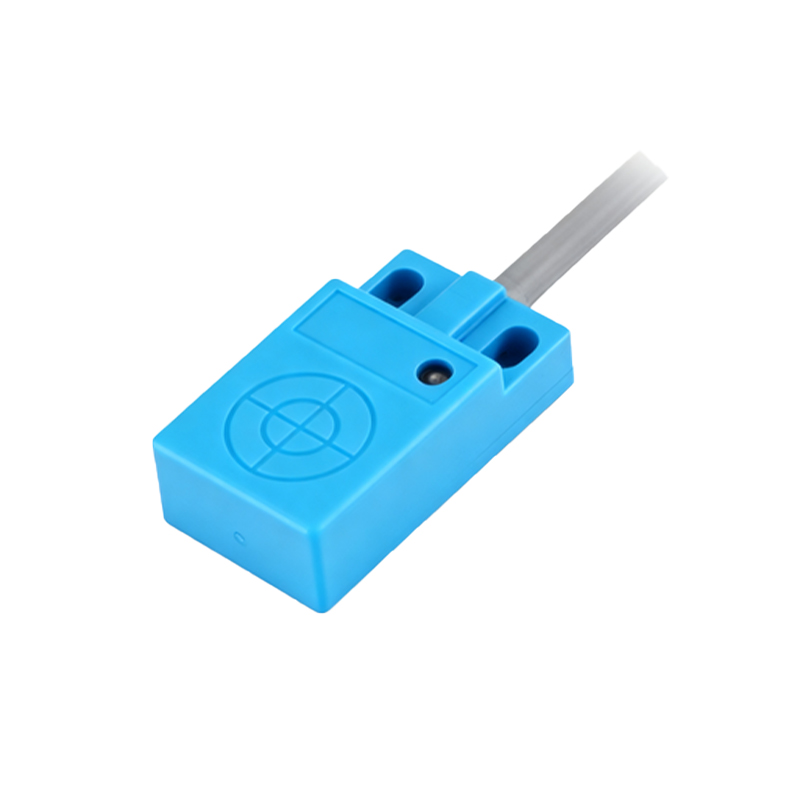
Common Industrial Applications
The application spectrum for eddy current proximity sensors is vast. In machine tools, they are used for precise tool wear monitoring, spindle runout measurement, and part positioning. On production lines, they count metal parts, control sorting gates, and verify the presence of components. In the automotive sector, they monitor crankshaft and camshaft position and speed. A critical application is in vibration analysis and condition monitoring of rotating machinery like turbines and motors, where they measure shaft displacement and eccentricity to predict maintenance needs. They are also employed in metal detection systems, thickness measurement of non-conductive coatings on metal, and as non-contact limit switches in automated systems.
Critical Selection Criteria and Considerations
Selecting the appropriate eddy current sensor requires careful analysis of several parameters. The first is the target material; sensors must be chosen or calibrated for the specific metal type (e.g., steel, aluminum) as the sensing distance (rated operating distance) differs. The required sensing distance and installation constraints dictate the sensor's size and shape (threaded barrel, rectangular). The output type (digital switch, analog, or special) must match the controller's input card. Environmental factors like temperature range, pressure, and potential chemical exposure determine the required housing material and ingress protection (IP) rating. For high-precision tasks, specifications like linearity error, temperature drift, and frequency response become paramount. Finally, considerations about cable connection (integral or connector) and mounting conditions (flush or