Introduction to Proximity Sensing
Proximity sensors are vital components in modern industrial automation, providing non-contact detection of objects within a defined range. Their ability to operate without physical contact ensures reliability, longevity, and high-speed performance in demanding environments. These sensors are fundamental for tasks such as object counting, position verification, limit switching, and safety monitoring. The selection of the appropriate sensor type depends on factors including the target material, required sensing distance, environmental conditions, and cost considerations. This guide provides a detailed classification of the primary proximity sensor technologies used across various industries.
Inductive Proximity Sensors
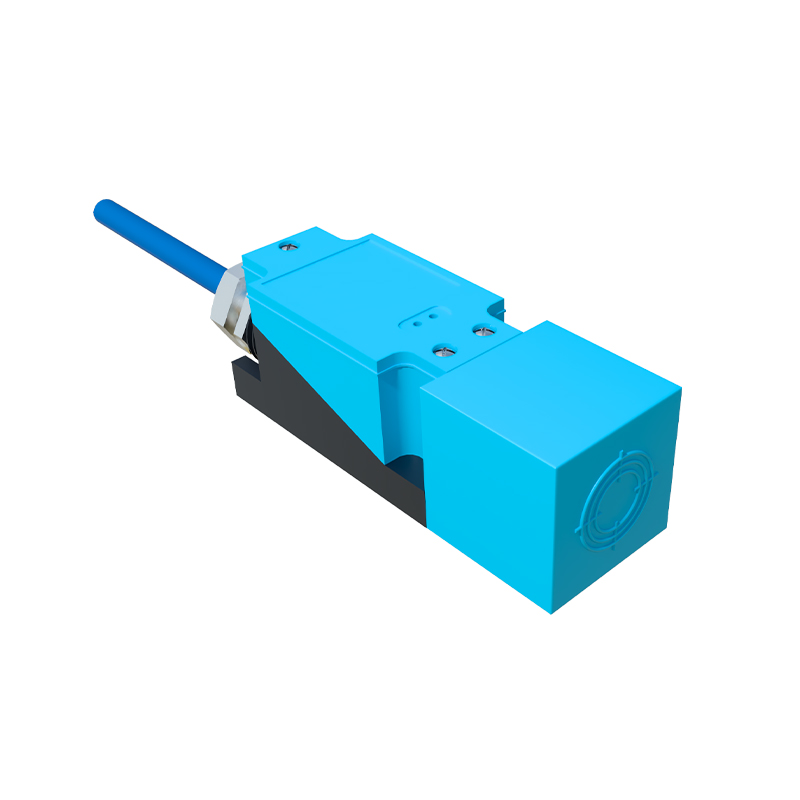
Inductive proximity sensors are designed specifically to detect metallic objects, primarily ferrous metals like steel and iron, though some models can also sense non-ferrous metals like aluminum, copper, and brass. They operate on the principle of electromagnetic induction. The sensor generates an oscillating electromagnetic field from its active face. When a metallic target enters this field, it induces eddy currents within the metal, which in turn dampens the oscillation amplitude of the sensor's internal LC circuit. This change is detected and triggers a switching output. These sensors are highly robust, resistant to dirt, dust, and moisture, and are ideal for harsh industrial settings. Common applications include detecting the presence of metal parts on conveyor lines, monitoring gear teeth rotation, and serving as limit switches in machine tools.
Capacitive Proximity Sensors
Capacitive proximity sensors can detect a much wider range of materials compared to inductive types, including metals, plastics, glass, wood, paper, and liquids. Their operation is based on changes in capacitance. The sensor face acts as one plate of a capacitor, with the target object acting as the other plate. An oscillator circuit creates an electrostatic field. When a target enters this field, it alters the dielectric constant and thus the capacitance of the system. This change increases the oscillation amplitude until it reaches a threshold that triggers the output switch. They are particularly useful for non-metallic object detection, level sensing of powders or liquids through container walls, and applications requiring detection of materials with low dielectric constants. Sensitivity adjustments allow them to ignore certain container materials and focus on the contents.
Ultrasonic Proximity Sensors
Ultrasonic sensors utilize sound waves beyond the human hearing range (typically above 20 kHz) to detect objects and measure distance. They consist of a transmitter that emits ultrasonic pulses and a receiver that listens for the echo reflected from a target. By calculating the time interval between the emission and reception of the echo (time-of-flight principle), the sensor can determine the presence and distance of an object. These sensors are effective for detecting objects of virtually any material, shape, color, or transparency, as long as the surface can reflect sound. They are excellent for long-range detection (up to several meters), level measurement in silos or tanks, and applications involving clear objects or challenging environmental conditions like smoke or dust. However, they can be affected by temperature variations, air turbulence, and soft, sound-absorbing materials.
Photoelectric Proximity Sensors
Photoelectric sensors use light beams to detect the presence or absence of objects. They are categorized into three main operating modes: through-beam, retro-reflective, and diffuse (proximity) mode. For proximity sensing, the diffuse mode is most common. In this setup, the sensor houses both the light emitter (usually an LED producing visible red, infrared, or laser light) and the receiver. The emitted light strikes the target object and is diffusely reflected back to the receiver. Detection occurs when the reflected light intensity exceeds a set threshold. Photoelectric sensors offer very long sensing ranges, high speed, and the ability to detect small objects. They can sense almost any material but may struggle with highly transparent or extremely dark, non-reflective surfaces. Common uses include bottle counting on packaging lines, detecting transparent films, and object positioning.
Magnetic Proximity Sensors (Reed Switches & Hall Effect)
Magnetic proximity sensors detect the presence of a permanent magnet. The two primary technologies are reed switches and Hall effect sensors. A reed switch consists of two ferromagnetic, hermetically sealed reeds inside a glass tube. When an external magnetic field of sufficient strength is applied, the reeds attract each other and make contact, closing the circuit. Hall effect sensors are solid-state devices that generate a voltage (the Hall voltage) proportional to the strength of an applied magnetic field perpendicular to the current flow. When this voltage exceeds a threshold, the output switches. Both types are used for detecting the position of cylinders with embedded magnets (pneumatic cylinders), door/window closure sensing, and speed detection in rotating shafts. They are