Introduction to Proximity Switch Sensors
In the realm of industrial automation and electrical control systems, proximity switch sensors stand as fundamental components for non-contact object detection. These devices, often simply called proximity sensors, detect the presence or absence of an object within a specified sensing range without any physical contact. This non-contact nature is their primary advantage, leading to high reliability, long operational life, and minimal maintenance requirements. They function by emitting an electromagnetic field or a beam of electromagnetic radiation and then looking for changes in the field or return signal. The target object, often referred to as the actuator, modifies the field upon entering the sensing zone, triggering the sensor's output state to change. This seamless operation makes them indispensable in applications ranging from assembly line counting and machine tool positioning to safety interlocking and robotic guidance.
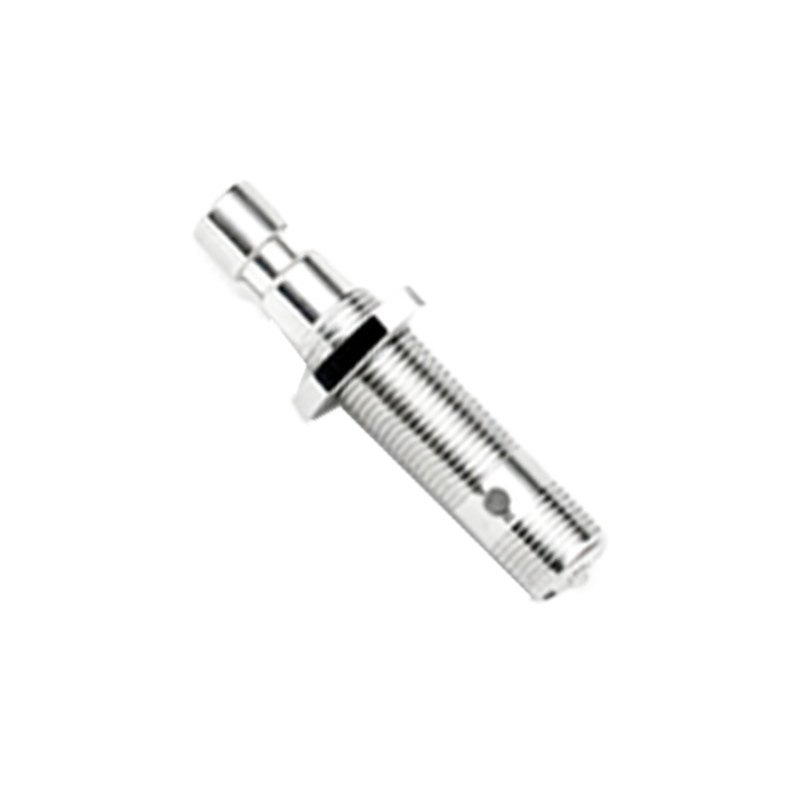
Core Operating Principles and Technologies
Proximity sensors are categorized based on their underlying detection technology, each suited for different materials and environmental conditions. Inductive proximity sensors are the most common type, designed to detect metallic objects. They contain a coil wound around a ferrite core connected to an oscillator. When a metal object enters the alternating magnetic field generated by the oscillator, eddy currents are induced in the object. This causes a load on the oscillator, leading to a change in oscillation amplitude. This change is detected by the threshold circuit, which subsequently switches the sensor's output state. Capacitive proximity sensors, on the other hand, can detect both metallic and non-metallic materials such as plastic, wood, or liquids. They generate an electrostatic field. When a target object enters this field, it alters the capacitance of the circuit, which is measured to trigger an output. Ultrasonic sensors use sound waves, while photoelectric sensors use light beams, but both are also considered under the broad umbrella of proximity sensing for specific applications.
Key Specifications and Selection Criteria
Selecting the appropriate proximity sensor requires a careful analysis of several technical parameters. The sensing distance, or nominal range, is critical and is specified for a standard target. Engineers must consider factors like temperature coefficients and supply voltage tolerances that can affect this range. The housing material, typically nickel-plated brass, stainless steel, or PBT plastic, must be chosen based on the environmental conditions, including exposure to chemicals, oils, or washdowns. Output configuration is another vital decision point; sensors come with NPN (sinking) or PNP (sourcing) transistor outputs, analog outputs, or relay contacts. The choice depends on the compatibility with the programmable logic controller (PLC) or other control circuitry. Other essential specifications include response frequency (how quickly the sensor can detect objects in succession), hysteresis (the difference between the operating and release points to prevent chatter), and protection class (IP rating for dust and water ingress).
Wiring and Integration into Control Systems
Proper wiring is paramount for the reliable operation of proximity sensors in an electrical panel or machine. A typical three-wire DC sensor will have connections for brown (positive supply), blue (common or negative), and black (output signal). For a PNP sensor, the black wire provides a positive voltage to the load when activated. For an NPN sensor, it provides a path to ground. It is crucial to ensure the sensor's voltage rating matches the control system's power supply, commonly 10-30V DC. Shielding and proper grounding are necessary in electrically noisy environments to prevent false triggering. The sensor output is typically connected to a digital input module on a PLC. When integrating, engineers must also account for the load current of the input module to ensure it does not exceed the sensor's switching capacity. Many modern sensors feature short-circuit and reverse polarity protection, enhancing system robustness.
Application Examples in Industrial Settings
The versatility of proximity sensors is demonstrated across countless industrial applications. In automotive manufacturing, inductive sensors verify the presence of metal engine blocks on conveyor belts or count gear teeth for rotational speed monitoring. Capacitive sensors are used in packaging lines to detect the level of liquid in bottles or the presence of plastic caps. On machine tools, they serve as precise limit switches to determine the end-of-travel for milling heads or lathe carriages, ensuring repeatable positioning. In material handling, they detect the position of pallets on automated storage and retrieval systems (AS/RS). Safety applications include monitoring guard door positions; if a door is opened, the sensor sends a signal to immediately halt machine operation. Their ability to function in harsh, dirty environments where mechanical switches would fail makes them the preferred choice for modern industrial automation.
Maintenance, Troubleshooting, and Best Practices
While known for durability, proximity sensors require periodic inspection and correct installation for optimal longevity. Common issues include false triggers due