Introduction to Proximity Sensors
Proximity sensors, often referred to as proximity switches, are fundamental components in the realm of industrial automation and control systems. These non-contact electronic devices are engineered to detect the presence or absence of an object within a specified sensing range without any physical contact. Their primary function is to convert information about the presence of a target into an electrical signal. This capability is crucial for a myriad of applications, from simple object detection to complex positioning and sequencing tasks in automated production lines. The core principle involves generating an electromagnetic field or a beam of radiation and monitoring for changes caused by a target object entering the field. This non-contact nature eliminates mechanical wear and tear, ensuring high reliability, long operational life, and consistent performance even in harsh industrial environments characterized by dust, oil, or vibration.
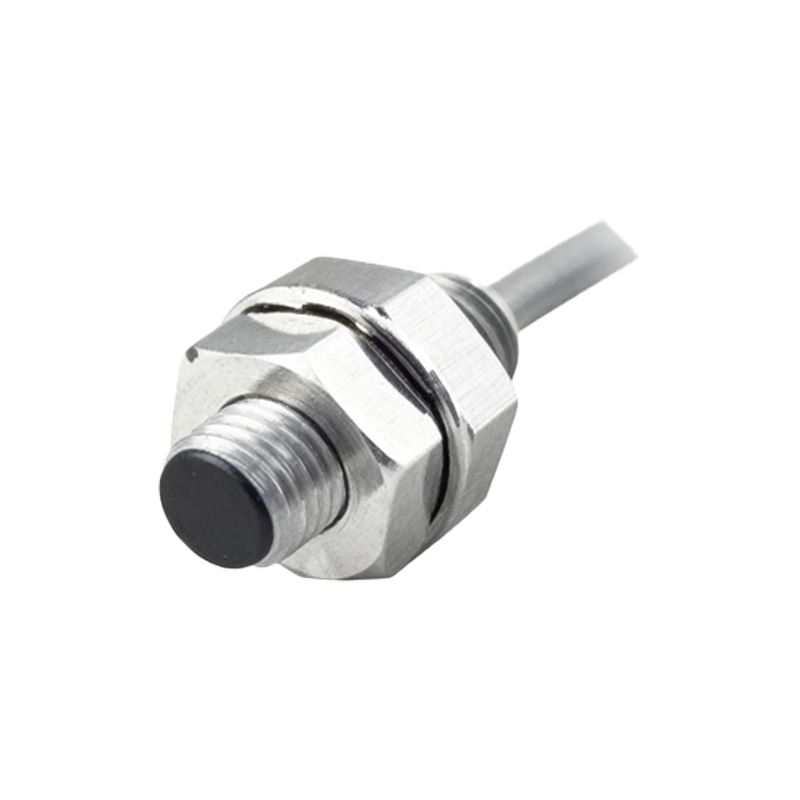
Key Operational Principles and Types
Proximity sensors operate based on different physical principles, leading to several distinct types, each suited for specific materials and applications. Inductive proximity sensors are the most common type used for detecting metallic objects. They generate an oscillating electromagnetic field. When a metallic target enters this field, it induces eddy currents within the metal, which dampens the oscillation of the sensor's coil. This change is detected and triggers a switching output. Capacitive proximity sensors, on the other hand, can detect both metallic and non-metallic materials, including liquids, powders, and plastics. They function by generating an electrostatic field and sensing the capacitance change when a target object enters the field. Photoelectric sensors use light beams (visible, infrared, or laser) to detect objects. They are highly versatile and can sense objects over long distances. Finally, ultrasonic sensors employ sound waves to measure distance to an object or detect its presence, making them effective for transparent or irregularly shaped objects where optical methods might fail.
Core Functions and Industrial Roles
The fundamental role of a proximity switch is to act as a digital "eye" for machinery. Its primary functions include position detection, end-of-travel limit sensing, counting, and object presence verification. In a conveyor system, for instance, inductive sensors can detect metal parts to control sorting gates or initiate a robotic pick-and-place operation. Capacitive sensors are often used in liquid level control within tanks or to detect the presence of plastic bottles on a filling line. As a limit switch, they provide critical safety and control by signaling when a moving part, like a robotic arm or a machine guard, has reached its intended position, preventing over-travel and potential damage. Their fast response time and high switching frequency make them indispensable for high-speed counting and sequencing applications, such as in packaging machinery or assembly stations, where precise timing is paramount for throughput and quality.
Advantages Over Mechanical Switches
The adoption of proximity sensors over traditional mechanical limit switches offers substantial advantages. Since there is no physical contact with the target, there is no mechanical wear on the sensor itself, leading to dramatically extended service life and reduced maintenance costs. The absence of moving parts also makes them highly resistant to vibration and shock. They provide exceptionally fast response times, often in the microsecond range, enabling their use in very high-speed processes. Furthermore, they are less susceptible to contamination from oil, coolant, or dust when properly selected and housed, ensuring stable operation in dirty environments. Their solid-state design allows for compact sizes, enabling installation in space-constrained locations. The output signal is clean and bounce-free, unlike mechanical contacts which can suffer from contact arcing and signal chatter, thus providing more reliable input to programmable logic controllers (PLCs) and other control systems.
Critical Selection Criteria for Engineers
Selecting the appropriate proximity sensor requires careful consideration of several technical parameters. The sensing distance, or nominal range, is a primary factor and must be chosen with a safety margin to account for installation tolerances and target material variations. The target material itself dictates the sensor type: inductive for metals, capacitive for a broader range, etc. The size and shape of the target also influence the effective sensing distance. Environmental conditions are crucial; engineers must consider ambient temperature, potential exposure to chemicals, washdown requirements (for IP69K rated sensors in food and beverage), and the presence of strong electromagnetic interference. The electrical output type (e.g., NPN sinking, PNP sourcing, analog, or IO-Link) must be compatible with the control system's input module. Finally, the physical housing style (barrel, rectangular, or ring-shaped) and connection method (pre-wired cable or quick-disconnect) are selected based on the mounting constraints and maintenance needs of the application.
Integration in Smart Manufacturing and IoT
The evolution of Industry 4.0 and the Industrial Internet of Things (II