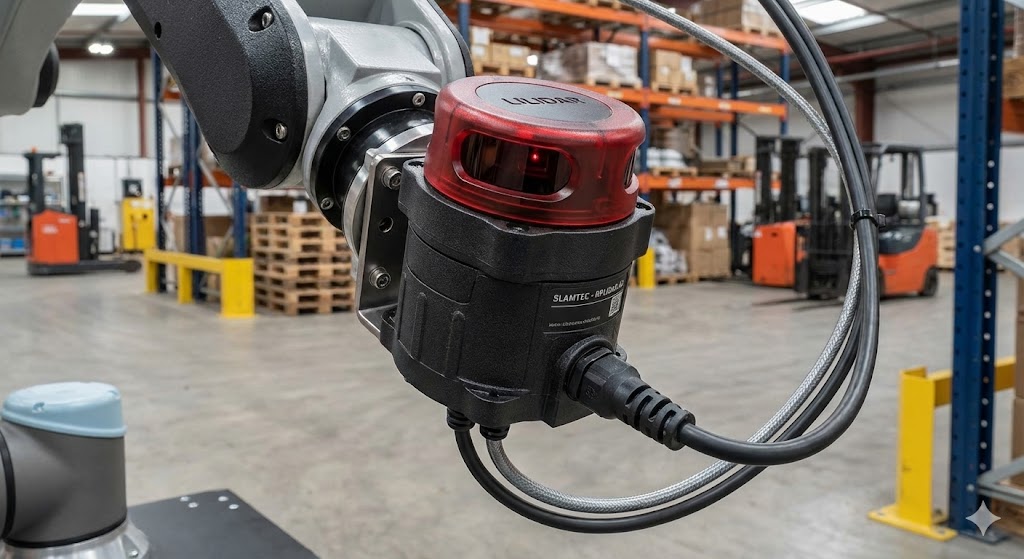
Infrared laser sensors have become a cornerstone technology for precise, non-contact distance measurement across a vast array of industries. Operating on the principle of emitting a modulated infrared laser beam and analyzing its reflection, these sensors offer a blend of accuracy, speed, and reliability that mechanical or ultrasonic alternatives often cannot match. The core mechanism involves calculating the time-of-flight (ToF) or phase shift of the emitted light. In direct time-of-flight systems, a short laser pulse is sent, and a high-speed receiver measures the time taken for the reflection to return. The distance is then derived using the constant speed of light. Phase-shift measurement, another prevalent method, involves modulating the intensity of the continuous laser beam at a known frequency. The distance is determined by measuring the phase difference between the emitted and reflected modulated signals, offering high precision for shorter ranges.
The advantages of infrared laser sensors are numerous. Their non-contact nature eliminates wear and tear, making them ideal for measuring delicate, hot, or moving objects. They provide exceptionally high measurement resolution, often down to the sub-millimeter level, and boast very fast response times, enabling real-time monitoring in dynamic processes. Furthermore, the focused, coherent nature of the laser beam minimizes interference from ambient light and allows for precise targeting, even over considerable distances. Modern sensors incorporate advanced optics and signal processing algorithms to filter out noise and enhance performance in challenging environments with dust, smoke, or varying surface reflectivities.
Applications for infrared laser distance sensors are ubiquitous. In industrial automation, they are critical for robotic guidance, conveyor belt monitoring, level control in silos, and dimensional inspection of manufactured parts. The automotive sector relies on them for advanced driver-assistance systems (ADAS), such as adaptive cruise control and collision avoidance. In consumer electronics, they enable autofocus in smartphones and cameras, as well as gesture recognition. Construction and surveying professionals use handheld laser distance meters for quick and accurate measurements. Even in emerging fields like robotics and drones, these sensors are essential for navigation, obstacle detection, and mapping.

When selecting an infrared laser sensor, several key parameters must be considered. The measuring range defines the minimum and maximum distances the device can handle accurately. Measurement rate or frequency indicates how many readings per second it can provide, crucial for high-speed applications. Accuracy and repeatability specifications detail the sensor's precision. The type of output (analog voltage, current, digital interfaces like RS-485 or IO-Link) determines its integration capability with control systems. Environmental ratings for temperature, humidity, and ingress protection (IP code) are vital for harsh industrial settings. Additionally, the laser safety class (typically Class 1 or Class 2) is paramount, ensuring the device is eye-safe under normal operating conditions.
Looking ahead, the evolution of infrared laser sensing continues. The integration of ToF technology into compact, low-cost semiconductor chips is driving its proliferation into mass-market applications. Multi-pixel ToF sensors are enabling 3D depth mapping for facial recognition and augmented reality. Furthermore, the development of longer-range, eye-safe lasers operating at specific wavelengths is expanding possibilities in areas like forestry, security perimeters, and autonomous vehicle LiDAR. With ongoing advancements in miniaturization, power efficiency, and intelligent data processing, infrared laser sensors are poised to become even more embedded in the fabric of smart technology, providing the essential "eyes" for machines to perceive and interact with the physical world with ever-greater fidelity.