What is a Proximity Sensor Core?
At the heart of every inductive proximity sensor lies a critical component known as the core. This is not merely a physical support structure but the functional centerpiece that enables non-contact detection of metallic objects. The core is typically a ferromagnetic component, often made from materials like ferrite or powdered iron, around which a coil of wire is wound. When an alternating current flows through this coil, it generates an oscillating electromagnetic field. The core's primary role is to concentrate and shape this magnetic flux, creating a defined sensing field in front of the sensor's face. Without this core, the magnetic field would be weak, diffuse, and largely ineffective for precise detection. The design, material, and geometry of the core directly dictate the sensor's range, sensitivity, frequency response, and overall stability in various industrial environments.
Core Materials and Their Properties
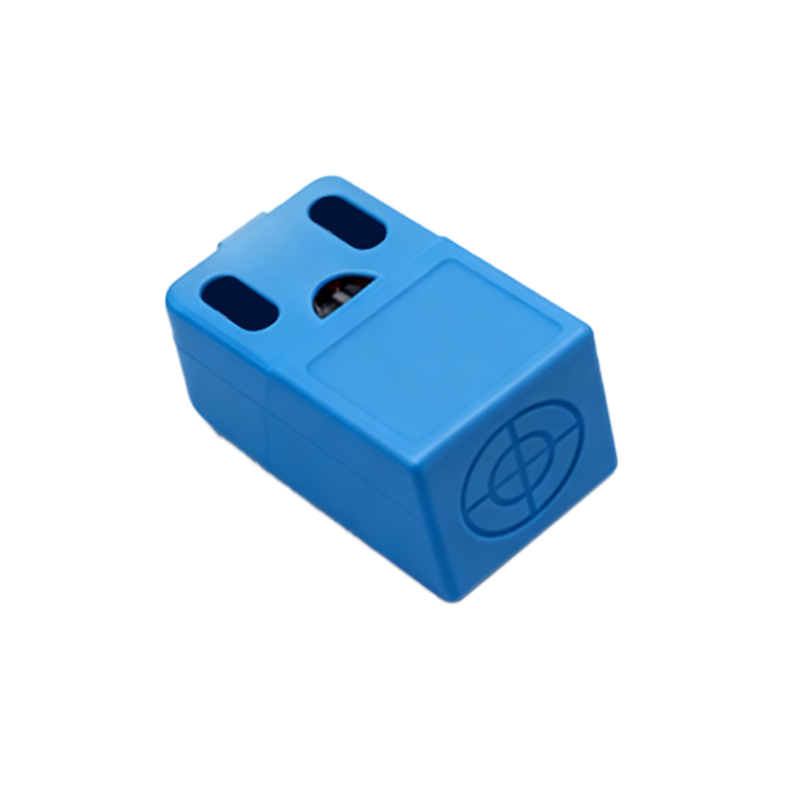
The choice of material for the proximity sensor core is a fundamental engineering decision. Ferrite cores are among the most common, prized for their high electrical resistivity which minimizes eddy current losses at high frequencies. This makes them ideal for sensors operating in the kHz range, offering good sensitivity and stable performance. Powdered iron cores, often composed of insulated iron particles, provide high magnetic permeability and saturation flux density. They are robust and suitable for applications requiring detection of larger or more massive ferrous metals, though they may exhibit higher core losses. Advanced materials like nanocrystalline alloys are also employed in specialized sensors, offering exceptional magnetic properties for ultra-sensitive or high-temperature applications. Each material presents a trade-off between factors like initial permeability, saturation point, temperature stability, and cost.
Core Geometry and Sensing Performance
The physical shape of the core is engineered to optimize the sensing field. A pot core, for instance, features a central post surrounded by an outer ring, creating a shielded and highly directional magnetic field. This design offers excellent immunity to side-mounted metallic objects and provides a precise, focused sensing range. E-cores and U-cores are also utilized, shaping the magnetic path to enhance field projection and sensitivity. The size of the core directly influences the nominal sensing distance; a larger core can generate a stronger and more extended field, enabling detection at greater ranges. Engineers meticulously design the core's cross-sectional area and magnetic path length to achieve the desired balance between switching frequency, hysteresis, and the sensor's physical size constraints.
The Role of the Core in Oscillator Circuits
In a standard inductive proximity sensor, the wound core forms the inductive element (L) of an LC oscillator circuit. The core's properties determine the inductance value. When a metallic target enters the sensing field, eddy currents are induced in the target. These currents draw energy from the oscillator, effectively increasing the losses in the core's magnetic circuit. This action dampens the oscillation amplitude. The sensor's electronics monitor this amplitude change. A high-quality core ensures a strong, stable initial oscillation and a pronounced damping effect, leading to reliable and repeatable switching signals. The core's ability to maintain consistent magnetic characteristics over temperature fluctuations is crucial for preventing false triggers in demanding conditions.
Shielding and Its Impact on Core Function
Many proximity sensors incorporate a shielding mechanism, often a metal sleeve (typically ferromagnetic) that surrounds the core and coil assembly. This shield serves a vital purpose: it channels the magnetic flux lines to emanate primarily from the front face of the sensor. A shielded (or "flush-mountable") core design allows the sensor to be installed embedded in a metal bracket without the bracket itself being detected, as the magnetic field is prevented from radiating to the sides. In contrast, an unshielded core allows a broader, less directional field. While this can slightly increase the sensing range, it makes the sensor susceptible to interference from adjacent metallic structures. The choice between shielded and unshielded designs is a direct application of core and magnetic path engineering.
Applications and Selection Criteria
The specific core design dictates the sensor's suitability for various tasks. For high-speed counting on assembly lines, a core material and geometry that support a high switching frequency are essential. In heavy machinery for position detection of large steel parts, a core with high saturation resistance is critical. For weld-field immunity in robotic welding cells, a core that maintains stability amidst strong external magnetic interference is selected. When specifying a sensor, engineers must consider the target material (steel, aluminum, brass), the required sensing distance, the operating temperature, the need for flush mounting, and the electrical noise environment—all factors intimately connected to the performance of the sensor's magnetic core.
Maintenance and Long-Term Reliability
The core is a solid-state component with no moving parts, contributing to the