Introduction to Long Range Inductive Proximity Sensors
In the realm of industrial automation, the ability to detect metallic objects without physical contact is a cornerstone of efficiency and reliability. Among the various sensing technologies available, inductive proximity sensors stand out for their robustness and precision. Long-range variants of these sensors push the boundaries further, offering extended detection distances that unlock new possibilities in material handling, automotive manufacturing, and heavy machinery applications. These devices operate on the fundamental principle of electromagnetic induction, generating an oscillating electromagnetic field from a coil within the sensor. When a metallic target enters this field, eddy currents are induced on the target's surface, causing a change in the oscillation amplitude. This change is detected by the sensor's circuitry, triggering an output signal. The "long-range" capability is achieved through sophisticated coil design, optimized oscillator circuits, and advanced signal processing, allowing for stable detection of ferrous and non-ferrous metals at distances significantly greater than standard inductive sensors.
Core Operating Principles and Technical Advancements
The extended sensing range is not merely a matter of amplifying a signal; it involves a holistic engineering approach. Key to this is the design of the sensing coil. Engineers utilize specialized ferrite cores and winding techniques to shape and project the electromagnetic field more effectively over a longer distance. Furthermore, modern long-range inductive sensors incorporate high-frequency oscillators and microprocessors with sophisticated algorithms. These algorithms can distinguish between the subtle signal changes caused by a genuine target and environmental noise, such as temperature fluctuations or electromagnetic interference from nearby equipment. This results in a sensor with a high signal-to-noise ratio, ensuring reliable switching even at the limits of its nominal range. Another critical advancement is the development of factor-1 sensors, which can detect all metals (like steel, aluminum, copper) at the same rated operating distance, simplifying system design and sensor selection for applications with varying target materials.
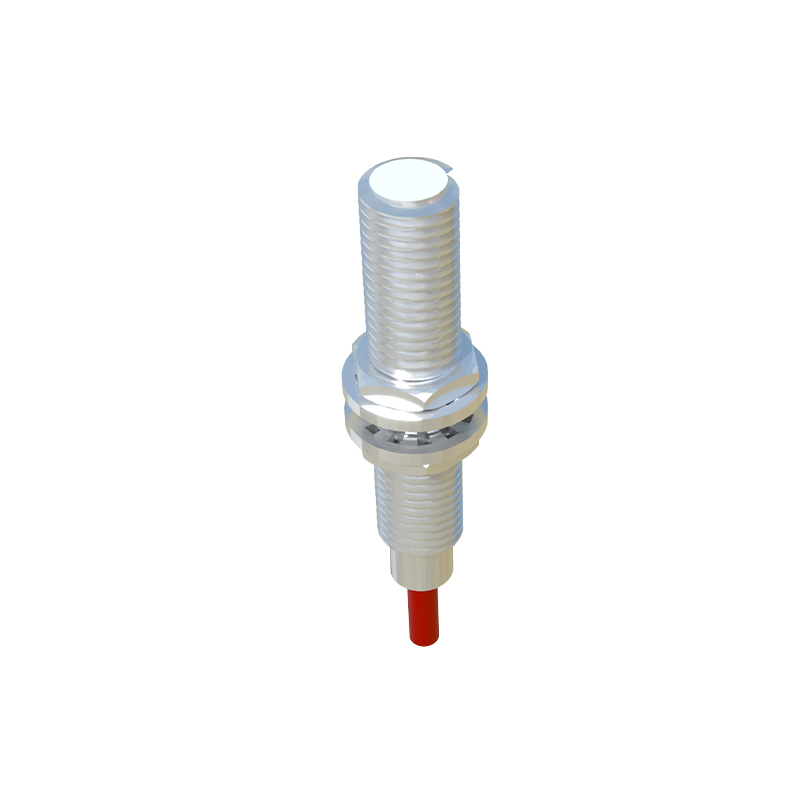
Key Design Features and Specifications
When selecting a long-range inductive proximity sensor, several specifications are paramount. The rated operating distance (Sn) is the primary parameter, typically ranging from 15mm to 40mm for cylindrical sensors, and even up to 70mm for some rectangular or block-style designs, far exceeding the 5-10mm range of standard sensors. Hysteresis, the difference between the switch-on and switch-off points, is carefully controlled to prevent output chattering. These sensors are often housed in rugged, nickel-plated brass or stainless-steel barrels with PTFE-coated faces to resist mechanical wear, cutting fluids, and chemicals. They commonly feature LED status indicators for diagnostics and offer output types including DC 3-wire (PNP/NPN), NO/NC configurations, and analog (4-20mA or 0-10V) versions for distance-proportional measurement. Many are also designed to meet high ingress protection ratings like IP67 and IP69K, making them suitable for washdown environments in food and beverage processing.
Primary Industrial Applications and Benefits
The extended range of these sensors solves numerous challenges in automation. In automotive assembly lines, they are used for early detection of vehicle chassis on overhead conveyors, allowing more time for downstream processes to prepare. In palletizing and packaging systems, they can sense the presence of metal pallets or containers from a greater distance, enabling smoother deceleration and positioning of robotic arms. Within heavy industries like steel mills or foundries, they provide a safety margin for detecting large, hot metal objects on roller conveyors without risk of damage from heat or impact. The primary benefits are clear: increased machine safety by allowing earlier detection, enhanced process flexibility by providing a larger installation and adjustment window, and reduced downtime by minimizing false triggers and physical wear associated with contact-based limit switches.
Installation Considerations and Best Practices
Proper installation is crucial to achieving the stated performance of a long-range inductive sensor. A fundamental rule is to maintain adequate clearance from surrounding metal objects, known as the lateral and flush-mounting distances specified by the manufacturer. Installing the sensor too close to a metal bracket or machine frame can dampen its electromagnetic field, drastically reducing the effective sensing range. For sensing non-ferrous metals like aluminum or copper, the effective operating distance will be less than the rated Sn (which is usually calibrated for mild steel); this reduction factor must be accounted for in the design. Environmental factors such as extreme temperatures, strong magnetic fields, or conductive dust can also influence performance. Implementing proper shielding and selecting sensors with appropriate temperature ratings are essential steps. Regular maintenance, including cleaning the sensor face from debris and verifying the switching function, ensures long-term reliability.
Future Trends and Conclusion
The future of long-range inductive sensing is intertwined with Industry 4.0 and the Industrial