Introduction to Proximity Sensing
A proximity sensor is a non-contact electronic device designed to detect the presence or absence of an object within its sensing field without any physical contact. This fundamental capability makes it indispensable in modern industrial automation, robotics, consumer electronics, and safety systems. Unlike limit switches that require mechanical contact, proximity sensors offer high reliability, long operational life, and the ability to detect a wide variety of materials, including metals, plastics, and liquids. The core principle involves generating an electromagnetic field or a beam of radiation and monitoring changes in the field or return signal caused by a target object. The specific technology employed dictates the sensor's construction, performance characteristics, and suitable applications.

Core Sensing Element and Technology Types
The heart of any proximity sensor is its sensing element, which varies significantly based on the underlying detection technology. The four primary types are inductive, capacitive, ultrasonic, and photoelectric. Inductive sensors contain a coil wound around a ferrite core, forming an oscillator circuit. They generate an oscillating electromagnetic field and detect the eddy current losses induced in metallic targets. Capacitive sensors utilize a capacitor plate as the sensing face. They detect targets by measuring changes in capacitance caused by the dielectric properties of the target material entering the electrostatic field. Ultrasonic sensors employ a piezoelectric transducer to emit high-frequency sound waves and receive their echo, calculating distance based on the time-of-flight. Photoelectric sensors consist of a light emitter (usually an LED or laser diode) and a receiver, detecting the interruption or reflection of a light beam.
Internal Electronic Circuitry
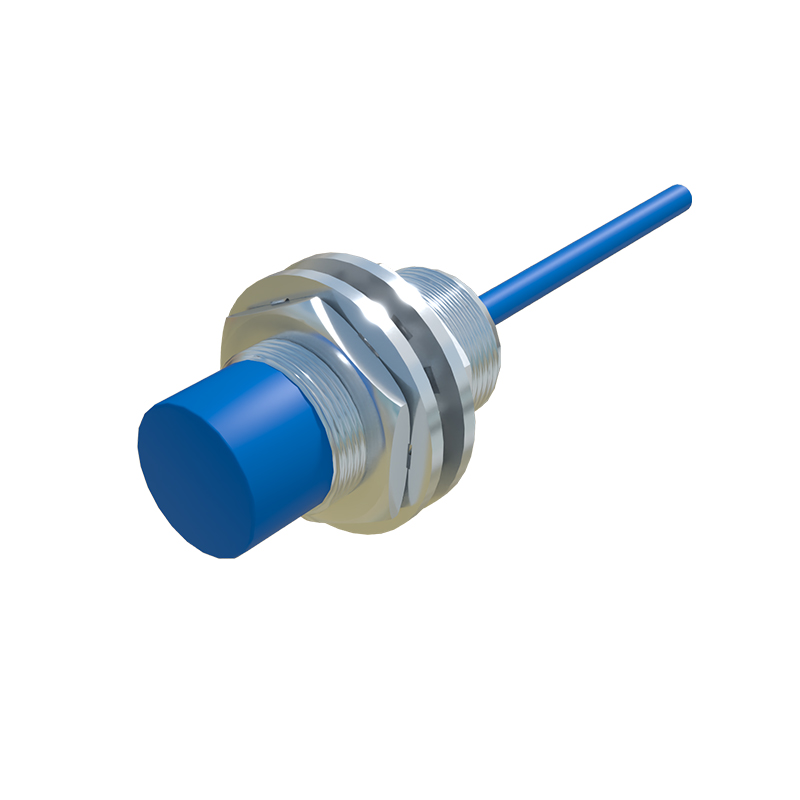
Surrounding the core sensing element is a sophisticated electronic circuit responsible for signal generation, processing, and output. This circuitry typically includes an oscillator to create the high-frequency field (for inductive/capacitive types) or pulse the emitter (for photoelectric/ultrasonic). A demodulator or signal conditioning circuit converts the minute changes detected by the sensing element into a clean, usable electrical signal. This signal is then fed into a threshold detector or comparator. Once the signal strength exceeds a pre-set threshold—indicating a target is present—the output stage is triggered. The output stage commonly features a solid-state switch, such as an NPN or PNP transistor, or a relay, providing a digital ON/OFF signal to the connected controller like a PLC.
Housing and Mechanical Construction
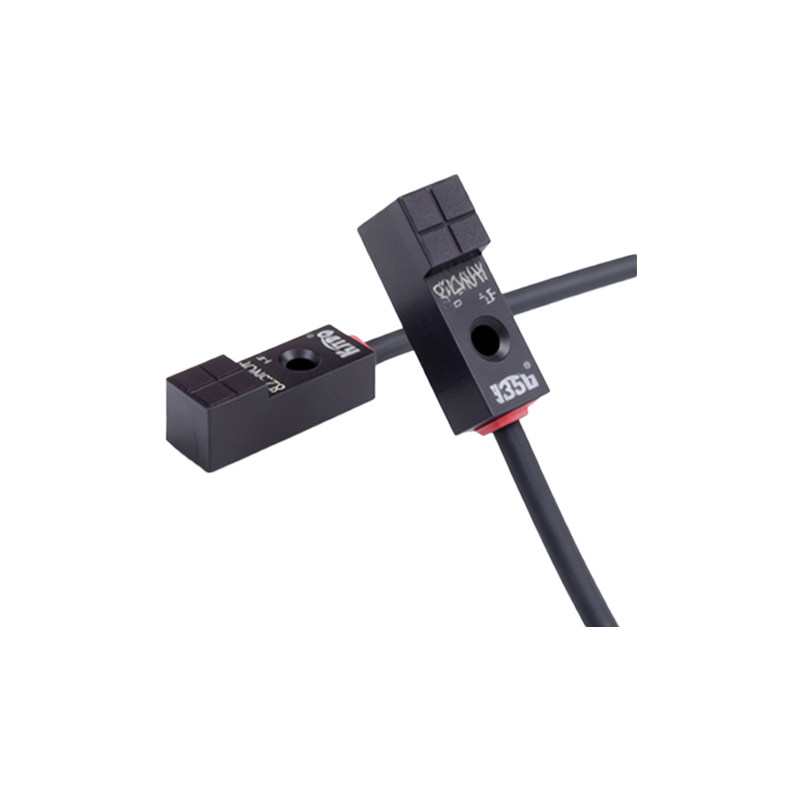
The robust housing, or body, protects the delicate internal components from harsh industrial environments. It is typically manufactured from materials like nickel-plated brass, stainless steel, or engineering plastics such as PBT or PPS, chosen for their durability, chemical resistance, and shielding properties. The housing design is critical for mounting and sensing direction. Common forms include cylindrical barrels (threaded or unthreaded), rectangular blocks, and ring-shaped models. The sensing face is often made of a specialized material, like PTFE or ceramic in capacitive sensors, to prevent material buildup, or a specific plastic that allows the electromagnetic field to pass through in inductive sensors. Gaskets and seals provide ingress protection ratings, commonly IP67 or IP69K, ensuring resistance to dust, water, and high-pressure washdowns.
Output Configuration and Wiring
Proximity sensors are characterized by their output configuration, which defines how they interface with control systems. The two main families are 2-wire and 3-wire DC sensors. Two-wire sensors are wired in series with the load, simplifying installation but requiring a minimum leakage current to operate. Three-wire sensors provide separate paths for power supply, ground, and the switched output signal, offering superior performance and flexibility. The output can be sinking (NPN) or sourcing (PNP), describing the direction of conventional current flow when active. Furthermore, sensors may offer analog outputs (4-20 mA, 0-10V) proportional to distance, or digital IO-Link outputs that enable bidirectional communication for parameter setting and advanced diagnostics.
Key Performance Specifications
Understanding a sensor's composition is incomplete without considering its key performance parameters, which are direct results of its internal design. The rated sensing distance (Sn) is the nominal range at which a standard target can be reliably detected. The hysteresis is a built-in differential between the switch-on and switch-off points, preventing output chatter. Repeatability defines the sensor's precision in consistently detecting a target at the same point. Switching frequency indicates how many on/off cycles per second the sensor can handle. Other critical specs include temperature range, short-circuit and overload protection, and immunity to electrical noise, all engineered into the device's construction.
Application-Specific Variants and Features
The basic construction is often modified to suit specialized applications. For example, all-metal weld