Introduction to Hall Effect Sensing Technology
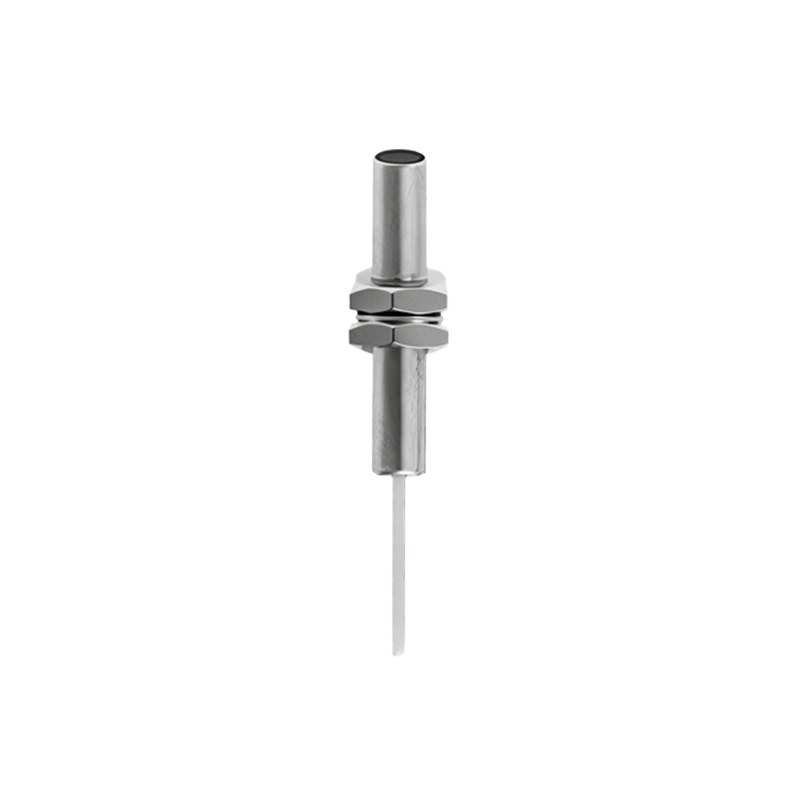
The Hall Effect, discovered by Edwin Hall in 1879, forms the foundational principle behind a critical component in modern robotics: the Hall effect proximity sensor. This sensor operates by detecting changes in a magnetic field. When a magnetic field is applied perpendicular to a current-carrying conductor, it generates a voltage difference—the Hall voltage—across the conductor. In a proximity sensor, this phenomenon is harnessed to detect the presence or absence of a magnetic target without any physical contact. The sensor's output state changes when the magnetic flux density exceeds a predefined threshold, providing a clean, digital, or analog signal to the robot's control system. This non-contact nature is paramount in robotics, where mechanical wear, dust, and liquid exposure can compromise traditional contact-based switches.
Core Advantages for Robotic Applications
Hall effect sensors offer a suite of benefits that make them exceptionally suitable for the demanding environment of robotics. First and foremost is their exceptional reliability and longevity. With no moving parts to wear out and a solid-state design, they can endure hundreds of millions of cycles, far outlasting mechanical limit switches. They are inherently immune to contaminants like oil, dust, and moisture, allowing them to function in harsh industrial settings. Furthermore, their response time is extremely fast, often in the microsecond range, enabling high-speed precision in operations such as pick-and-place, assembly, and packaging. Their ability to operate with a consistent switching point, regardless of environmental factors, ensures repeatable accuracy in positioning and end-effector control, a non-negotiable requirement in automated systems.
Key Implementation Areas in Robotics
The integration of Hall effect proximity sensors is widespread across various robotic subsystems. One primary application is in joint and actuator position feedback. Sensors embedded in robotic arms provide critical data on angular position, helping to define safe operational limits and precise movement paths. They are also indispensable for end-of-arm tooling (EOAT), detecting whether a gripper is open or closed, or confirming the presence of a grasped object. In mobile robotics, these sensors are used for wheel encoding to measure speed and distance traveled. Another crucial role is in safety interlocks and homing sequences. For instance, a sensor can detect when a robot has returned to its "home" position, ensuring a known starting point for a new cycle, or can act as a fail-safe limit switch to prevent over-travel and potential damage.
Selection Criteria and Integration Considerations
Choosing the right Hall effect sensor for a robotic application requires careful evaluation of several parameters. The sensing distance, or operating point, must be matched to the application's mechanical tolerances. Engineers must also consider the type of output required: digital (e.g., NPN/PNP) for simple on/off detection, or analog (e.g., 0-10V, 4-20mA) for proportional distance measurement. The magnetic field strength of the target and the required supply voltage are other critical factors. Integration involves ensuring proper alignment between the sensor and the magnetic target, typically a permanent magnet. Shielding from external magnetic fields and electrical noise in the robot's control cabinet is also essential to prevent false triggering. Robust packaging with appropriate IP (Ingress Protection) ratings is selected based on the operational environment.
Future Trends and Technological Evolution
The future of Hall effect sensing in robotics is intertwined with the industry's push towards greater intelligence, miniaturization, and integration. The development of 3D Hall effect sensors, capable of detecting magnetic field vectors in multiple axes, is enabling more sophisticated motion control and gesture recognition. Integration with micro-electro-mechanical systems (MEMS) is leading to smaller, more power-efficient sensor packages ideal for collaborative robots (cobots) and wearable exoskeletons. Furthermore, the convergence of sensing and networking through Industrial Internet of Things (IIoT) protocols is creating "smart" sensors that can communicate diagnostic data—such as temperature or impending failure—predictively, facilitating condition-based maintenance and reducing robotic cell downtime. As robotics continues to advance into more delicate and complex tasks, the precision and robustness of Hall effect technology will remain a cornerstone of reliable automation.