Introduction to Proximity Sensing Technology
Proximity sensors are indispensable components in modern industrial automation, enabling non-contact detection of metallic or non-metallic objects. Among various configurations, the 3-wire proximity sensor stands out due to its widespread adoption in control systems. These sensors provide a reliable and efficient solution for position sensing, object counting, and safety interlocking. Unlike mechanical limit switches, they have no moving parts, resulting in longer service life and higher operational speeds. The three-wire design specifically refers to the wiring scheme: one wire for power supply, one for ground, and one for the output signal. This setup allows for a straightforward interface with programmable logic controllers (PLCs) and other industrial controllers, forming the backbone of countless automated processes in manufacturing, packaging, and material handling.
Core Operating Principle: Inductive and Capacitive Methods
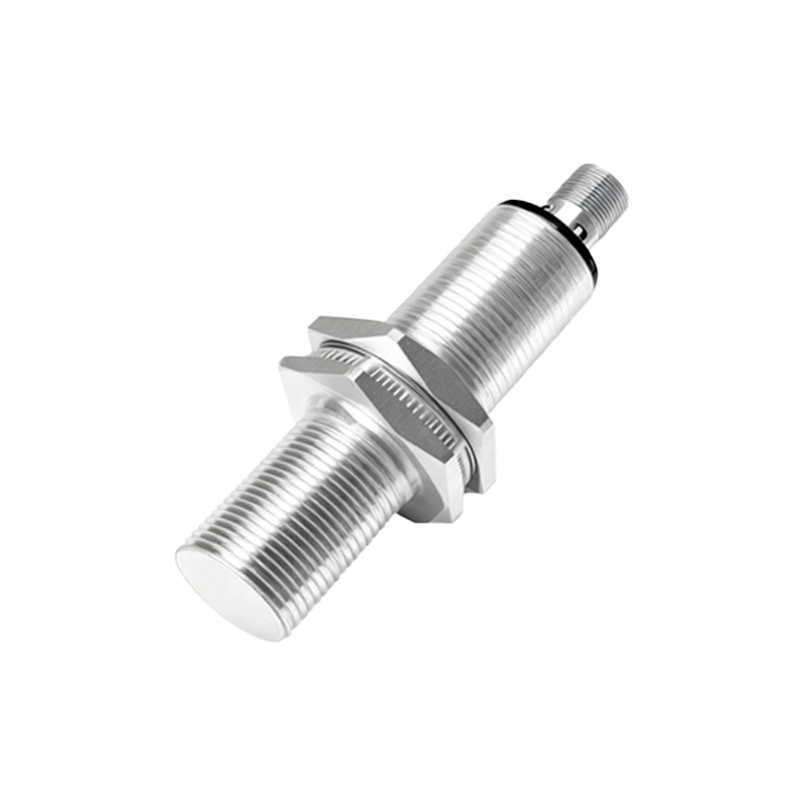
The fundamental operation of a 3-wire proximity sensor depends on its sensing technology. The most common type is the inductive proximity sensor, designed to detect metallic objects. It contains an oscillator circuit that generates a high-frequency electromagnetic field from its sensing face. When a metal target enters this field, eddy currents are induced on the metal's surface. These currents absorb energy from the oscillator, causing its amplitude to decrease. This change is detected by a threshold circuit, which subsequently triggers the sensor's solid-state output to switch states—either from OFF to ON (in a normally-open configuration) or from ON to OFF (normally-closed). For non-metallic targets like plastic, wood, or liquids, capacitive 3-wire sensors are used. They function by detecting changes in capacitance between the sensor's electrode and the target object, which acts as the second plate of a capacitor. Both types convert a physical presence into an electrical signal without any physical contact.
Internal Circuitry and the Three-Wire Configuration
A 3-wire proximity sensor's internal architecture is key to its functionality. The three wires are typically color-coded: brown for positive DC supply voltage (often 10-30V DC), blue for common ground (0V), and black for the switched output signal. Inside the sensor housing, the circuitry includes the oscillator, demodulator, amplifier, and output switching device—usually a transistor. The power and ground wires energize this entire circuit. The output transistor acts as a switch, connecting the black wire either to the positive supply voltage (for a PNP, or sourcing, output) or to ground (for an NPN, or sinking, output). This design provides a clear, digital signal: when a target is detected, the output wire's voltage level changes relative to the common wire, signaling the event to the connected controller. The use of a transistor allows for fast switching speeds and high cycle rates, suitable for demanding industrial environments.
Output Types: PNP vs. NPN Sourcing and Sinking
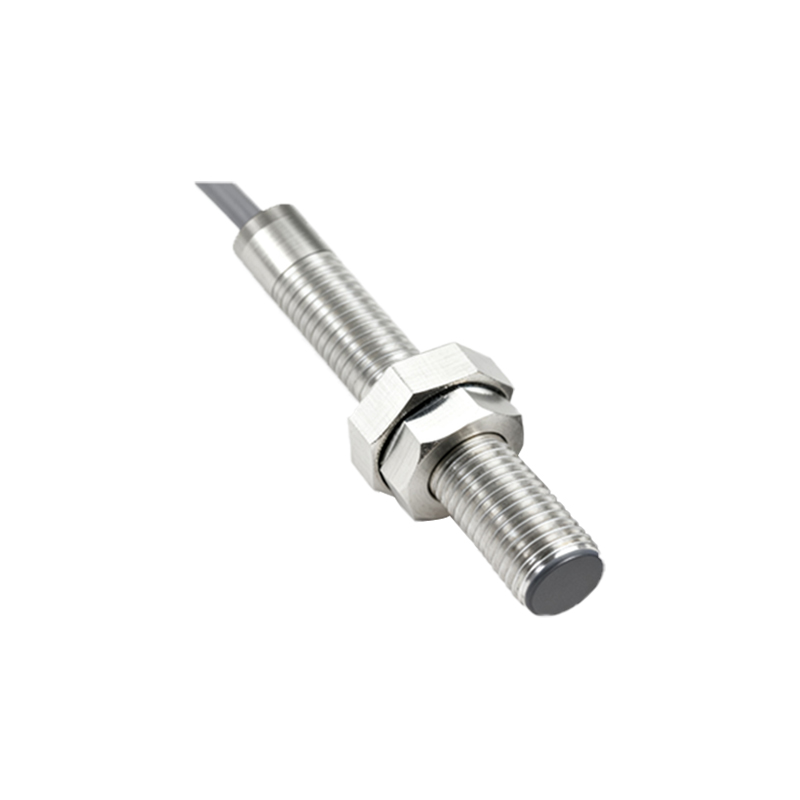
Understanding the output type is critical for proper integration. The terms PNP and NPN refer to the type of transistor used in the output stage. A PNP sensor, common in Europe and many regions, "sources" current. In its active state, it connects the output (black) wire to the positive supply (brown), providing a voltage signal to the load (like a PLC input). Conversely, an NPN sensor, often used in Asia, "sinks" current. When active, it connects the output wire to ground (blue), allowing current to flow from the load into the sensor. The choice between PNP and NPN depends on the input circuit of the receiving control device. Mismatching can lead to system malfunctions. Most modern 3-wire sensors are available in both configurations, and some even feature selectable or complementary outputs for maximum flexibility in diverse electrical systems.
Key Performance Characteristics and Specifications
Several technical parameters define a sensor's suitability for an application. The sensing distance, or nominal range, specifies the maximum distance at which a standard target can be reliably detected. This is a theoretical value; in practice, a reduction factor based on target material and size is applied. Switching frequency indicates how many on/off cycles per second the sensor can handle, crucial for high-speed counting. Hysteresis is a built-in feature that prevents output chattering when a target is at the edge of the sensing range; it creates a small difference between the switch-on and switch-off points. Other vital specs include voltage operating range, current consumption, output current capacity, protection ratings (like IP67 for dust and water resistance), and temperature range. Understanding these specs ensures reliable operation under specific environmental conditions, such as exposure to coolant, vibration, or electromagnetic interference.