Introduction to Proximity Sensing
A proximity sensor is a non-contact electronic device designed to detect the presence or absence of an object within a specific range without any physical contact. Unlike mechanical limit switches, these sensors operate by emitting an electromagnetic field, beam, or radiation and then monitoring for changes in the field or return signal. The core principle hinges on the interaction between the sensor's emitted energy and the target object. This technology is fundamental to modern industrial automation, robotics, and smart systems, enabling precise, reliable, and wear-free detection. The absence of mechanical contact eliminates issues like friction, wear, and target damage, significantly enhancing system longevity and reliability. From assembly lines to consumer electronics, proximity sensors provide the essential "eyes" for machines, triggering actions, counting items, or ensuring safety.
Core Operating Principles
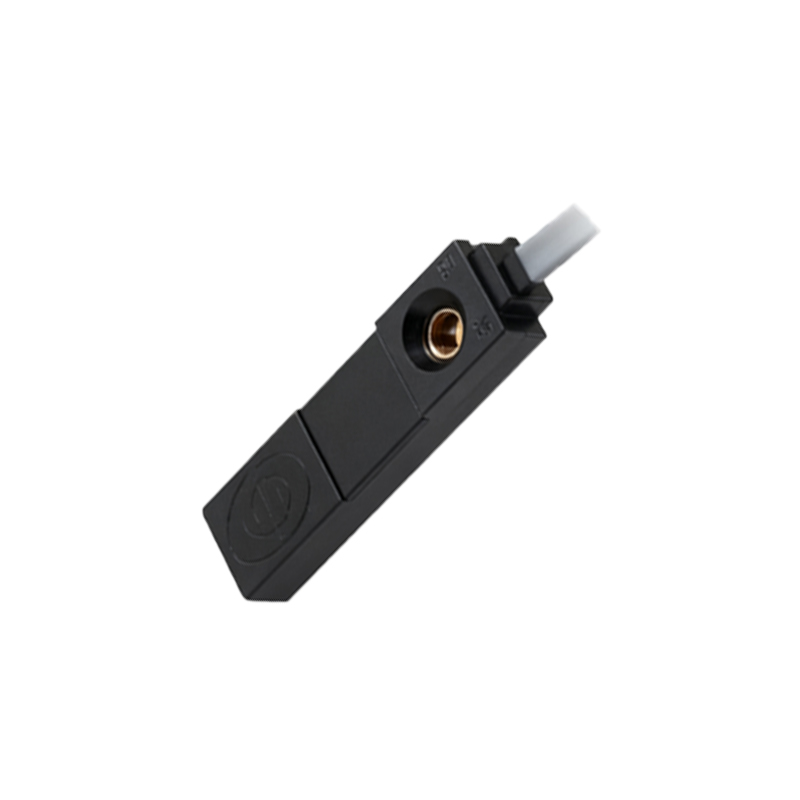
The functionality of a proximity sensor is defined by its underlying technology. The most prevalent types are inductive, capacitive, ultrasonic, and photoelectric sensors. Inductive proximity sensors generate an oscillating electromagnetic field. When a metallic object enters this field, it induces eddy currents within the metal, causing a change in the oscillation amplitude. The sensor's circuit detects this change and switches its output state. These sensors are exclusively for detecting metals. Capacitive sensors, conversely, can detect both metallic and non-metallic materials like liquids, plastics, or wood. They work by generating an electrostatic field. Any object with a dielectric constant different from air will alter the capacitance of the sensing field, triggering detection.
Primary Types and Their Applications
Understanding the distinct types is crucial for selection. Inductive sensors are the workhorses of manufacturing, ideal for detecting metal parts in machinery, position verification in CNC machines, or as non-contact limit switches. Capacitive sensors excel in level detection for liquids or granular materials, presence detection of non-metallic objects on conveyors, and touch-sensitive interfaces. Ultrasonic proximity sensors use sound waves beyond human hearing. They measure the time taken for an emitted pulse to bounce back from an object, making them perfect for distance measurement, transparent object detection, and challenging environments with dust or moisture. Photoelectric sensors use light beams (visible, infrared, or laser) and are categorized into through-beam, retro-reflective, and diffuse reflective models for long-range detection, packaging, and object counting.
Key Technical Specifications
Selecting the right sensor requires careful analysis of its specifications. The sensing range, or nominal range (Sn), indicates the standard distance at which a standard target can be reliably detected. The operating voltage defines the power supply requirements, typically ranging from 10-30V DC or 90-250V AC. Output configuration is critical; sensors can have NPN (sinking) or PNP (sourcing) transistor outputs, analog outputs (4-20mA, 0-10V), or relay outputs for direct load switching. Other vital parameters include response time (how quickly the sensor reacts), repeat accuracy (consistency of detection at the same point), housing material (e.g., brass, stainless steel for harsh conditions), and protection ratings like IP67 for dust and water resistance.
Advantages Over Traditional Switches
The benefits of proximity sensors are substantial. Their non-contact nature ensures no wear on the sensor or the target, leading to a virtually infinite mechanical lifespan. They offer high switching frequencies, capable of detecting thousands of objects per minute, far surpassing mechanical switches. Operation is possible at high speeds and in dirty, oily, or wet environments where mechanical contacts would fail. They provide exceptional accuracy and repeatability for precision applications. Furthermore, solid-state electronics make them highly resistant to vibration and shock. This reliability translates to reduced machine downtime, lower maintenance costs, and increased overall equipment effectiveness (OEE) in industrial settings.
Common Industrial Use Cases
In practice, proximity sensors are ubiquitous. On automated production lines, they detect parts for robotic pick-and-place operations, verify if a component is present before a machining step, or count bottles on a filling line. In the automotive industry, they monitor robot arm positions in welding and painting cells. They serve as safety devices to confirm guard doors are closed before machine start-up. In material handling, capacitive sensors control silo filling levels, while ultrasonic sensors manage parking assistance systems. Even everyday devices like smartphones use capacitive proximity sensors to disable the touchscreen during a call.
Installation and Calibration Considerations
Proper installation is paramount for optimal performance. Factors like sensor mounting, target material, size, and environment must be considered. For inductive sensors, the sensing distance can vary based on the target metal type; steel is the standard, while aluminum or copper may reduce the effective range. Maintaining the correct gap