Introduction to Ultrasonic Sensing Technology
Ultrasonic proximity sensors operate on a principle similar to sonar or echolocation. They emit high-frequency sound waves, typically above 20 kHz, which are inaudible to the human ear. These sound waves travel through the air until they encounter an object. Upon striking the object, the waves are reflected back towards the sensor. A receiver within the sensor detects this returning echo. By precisely measuring the time interval between the emission of the sound pulse and the reception of its echo, the sensor can calculate the distance to the target object. This time-of-flight (ToF) calculation is the core of ultrasonic ranging, providing reliable, non-contact distance measurement.
Key Components and Operational Modes
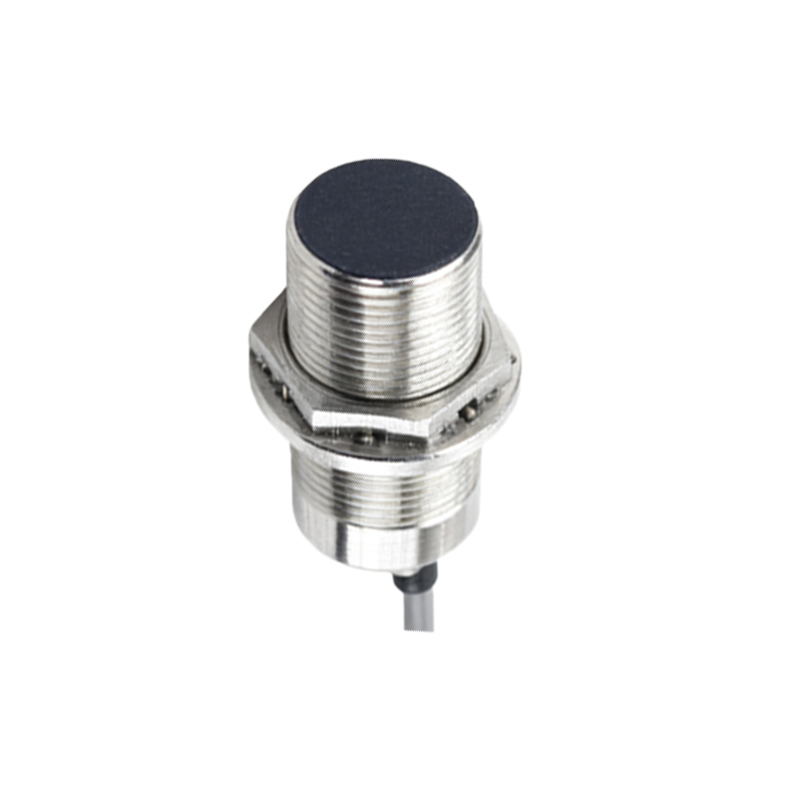
A standard ultrasonic sensor comprises a piezoelectric transducer, control electronics, and often a temperature compensation circuit. The piezoelectric transducer acts as both the transmitter and receiver, vibrating to generate ultrasonic waves and then converting returning sound waves back into electrical signals. These sensors primarily function in two modes: diffuse (proximity) mode and retro-reflective mode. In diffuse mode, the sensor detects the reflection from the object itself. In retro-reflective mode, it works with a separate reflector; the presence of an object is detected when it interrupts the sound beam between the sensor and the reflector. This flexibility allows for diverse application setups.
Advantages Over Other Sensor Types
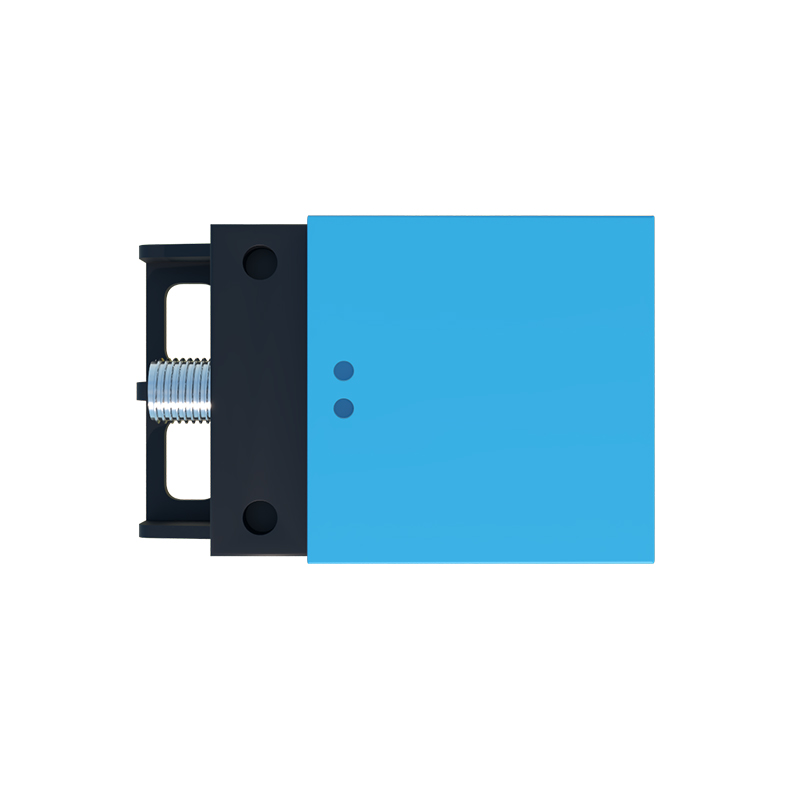
Ultrasonic sensors offer distinct benefits that make them suitable for challenging industrial environments. Unlike optical sensors, they are largely unaffected by target color, transparency, or ambient light conditions, including total darkness. They can reliably detect clear glass, liquid surfaces, and highly reflective metals. Compared to inductive or capacitive sensors, ultrasonic variants can sense a much wider variety of materials, including solids, powders, and liquids, regardless of conductivity. Furthermore, they provide precise analog distance information, not just a simple on/off switch, enabling applications like continuous level monitoring or dimension checking.
Common Industrial Applications
The robustness and versatility of ultrasonic proximity sensors have led to their widespread adoption. In factory automation, they are used for object detection on conveyor lines, palletizing, and robot guidance. In process industries, they are indispensable for continuous level measurement of liquids, slurries, and bulk solids in tanks and silos. The automotive industry utilizes them in assembly line control and as parking aid systems. Other applications include presence detection in automatic doors, loop control in winding machines, and height detection in vehicle suspension systems. Their ability to function in dusty, humid, or vaporous environments where optics fail is a key advantage.
Critical Factors for Sensor Selection
Selecting the appropriate ultrasonic sensor requires careful consideration of several parameters. The sensing range is paramount; engineers must choose a sensor whose specified range accommodates the maximum and minimum detection distances with a safety margin. Beam angle determines the detection cone's width—a narrow beam is precise for small objects, while a wide beam is forgiving for alignment. Response time must be fast enough for the application's cycle speed. Environmental factors like operating temperature, pressure, and the presence of dust or foam can significantly impact performance. Finally, the output type (analog voltage/current, discrete switch, or serial communication) must integrate seamlessly with the existing control system.
Installation and Calibration Best Practices
Proper installation is crucial for optimal performance. Sensors should be mounted securely to minimize vibration, which can cause signal noise. The sensing path must be clear of obstructions and potential false reflectors, such as beams or pipes. For level sensing, the sensor should be aligned perpendicular to the liquid or solid surface. Temperature compensation is often necessary, as the speed of sound varies with air temperature; many modern sensors have built-in compensation. Regular calibration checks are recommended, especially in applications with significant temperature fluctuations or where high precision is required. Following the manufacturer's guidelines for mounting distance and dead zone is essential.
Limitations and Mitigation Strategies
While highly capable, ultrasonic sensors have limitations that engineers must acknowledge. Soft, absorbent materials like foam or fabric may not reflect sound waves effectively, leading to detection failures. Extreme environmental noise in the ultrasonic frequency range can interfere with operation. Sudden changes in air composition, temperature gradients, or high winds can deflect or attenuate the sound beam. To mitigate these issues, selecting sensors with adjustable sensitivity, using models with higher output power for difficult materials, and installing physical barriers or sound-absorbing materials to shield from noise are effective strategies. Understanding these constraints ensures reliable integration into a system.
Future Trends and Innovations
The future of ultrasonic sensing is geared towards greater intelligence, miniaturization, and integration. Developments in micro-electromechanical systems