Introduction to Proximity Switch Sensors
Proximity switch sensors, often simply called proximity sensors, are non-contact electronic devices designed to detect the presence or absence of an object within a defined sensing range without any physical contact. These robust and reliable components are fundamental in industrial automation, manufacturing lines, robotics, and safety systems. Their ability to operate in harsh environments—resistant to dirt, oil, and vibration—makes them superior to traditional mechanical limit switches. The core principle behind their operation is the disturbance of an electromagnetic field or the alteration of an oscillation circuit by a target object. This article delves into the detailed structural composition and the underlying working principles of the most common types of proximity sensors.
Core Structural Components
Despite variations among types, a standard proximity sensor comprises several key structural elements. The front face houses the sensing surface, typically made of a durable plastic or ceramic material that protects the internal coil and oscillator circuit. Directly behind this is the oscillator coil, which generates a high-frequency electromagnetic field. The oscillator circuit, including a capacitor, creates and sustains the oscillations. Adjacent to this is the detection circuit, which monitors the amplitude of the oscillations. A trigger circuit, often a Schmitt trigger, compares the signal from the detection circuit to a predefined threshold. Finally, an output switching device, such as a transistor (for DC sensors) or a triac (for AC sensors), is activated to control the load. The entire assembly is encapsulated in a metal (often stainless steel) or rugged polymer housing, providing mechanical strength and environmental protection.
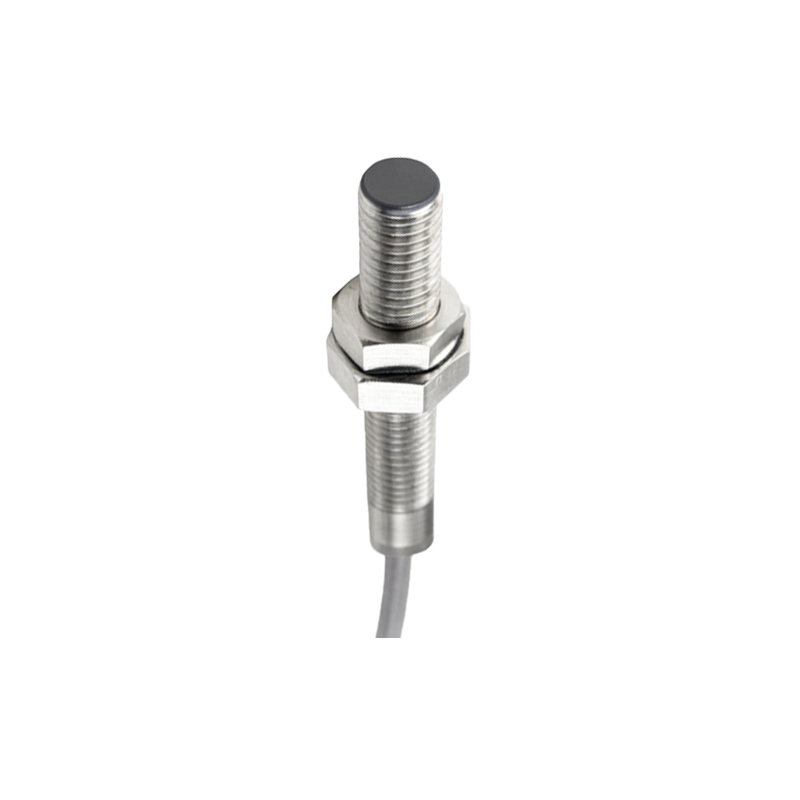
Inductive Proximity Sensor Principle
Inductive proximity sensors are specifically designed to detect metallic objects, primarily ferrous metals like iron and steel, though non-ferrous metals can also be sensed at reduced ranges. The operational principle begins with the internal oscillator generating a high-frequency alternating magnetic field that radiates from the sensing face. When a metallic target enters this field, eddy currents are induced on the surface of the target. These eddy currents draw energy from the oscillator circuit, causing a measurable reduction in the amplitude of the oscillations. The sensor's detection circuit continuously monitors this amplitude. Once the amplitude drop exceeds a set threshold—indicating the target is within the nominal sensing distance—the trigger circuit flips state. This change commands the output switch to turn ON (or OFF, depending on the configuration), sending a signal to the connected controller like a PLC.
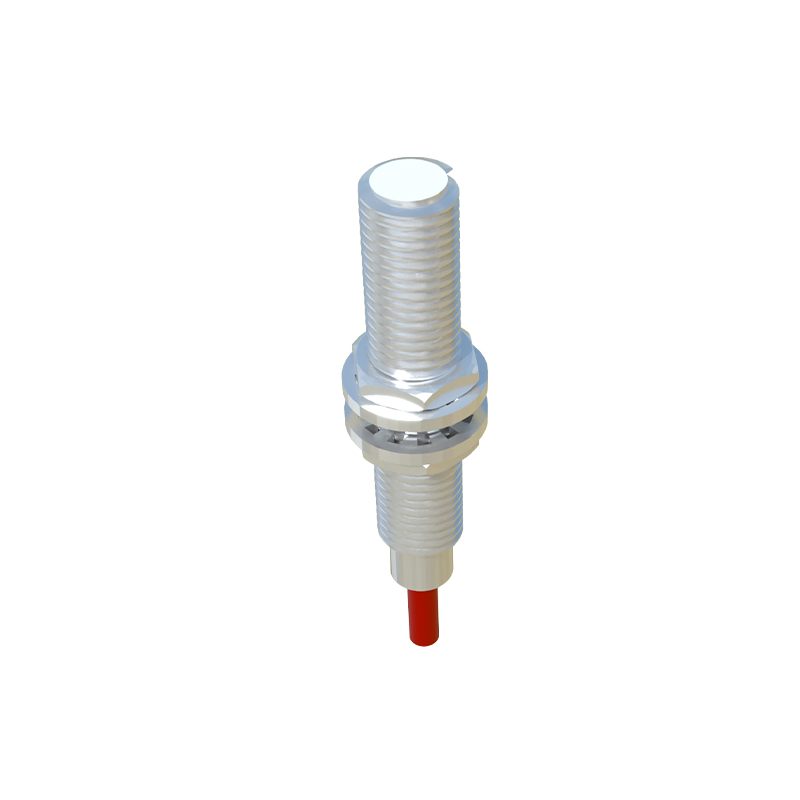
Capacitive Proximity Sensor Principle
Capacitive proximity sensors can detect both metallic and non-metallic materials, including liquids, powders, plastics, and wood. Their structure is similar to inductive sensors but with a key difference: the sensing surface forms one plate of a capacitor, and the external target (or a stationary reference electrode) acts as the other plate. The internal oscillator circuit is tuned to a specific capacitance value. When any material with a sufficient dielectric constant approaches the active face, it alters the capacitance of this system. This change in capacitance affects the oscillator's amplitude. The detection circuit senses this shift, and when it passes the trigger threshold, the output state changes. This makes capacitive sensors versatile for level detection of granular materials or presence detection of non-metallic objects, though they can be more sensitive to environmental factors like humidity.
Magnetic (Reed) and Ultrasonic Types
Two other important structural variants exist. Magnetic proximity sensors, or reed switches, operate on a purely magnetic principle. Their structure consists of two ferromagnetic reed contacts sealed within a glass tube filled with inert gas. When a permanent magnet (the target) approaches, the reeds magnetize, attract each other, and make physical contact to close the circuit. They are simple, low-power, but involve a mechanical moving part. Ultrasonic proximity sensors use a different physical principle altogether. Their structure includes a piezoelectric transducer that emits high-frequency sound pulses and listens for the echo. An internal electronic timer measures the time-of-flight of the sound wave. When an object enters the sensing zone, the reflected echo returns faster, and the calculated distance triggers the output. They are effective for detecting objects of any material, over longer distances, but can be affected by temperature and air turbulence.
Output Configuration and Wiring
The electrical output structure is a critical aspect. Proximity sensors are classified as either 2-wire, 3-wire, or 4-wire devices. The 3-wire DC type is most prevalent in modern automation. It comprises separate wires for DC power supply positive (brown), DC power supply negative (blue), and the output signal (black). The output transistor can be configured as NPN (sinking current, common in Asia/Europe) or PNP (sourcing current, common in