Introduction to Z15GQB Proximity Sensor
The Z15GQB is a high-performance inductive proximity sensor designed for demanding industrial environments. Engineered with precision and durability in mind, this sensor offers reliable non-contact detection of metallic objects. Its robust construction ensures stable operation even in harsh conditions involving dust, oil, and coolant splashes. The Z15GQB series is a testament to modern sensing technology, providing a critical component for automation systems where accuracy and longevity are paramount. This guide delves into its technical specifications, operational principles, and diverse application scenarios.
Core Technical Specifications and Design
The Z15GQB sensor typically operates on a standard DC voltage range, such as 10-30V DC, making it compatible with most industrial control systems. It features a sensing distance of up to 15mm, though specific models within the series may vary. The housing is often constructed from nickel-plated brass or stainless steel, providing excellent resistance to corrosion and mechanical impact. Key electrical characteristics include a low leakage current and a switching frequency that allows for high-speed object detection. The output is usually in a PNP (sourcing) or NPN (sinking) configuration, with options for normally open (NO) or normally closed (NC) logic, offering flexibility for different circuit designs.
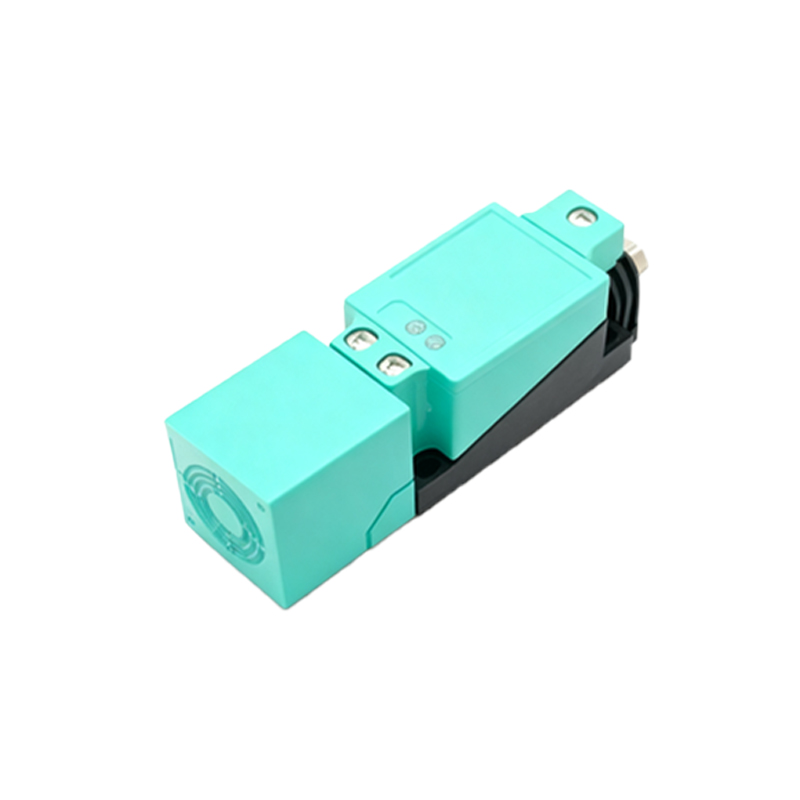
Operating Principle: Inductive Sensing Technology

At the heart of the Z15GQB lies inductive sensing technology. The sensor generates an oscillating electromagnetic field from its active face. When a metallic target enters this detection field, eddy currents are induced on the target's surface. This causes a change in the oscillation amplitude within the sensor's internal LC circuit. The sensor's electronics monitor this change and trigger a solid-state output switch when the amplitude drops below a predefined threshold. This principle allows for the detection of ferrous metals like steel and iron at the rated sensing distance, while non-ferrous metals like aluminum or copper may have a reduced effective sensing range.
Key Features and Performance Advantages
Several features distinguish the Z15GQB in the market. It often incorporates short-circuit and reverse polarity protection, safeguarding both the sensor and the connected controller from wiring errors. Many models are equipped with an LED status indicator for visual confirmation of power and output state, simplifying installation and troubleshooting. Its high immunity to electromagnetic interference (EMI) ensures stable performance near motors and frequency drives. Furthermore, the precision-machined sensing face and stable temperature compensation circuitry guarantee consistent detection performance across a wide operating temperature range, typically from -25°C to +70°C.
Installation Guidelines and Best Practices
Proper installation is crucial for optimal performance. The sensor should be mounted securely to minimize vibration. It is essential to maintain the recommended lateral and axial clearance from surrounding metal structures to prevent false triggering. For flush-mountable models, they can be installed level with a metal bracket. Non-flush models require a specific free space around the sensing face. Wiring must follow the manufacturer's diagram, ensuring correct connection of the brown (positive), blue (negative), and black (output) wires. Using shielded cables in electrically noisy environments is highly recommended to maintain signal integrity.
Common Industrial Applications
The Z15GQB finds extensive use across various sectors. In automotive manufacturing, it is used for part presence verification on assembly lines and robotic tooling positioning. Within packaging machinery, it detects metal components on conveyor systems for counting and sorting operations. In metalworking and CNC machining centers, these sensors monitor tool presence, detect workpiece position, and act as end-of-travel limit switches. They are also integral to material handling systems for pallet detection and elevator level control, proving their versatility and reliability in continuous operation.
Troubleshooting and Maintenance Tips
Despite their robustness, sensors may occasionally require attention. Common issues include failure to detect targets, which may be caused by incorrect mounting, an unsuitable target material, or the target being outside the sensing range. Constant output activation could indicate sensor damage or metallic debris stuck to the sensing face. Regular maintenance involves keeping the sensing face clean from oil, dust, or metal chips. Periodically checking the mounting hardware for tightness and inspecting cables for wear or damage can prevent unexpected downtime. Always refer to the specific datasheet for diagnostic procedures.
Comparison and Selection Considerations
When selecting a proximity sensor like the Z15GQB, engineers must evaluate several factors against alternatives. Key considerations include the required sensing distance, target material composition, environmental conditions (IP rating for ingress protection), output type compatibility with the PLC, and housing size/thread type (e.g., M18, M30). Compared to capacitive or photoelectric sensors, inductive types like the Z15