Introduction to Proximity Sensor Switches
Proximity sensor switches are fundamental components in modern industrial automation, providing non-contact detection of objects. These devices are crucial for enhancing efficiency, safety, and reliability in manufacturing, packaging, material handling, and countless other sectors. Unlike mechanical limit switches, proximity sensors operate without physical contact, eliminating wear and tear and enabling high-speed, precise detection. They function by emitting an electromagnetic field or a beam of electromagnetic radiation and monitoring for changes in the field or return signal. This guide delves into the five major types of proximity sensor switches, exploring their operating principles, key characteristics, and typical applications to aid engineers in selecting the optimal solution for their specific needs.
Inductive Proximity Sensors
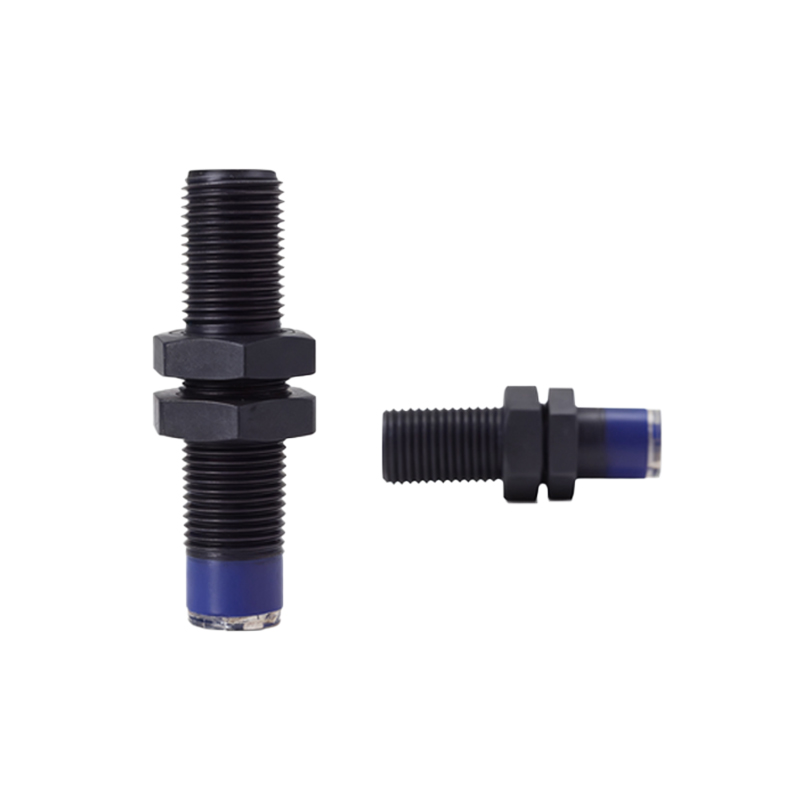
Inductive proximity sensors are designed exclusively for the detection of metallic objects. Their core operating principle is based on electromagnetic induction. The sensor contains an oscillator circuit that generates a high-frequency electromagnetic field at its active face. When a ferrous or non-ferrous metal target enters this field, eddy currents are induced on the surface of the metal. This causes a load on the oscillator, leading to a reduction in the oscillation amplitude. This change is detected by the sensor's circuitry, which subsequently triggers a solid-state output switch. Key advantages include their robustness, long operational life, and high switching frequency. They are insensitive to non-metallic materials like dust, chips, or liquids, making them ideal for harsh industrial environments. Common applications include detecting the presence of metal parts on conveyor belts, counting metal objects, and determining the position of machine tool slides or robotic arms.
Capacitive Proximity Sensors
Capacitive proximity sensors offer a broader detection capability compared to their inductive counterparts. They can detect both metallic and non-metallic materials, including liquids, plastics, glass, wood, and granular substances. The sensor operates by generating an electrostatic field. The sensor itself acts as one plate of a capacitor, with the target object acting as the other plate. As a target approaches the sensor's active surface, it alters the capacitance of this system. The sensor's internal circuitry monitors this change in capacitance. Once the change reaches a preset threshold, the output state switches. These sensors are particularly useful for level detection of liquids, powders, or granules inside non-metallic containers, such as detecting the fill level in a plastic bottle or a hopper. They can also detect materials through thin non-metallic walls. A key consideration is their potential sensitivity to environmental factors like humidity or temperature, which may require careful calibration.
Ultrasonic Proximity Sensors
Ultrasonic proximity sensors utilize sound waves beyond the range of human hearing to detect objects and measure distance. They operate on the principle of echolocation. The sensor emits high-frequency ultrasonic pulses from a transducer. These pulses travel through the air, strike a target object, and are reflected back to the sensor. The electronics within the sensor calculate the time interval between the emission and the reception of the echo. This time-of-flight measurement is then used to determine the presence and distance of the object. A major strength of ultrasonic sensors is their ability to detect objects regardless of color, transparency, or material composition, as long as the surface is capable of reflecting sound. They are excellent for applications involving clear glass or plastic bottles, liquid level sensing in tanks, and detecting irregularly shaped objects. They can also operate effectively in environments with dust, smoke, or fog where optical sensors might fail.
Photoelectric Proximity Sensors
Photoelectric sensors, or photo-eyes, use a beam of light to detect the presence, absence, or distance of an object. They consist of a light emitter (usually an LED) and a receiver. There are three primary operating modes: through-beam, retro-reflective, and diffuse (proximity) mode. In the diffuse mode, which functions as a true proximity sensor, the emitter and receiver are housed in the same unit. The emitted light strikes a target and is diffusely reflected back to the receiver. Detection occurs when sufficient reflected light is received. These sensors offer very long sensing ranges and can detect small objects with high precision. They are versatile for detecting a wide variety of materials but can be affected by the target's color, reflectivity, and surface texture. Environmental factors like ambient light, dust, and dirt can also impact performance. Common uses include object detection on high-speed assembly lines, web break detection, and registration control in printing.
Magnetic Proximity Sensors (Reed Switches)
Magnetic proximity sensors, often implemented as reed switches or Hall-effect sensors, detect the presence of a magnetic field, typically from a permanent magnet. A reed switch consists of two ferromagnetic re