Introduction to Non-Metallic Sensing
In the diverse landscape of industrial automation, proximity sensors are indispensable for detecting the presence or absence of objects without physical contact. While traditional inductive sensors excel at detecting metals, a significant portion of modern manufacturing involves non-metallic materials such as plastics, glass, wood, cardboard, and liquids. This necessity has driven the development and widespread adoption of non-metallic material proximity sensors. These sensors operate on different physical principles, primarily capacitive and ultrasonic technologies, to reliably detect materials that are invisible to standard inductive probes. Their ability to sense through certain barriers and their insensitivity to color or surface finish make them versatile tools in complex production environments, from packaging and food processing to pharmaceutical and woodworking industries.
Core Operating Principles: Capacitive vs. Ultrasonic
The two dominant technologies for non-metallic detection are capacitive and ultrasonic sensing. Capacitive proximity sensors function similarly to an open capacitor. The sensor's active surface and the target object form the two plates of a capacitor. When a non-metallic object enters the sensing field, it alters the dielectric constant, leading to a change in the oscillator's amplitude. This change triggers the sensor's output switch. Capacitive sensors are highly effective for detecting solids, granules, and liquids, including materials inside non-metallic containers. Ultrasonic sensors, on the other hand, emit high-frequency sound waves and evaluate the reflected echo. They measure the time interval between sending the signal and receiving the echo to determine the distance to an object. This principle allows them to detect virtually any material, regardless of color, transparency, or surface texture, and they are excellent for precise distance measurement and level detection.
Key Types and Their Specific Applications
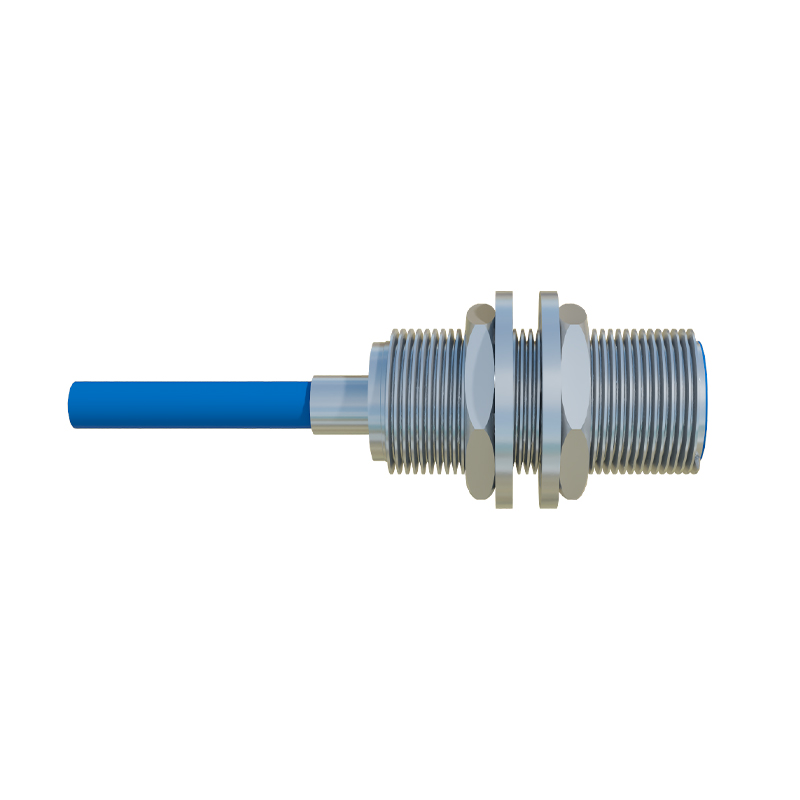
Within these two categories, several specialized types exist. Standard capacitive sensors are commonly used for level control of powders in silos, presence detection of plastic bottles on conveyors, and liquid level sensing in tanks. Cylindrical and rectangular housing designs cater to different mounting requirements. For challenging environments, there are capacitive sensors with robust housings resistant to chemicals and high-pressure washdowns. Ultrasonic sensors come in both diffuse-reflective (proximity) mode and through-beam mode. Diffuse mode sensors are used for simple object detection or distance measurement to a single surface, such as monitoring stack height of cardboard boxes. Through-beam ultrasonic sensors, with separate transmitter and receiver, offer very reliable detection over longer ranges and are used in transparent bottle detection or web break detection in paper processing.
Critical Selection Criteria for Engineers
Selecting the appropriate non-metallic proximity sensor requires careful analysis of several parameters. The nature of the target material is paramount: capacitive sensors are ideal for materials with high dielectric constants (like water-based products), while ultrasonic sensors are unaffected by dielectric properties. The required sensing distance is another key factor; ultrasonic sensors typically offer longer ranges than capacitive ones. Environmental conditions such as temperature extremes, dust, moisture, and airborne contaminants like foam must be considered, as they can affect ultrasonic performance. For capacitive sensors, the influence of the mounting background and potential interference from adjacent objects or materials must be mitigated through proper installation and shielding. Output type (PNP/NPN, analog, IO-Link), supply voltage, and housing material (e.g., PTFE for aggressive chemicals) are also essential decision points.
Advantages Over Other Sensing Technologies
Non-metallic proximity sensors offer distinct advantages that justify their use. Their primary benefit is material versatility—they can detect what photoelectric or inductive sensors cannot. Capacitive sensors can detect materials through thin non-metallic walls, enabling non-invasive level sensing. Ultrasonic sensors provide highly accurate distance information, which is valuable for positioning and dimension control. Both types are generally immune to color changes and surface reflectivity issues that plague photoelectric sensors. Furthermore, in dusty or steamy environments where optical beams scatter, ultrasonic sensors often provide more reliable performance. Their solid-state design ensures long service life with minimal maintenance, contributing to lower total cost of ownership in demanding applications.
Common Challenges and Practical Solutions
Despite their robustness, these sensors face specific challenges. Capacitive sensors can be sensitive to environmental changes like humidity or temperature, which alter the dielectric constant of air. They can also be triggered by unwanted background materials. Solutions include using sensors with adjustable sensitivity potentiometers, employing shielded versions to create a more focused field, and careful calibration during installation. Ultrasonic sensors may struggle with soft, sound-absorbing materials (like foam or fabric) and can experience false echoes from complex backgrounds or noisy environments with other ultrasonic sources. Angling the sensor, using models with built-in background suppression, and selecting sensors with teach-in functionality for precise range setting are effective countermeasures. Regular cleaning of the transducer