Introduction to Hourglass Facial Recognition Technology
Hourglass facial recognition represents a sophisticated advancement in biometric security, utilizing a multi-layered, tapered neural network architecture. This design, reminiscent of an hourglass shape, processes facial data through successive stages of compression and expansion, enabling highly detailed feature extraction. Unlike conventional systems that often rely on a suite of hardware sensors, the hourglass model is predominantly software and algorithm-driven. Its core strength lies in deep learning models trained on vast datasets, allowing it to interpret standard 2D or 3D camera feeds with exceptional accuracy for identification and authentication purposes.
The Role of Sensors in Traditional Biometric Systems
Traditional biometric security systems frequently incorporate various sensors to enhance functionality and security. Proximity sensors, in particular, are common in devices like smartphones. Their primary function is to detect the presence of a user's face near the screen, typically to disable the display during a call to prevent accidental touches. In some facial recognition setups, rudimentary proximity detection might be used to activate the scanning process. However, these sensors serve an ancillary, mechanistic role—they do not contribute to the actual facial analysis or feature mapping. They are hardware components addressing a specific user interface need, not the core biometric task.
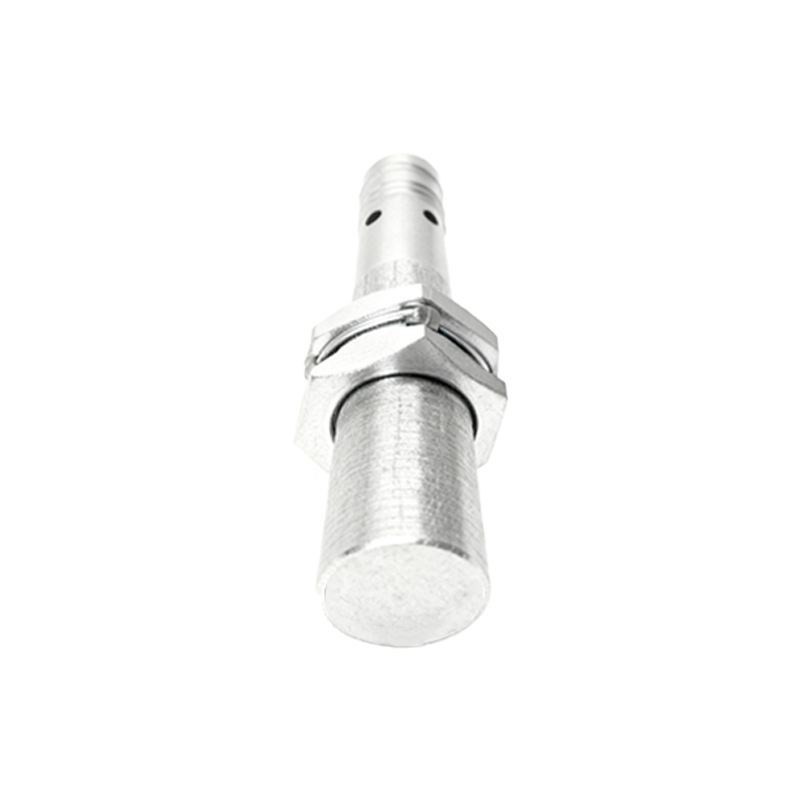
Why Proximity Sensors Are Not Integral to the Hourglass Model
The absence of a dedicated proximity sensor in an hourglass-based facial recognition system is a deliberate architectural choice. This technology is designed for precise, static, or controlled-motion verification. Its operation is triggered by software events—such as attempting to unlock a device or gain access to a secure area—rather than by a generic hardware trigger like proximity. The complex neural network requires a clear, well-framed facial image to perform its multi-stage analysis. The concept of "proximity" is irrelevant to its algorithm; what matters is image quality, lighting, and facial alignment. Integrating a proximity sensor would add cost and complexity without improving the recognition accuracy that is the system's raison d'être.
Primary Data Inputs: Cameras and Depth Perception
The essential hardware for an hourglass facial system is the imaging sensor. This can range from a high-resolution RGB camera to more advanced setups including infrared (IR) cameras or structured light projectors for 3D depth mapping. These components capture the raw data—texture, contours, and spatial geometry—that the hourglass network processes. In environments requiring liveness detection (to prevent spoofing with photos or masks), systems may use additional IR sensors or analyze micro-movements. However, these are specialized imaging sensors, not simple proximity detectors. They provide rich, actionable data for the AI, whereas a proximity sensor provides a simple binary "near/far" signal with no biometric value.
Advantages of a Sensor-Minimized Design Approach
Eliminating non-essential hardware like proximity sensors offers several engineering and user experience benefits. It simplifies the device's bill of materials, reducing manufacturing costs and potential points of failure. It allows for cleaner industrial design without the need for additional apertures on the device facade. From a performance perspective, it ensures the facial recognition process is initiated intentionally and under optimal conditions, rather than accidentally by a passing object. Furthermore, it aligns with a privacy-by-design principle; the system only activates when explicitly engaged by the user, rather than passively sensing presence, which can alleviate certain privacy concerns.
Addressing Functionality Gaps Without Proximity Sensing
One might question how a device handles functions traditionally managed by a proximity sensor, such as screen blanking during calls. Modern systems address this through alternative, often superior, methods. The primary facial recognition cameras or IR emitters can be repurposed with simplified algorithms to detect coarse proximity based on image blur or signal reflection. More commonly, this function is managed by a combination of other sensors like accelerometers (detecting device orientation) and software context (knowing a call is active). These solutions are more integrated and context-aware than a single-purpose proximity sensor, demonstrating a holistic system design.
Future Trends in Facial Recognition Hardware Integration
The evolution of facial recognition is moving towards greater sensor fusion and AI integration, not a proliferation of discrete sensors. Future hourglass or similar AI models will likely work with more advanced, multi-spectral imaging systems that capture data beyond visible light. The focus is on enriching the quality and type of input data for the neural network. The industry trend is to make the software intelligence so robust that it can derive contextual information (like user intent or presence) directly from the primary camera feed, further obviating the need for separate, simplistic sensors like proximity detectors. The hardware-software boundary will continue to