Introduction to Proximity Sensing
Proximity sensors are fundamental components in modern industrial automation, robotics, and smart systems. They detect the presence or absence of an object within a specified range without physical contact. Large-scale proximity sensors, in particular, are engineered for applications requiring extended detection ranges, high reliability in harsh environments, or the monitoring of vast areas. Their operation hinges on various physical principles, primarily electromagnetic, capacitive, and optical. Understanding the structural design that enables these principles is key to selecting and implementing the right sensor for demanding industrial tasks, where precision, durability, and scalability are paramount.
Electromagnetic Inductive Sensor Structure
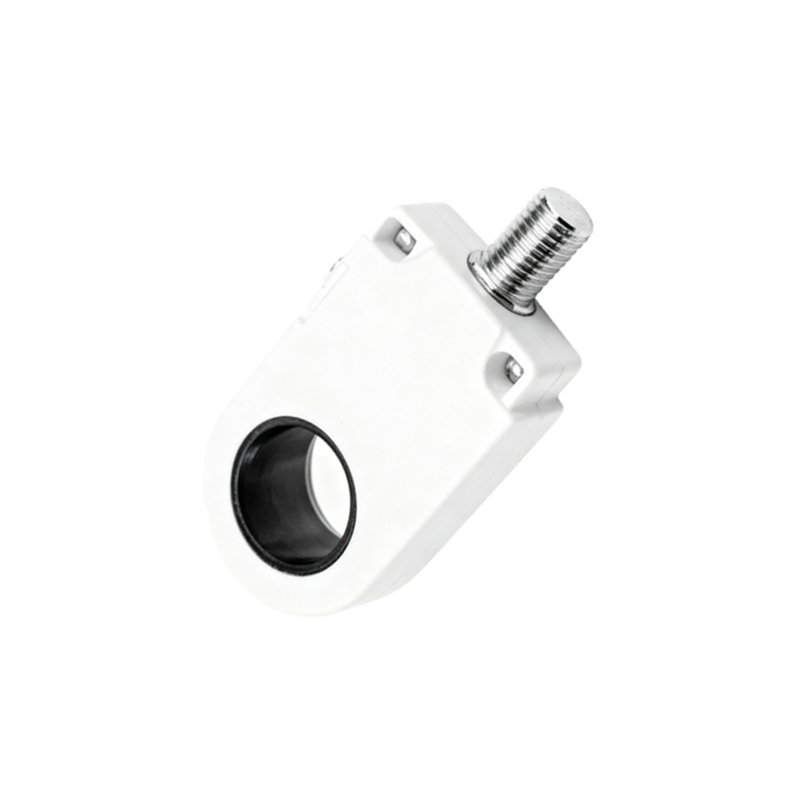
Inductive proximity sensors are the workhorses for detecting metallic objects. The core structure consists of a coil wound around a ferrite core, an oscillator circuit, a signal evaluator, and an output switching circuit. The oscillator generates a high-frequency electromagnetic field that emanates from the sensor's active face. When a conductive metal object enters this field, eddy currents are induced on the object's surface. These eddy currents draw energy from the oscillator, causing a measurable change in its amplitude. The evaluation circuit detects this damping and triggers the output switch. The housing is typically made of robust materials like nickel-plated brass or stainless steel to withstand mechanical stress and chemical exposure. The sensing range is influenced by the coil design, oscillator frequency, and the target metal's properties, with larger coils enabling greater detection distances.
Capacitive Sensor Architecture
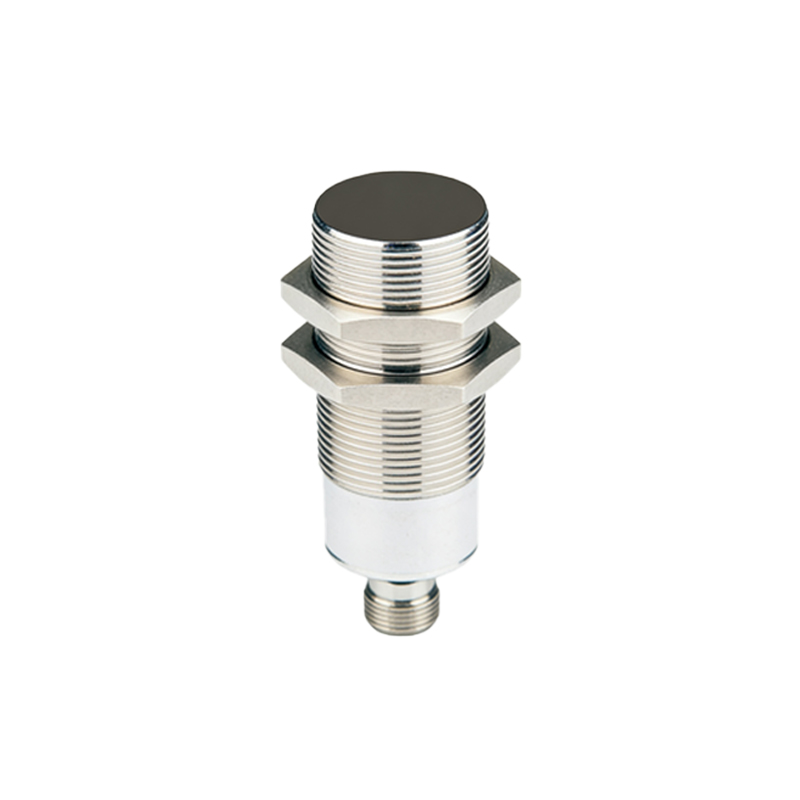
Capacitive proximity sensors can detect both metallic and non-metallic materials, including liquids, plastics, and wood. Their structure is based on forming a capacitor. One plate is the sensor's active electrode, often a conductive area on the face, and the other plate is the ground electrode or the external ground. The space between them is the dielectric. An oscillator circuit charges this capacitor. When any object with a different dielectric constant enters the sensing field, it alters the capacitance, which changes the oscillator's amplitude or frequency. A threshold circuit then activates the output. Key structural elements include shielding to prevent false triggers from lateral objects and sensitivity adjustment potentiometers. The sensor face is often made of a material like PTFE for resistance to adhesives, making them ideal for level detection or material handling of non-conductives.
Optical Proximity Sensor Design
Optical sensors use light to detect objects. The two primary structural configurations are through-beam and reflective (diffuse). A through-beam sensor has separate emitter and receiver units. The emitter projects a continuous or modulated light beam (often infrared or laser) to the receiver. An object interrupting this beam is detected. This structure offers the longest range and highest reliability. A reflective sensor houses both emitter and receiver in one housing. It detects objects that reflect its emitted light back to the receiver. For large-scale applications, background suppression reflective sensors are crucial. They use triangulation optics; the receiver lens focuses light from only a specific distance onto its receiving element, effectively ignoring objects beyond the set range. Housing is critical for alignment and protection against dust and moisture, often rated to IP67 or higher.
Ultrasonic Sensor Mechanics
Ultrasonic sensors operate on the principle of sound wave reflection. The core structural components are a piezoelectric transducer, a control circuit, and a housing with an acoustic lens. The transducer acts as both transmitter and receiver. It emits short, high-frequency ultrasonic pulses. These pulses travel through the air, hit a target object, and reflect as an echo back to the sensor. The control circuit measures the time interval between emission and reception (time-of-flight) to calculate distance. For large-scale proximity sensing, the design focuses on the transducer's power and the lens's ability to create a focused sound beam. Housing materials must not dampen the sound waves and are designed to compensate for temperature variations, which affect sound speed, ensuring stable long-range performance up to several meters.
Key Structural Considerations for Large-Scale Use
Designing for large-scale or harsh environments imposes additional structural demands. Environmental sealing (IP rating) is essential to protect internal electronics from dust, water, and corrosive agents. Electromagnetic compatibility (EMC) shielding prevents interference from nearby motors or drives. The housing must provide mechanical robustness against vibration and impact. For extended range, the sensor's face size and internal amplifier circuitry are optimized for signal strength and noise immunity. Many industrial sensors feature built-in diagnostics via LED indicators or IO-Link communication, which requires integrating a microchip and communication interface into the compact structure. The choice of cabling and connector type (e.g., M12) is also a critical part of the system's structural reliability in large installations.