Introduction to Proximity Sensor Sizing
In the world of industrial automation, proximity sensors are fundamental components for non-contact detection of metallic and sometimes non-metallic objects. They come in standardized housing diameters, with M8, M12, M18, and M30 being the most prevalent sizes globally. These sizes have become the de facto standards, supported by a vast ecosystem of connectors, mounting accessories, and replacement parts. The M10 size, however, occupies a curious and notably less common position in this landscape. Its relative rarity is not due to a fundamental flaw in performance but is primarily a consequence of historical market evolution, standardization trends, and practical installation considerations.
The Dominance of Established Standard Sizes
The widespread adoption of M8, M12, M18, and M30 sensors created a powerful network effect. Machine builders and system integrators design their panels, fixtures, and enclosures around these standard mounting hole sizes. Procurement departments stock these common sizes to streamline maintenance and reduce inventory complexity. This creates a significant barrier for any alternative size, including M10. Introducing an M10 sensor into a system designed for M8 or M12 mounts requires a non-standard bushing or adapter, adding cost, installation time, and potential points of failure. The sheer volume of production for the standard sizes also often makes them more cost-competitive than the lower-volume M10.
Performance and Specification Overlap
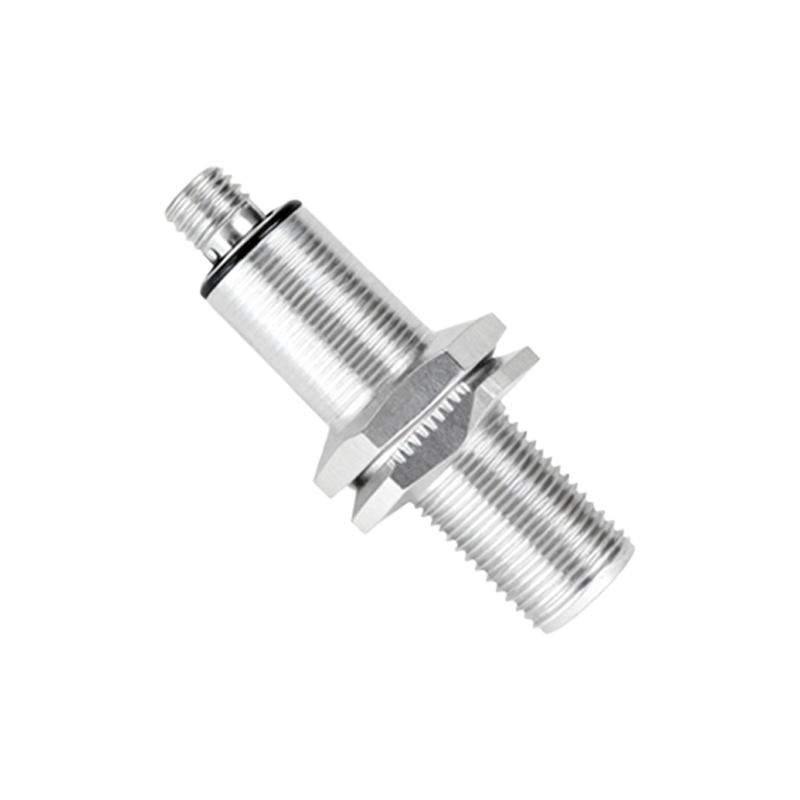
From a technical specification standpoint, the M10 sensor often finds itself in a "no man's land" between the M8 and M12. An M8 sensor is chosen for extremely compact installations where space is at an absolute premium. An M12 sensor offers a larger sensing range, more robust construction, and often higher current switching capabilities. The M10, with a diameter of 10mm, provides only a marginal size advantage over the 12mm M12 but sacrifices the performance benefits and ruggedness that the M12 offers. For most engineering applications, the choice logically falls on either the smaller M8 for tight spaces or the more capable M12 for general-purpose use, leaving little compelling reason to specify the intermediate M10.
Connector and Wiring Compatibility Challenges
A critical factor in sensor adoption is the connector system. M12 sensors universally use a robust, 4-pin or 2-pin, threaded circular connector that is IP67 rated and highly resistant to vibration and moisture. M8 sensors use a smaller, similarly standardized connector. The M10 size historically lacked a universally standardized, high-performance connector counterpart that gained industry-wide acceptance. This incompatibility forces manufacturers to use less common or proprietary connectors for M10 models, which again increases complexity for the end-user in terms of cabling, sourcing, and field replacement, further diminishing its appeal.
Market Availability and Manufacturer Support
Due to the lower demand, fewer major automation component manufacturers produce a comprehensive range of M10 proximity sensors. This limited availability translates into longer lead times, fewer technology variants (e.g., short-body, extended sensing range, weld-field immune models), and less competitive pricing. When a maintenance technician needs a quick replacement, an M8 or M12 sensor is almost always immediately available from local distributors or even from a different machine on the factory floor. An M10 sensor would likely require a special order, leading to costly machine downtime.
Niche Applications for M10 Sensors
Despite its overall uncommon status, the M10 proximity sensor does find use in specific niche applications. These are often legacy systems or specialized machinery, particularly of European origin, where the M10 size was initially adopted. Some compact consumer electronics manufacturing or precision assembly equipment might utilize M10 sensors where the installation hole is precisely machined and cannot be altered, and the performance gap between M8 and M12 is critical. However, for new machine designs, engineers are strongly incentivized to avoid M10 to ensure future-proofing and supply chain simplicity.
Conclusion and Recommendation for Selection
In summary, the M10 proximity sensor is less common due to a confluence of factors: the overwhelming market standardization around M8/M12/M18/M30, its awkward positioning in the performance spectrum, connector incompatibility issues, and limited manufacturer support. For new projects, the recommendation is unequivocal: adhere to the established standard sizes. Choose an M8 sensor for ultra-compact spaces and an M12 sensor for the vast majority of general industrial detection tasks. This strategy ensures maximum compatibility, availability, cost-effectiveness, and ease of maintenance over the entire lifecycle of the automated system.