Introduction to Proximity Sensor Fundamentals
Proximity sensors are non-contact electronic devices designed to detect the presence or absence of an object within a defined sensing range without physical contact. Their operation hinges on the disturbance or change of a field or the emission of a beam of electromagnetic radiation. These sensors are fundamental components in modern industrial automation, robotics, and safety systems, offering high reliability, long operational life, and the ability to function in harsh environments. The core principle involves generating an electromagnetic field or beam and monitoring changes caused by a target object. This detection triggers an output signal, typically a solid-state switch, which can interface with programmable logic controllers (PLCs), motor starters, or other control systems. Understanding the classification of these sensors is crucial for selecting the right technology for specific application requirements, considering factors like target material, sensing distance, environmental conditions, and required output.
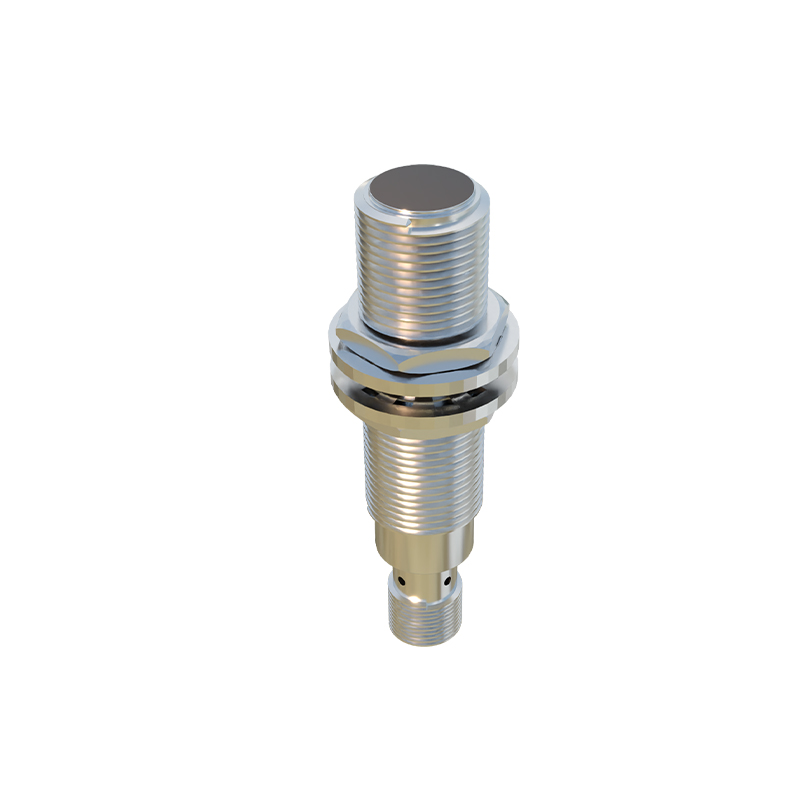
Inductive Proximity Sensors
Inductive proximity sensors are exclusively used for detecting metallic objects. Their operation is based on the principle of electromagnetic induction. The sensor's oscillator circuit generates a high-frequency oscillating electromagnetic field from its active face. When a ferrous or non-ferrous metal target enters this field, eddy currents are induced on the surface of the metal. These eddy currents draw energy from the oscillator, causing a reduction in the oscillation amplitude. This change is detected by the sensor's threshold circuit, which subsequently switches the output state. Key characteristics include a sensing range typically up to 60mm, high switching frequency, and exceptional resistance to environmental contaminants like dust, oil, and coolant. They are commonly classified by their housing shape (e.g., cylindrical, rectangular), output type (NPN/PNP, NO/NC), and shielding type (shielded or unshielded). Shielded sensors can be flush-mounted in metal, while unshielded versions offer a longer sensing range.
Capacitive Proximity Sensors
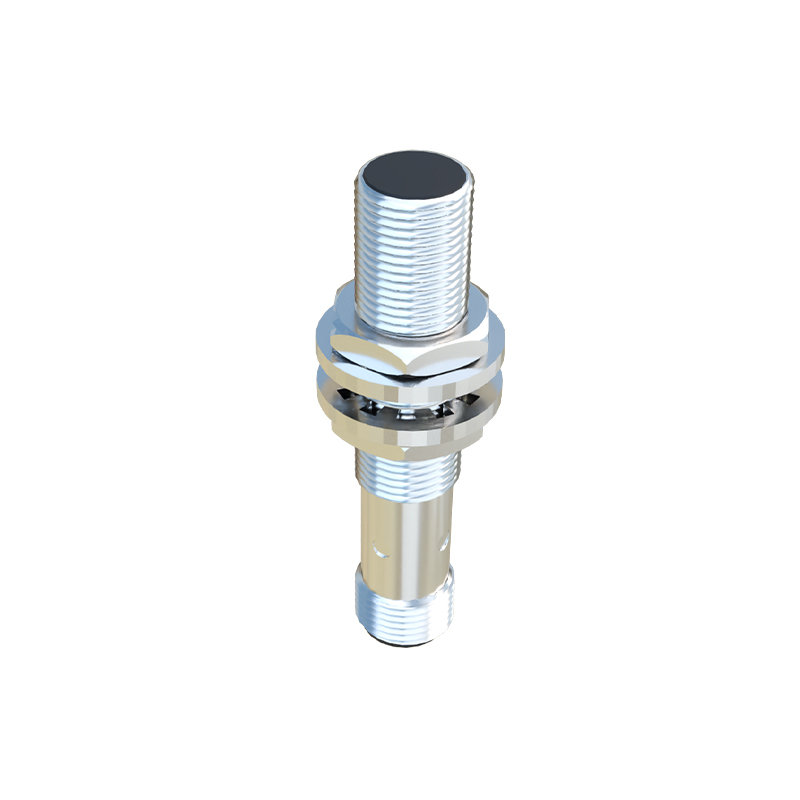
Capacitive proximity sensors can detect both metallic and non-metallic materials, including liquids, powders, plastics, and wood. They function by measuring changes in capacitance. The sensor face acts as one plate of a capacitor, with the target object acting as the other plate, and the air gap as the dielectric. An oscillator circuit measures the capacitance of this system. When a target object approaches, it alters the dielectric constant and thus the capacitance, increasing the oscillation amplitude. Once this amplitude reaches a predetermined threshold, the output circuit activates. These sensors often feature a sensitivity adjustment potentiometer to tune for different materials and to ignore background objects. They are ideal for applications like level detection of liquids or granules, and detecting non-metallic objects through thin container walls. Their sensing range is generally similar to or slightly less than inductive sensors.
Ultrasonic Proximity Sensors
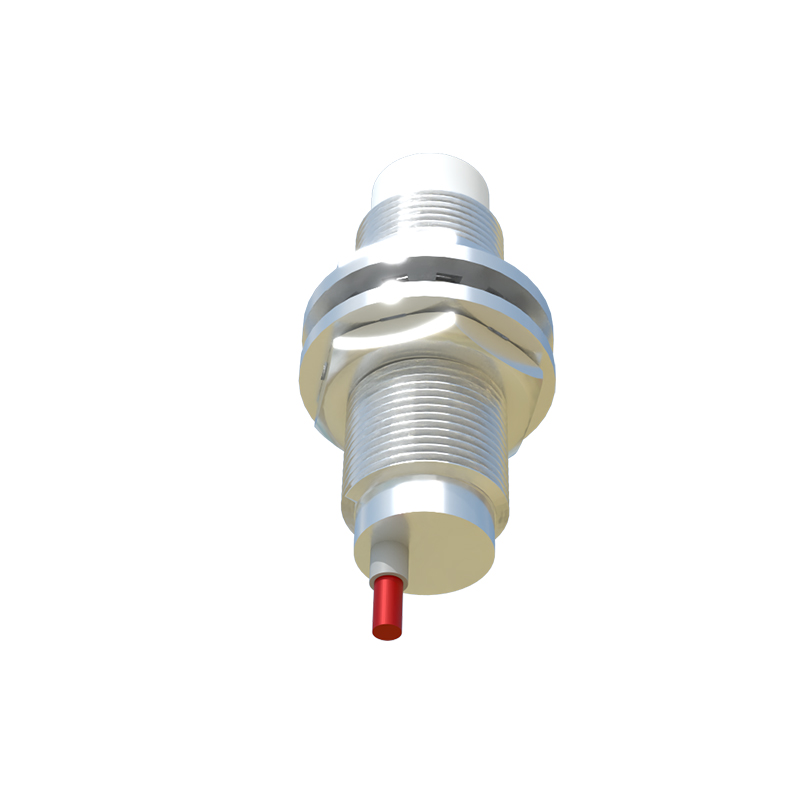
Ultrasonic sensors operate by emitting high-frequency sound waves (typically beyond 20 kHz) and evaluating the reflected echo. They measure the time interval between sending the signal and receiving the echo to calculate the distance to the target. This time-of-flight principle allows them to detect objects of virtually any material, as long as the material reflects sound adequately. They are highly effective for clear liquid level sensing, transparent object detection, and applications requiring longer sensing ranges, often up to several meters. These sensors can be analog (providing a continuous distance signal) or discrete (providing a switch output at a set point). Key considerations include the object's surface texture (smooth surfaces reflect better), temperature (which affects sound speed), and environmental factors like air turbulence or foam, which can attenuate the signal.
Photoelectric Proximity Sensors
Photoelectric sensors use light beams to detect objects. They consist of a light emitter (usually an LED producing visible red, infrared, or laser light) and a receiver. They are classified into three main operational modes. Through-beam sensors have separate emitter and receiver units; an object is detected when it interrupts the light beam. This mode offers the longest sensing range and highest reliability. Retro-reflective sensors use a single housing containing both emitter and receiver, and a reflector; detection occurs when the object blocks the beam reflected from the reflector. Diffuse or proximity sensors have the emitter and receiver in one unit and detect light reflected directly off the target object. They are versatile and can detect a wide variety of materials but are sensitive to the target's color, reflectivity, and surface finish.
Magnetic Proximity Sensors (Reed Switches & Hall Effect)
Magnetic proximity sensors detect the presence of a permanent magnet. The two primary types are reed switches and Hall effect sensors. A reed switch consists of two ferromagnetic, hermetically sealed reeds inside a glass tube. When a magnet approaches,