Introduction to Capacitive Sensing Technology
Capacitive proximity sensors operate on a fundamental principle of physics: the ability to detect changes in capacitance. At their core, these sensors consist of an electrode, often the sensor face itself, which forms one plate of a capacitor. The target object acts as the other plate, with the dielectric medium (typically air) in between. An internal oscillator circuit charges this electrode. When a target enters the sensor's electrostatic field, it alters the dielectric constant and thus the capacitance of the system. This change in capacitance is detected by the sensor's circuitry, which then triggers a switching output. Unlike inductive sensors that only detect metals, capacitive sensors can detect a vast array of materials, including liquids, powders, plastics, wood, and glass, making them exceptionally versatile in industrial automation.
Standard Cylindrical Capacitive Sensors
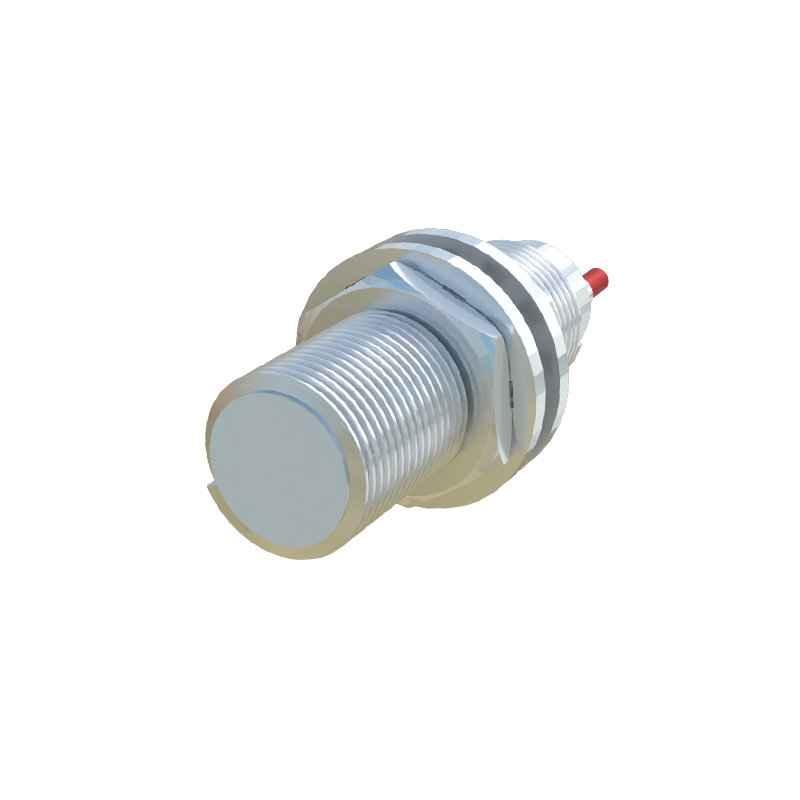
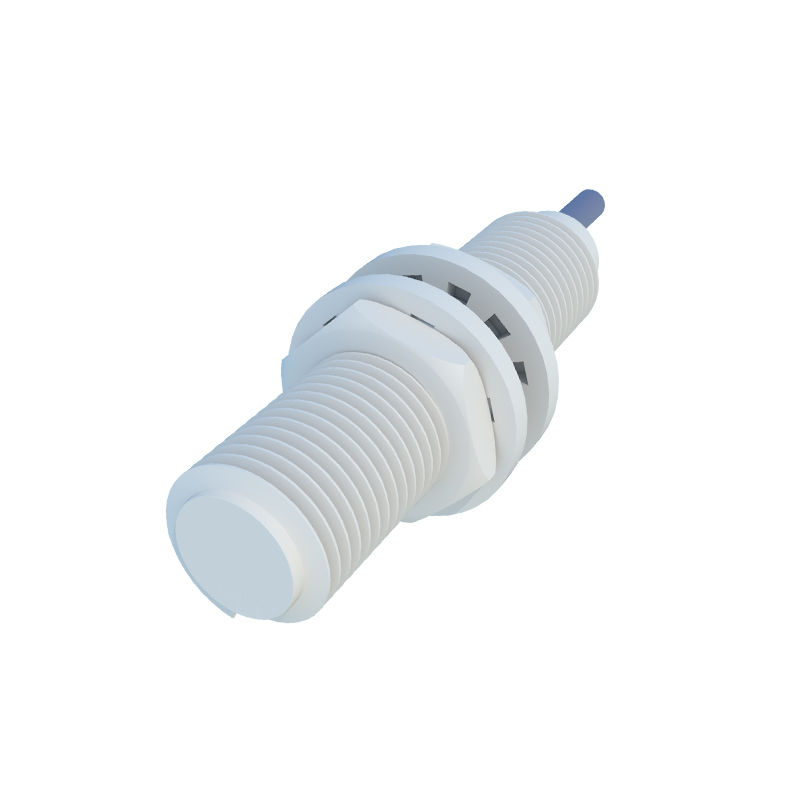
The most common form factor in industrial settings is the cylindrical capacitive sensor. These are housed in robust, threaded metal barrels, typically made of stainless steel or nickel-plated brass, offering high ingress protection ratings like IP67. They are available in various diameters (e.g., M8, M12, M18, M30) to suit different sensing ranges and mounting requirements. The sensing face is usually flush-mounted or non-flush (with a protruding electrode), with non-flush types offering a longer sensing distance. Standard cylindrical sensors are the workhorses for applications such as level detection of liquids or granular materials in tanks, presence detection of non-metallic objects on conveyors, and part detection in packaging machinery. Their standardized design allows for easy replacement and integration into control panels and machinery.
Rectangular and Block-Type Capacitive Sensors
For applications requiring a larger sensing area or specific mounting constraints, rectangular or block-type capacitive sensors are the preferred choice. Their flat, often square or rectangular housing allows them to be mounted in tight spaces where a cylindrical sensor would not fit. The sensing field from these devices is typically broader and more diffuse, which can be advantageous for detecting materials with low dielectric constants or for covering a wider area. Common applications include detecting the presence of paper stacks, monitoring the fill level in large containers or silos, and ensuring the correct positioning of plastic or glass panels. Many models feature adjustable sensitivity potentiometers, enabling fine-tuning to ignore background materials like container walls.
Miniature and Subminiature Capacitive Sensors
As automation equipment becomes more compact, the demand for smaller sensors grows. Miniature (e.g., M5, M8 diameters) and subminiature capacitive sensors provide a solution for space-critical applications. Despite their small size, they incorporate sophisticated electronics to deliver reliable performance. These sensors are ideal for use in small assembly robots, semiconductor manufacturing equipment, medical devices, and intricate packaging lines where detecting tiny plastic components, vials, or precise adhesive dots is necessary. Their compact design often necessitates careful installation to avoid interference from adjacent metal, but they are indispensable for modern, high-density machinery.
Analog Output and Special Function Sensors
Beyond simple on/off switching, capacitive sensors with analog outputs (e.g., 0-10V, 4-20mA) provide continuous measurement data proportional to the target's distance or material properties. These are crucial for process control, such as continuously monitoring the level of a liquid in a tank, measuring the thickness of a material web, or controlling the tension of a non-metallic film. Another special type is the slot sensor, designed to detect objects passing through a "slot" or gap. These are perfect for detecting labels on bottles, counting small items on a production line, or verifying the presence of a cap on a container. They provide a focused sensing field that is highly immune to background interference.
High-Temperature and Chemically Resistant Models
Harsh industrial environments demand specialized sensors. High-temperature capacitive sensors are constructed with materials and electronics capable of withstanding ambient temperatures exceeding 100°C, sometimes up to 200°C, making them suitable for foundries, plastic injection molding machines, and oven conveyor systems. Chemically resistant models feature housings and sensing faces made from advanced polymers like PEEK or PTFE (Teflon). These sensors resist corrosion from aggressive acids, bases, solvents, and cleaning agents, ensuring reliable operation in chemical processing, pharmaceutical manufacturing, and food & beverage applications where frequent washdowns with caustic cleaners are standard.
Application-Specific Considerations and Selection
Selecting the correct capacitive sensor type requires careful analysis of the application. Key parameters include the target material's dielectric constant, the required sensing distance, the operating environment (temperature, humidity, potential contaminants), the required output type (PNP/NPN, NO