Introduction to Smart Proximity Sensing
Proximity sensors are fundamental components in modern automation, detecting the presence or absence of objects without physical contact. The evolution from standard to "smart" proximity sensors represents a significant leap, integrating advanced diagnostics, communication protocols, and data processing capabilities directly into the sensor housing. These intelligent devices not only perform detection but also provide valuable information about their own health, environmental conditions, and process status, enabling predictive maintenance and enhanced system control. The core function remains based on established physical principles, but the embedded intelligence transforms them into critical nodes within the Industrial Internet of Things (IIoT) ecosystem.
Inductive Proximity Sensors
Inductive proximity sensors are specifically designed to detect metallic objects. They operate by generating an electromagnetic field from a coil in the oscillator circuit. When a ferrous or non-ferrous metal target enters this field, it induces eddy currents, causing a change in the oscillation amplitude. This change is detected by the sensor's circuitry, triggering an output signal. Smart inductive sensors enhance this basic function with features like temperature monitoring, switch point drift indication, and output current monitoring. They communicate via IO-Link, enabling parameterization, remote diagnostics, and the transmission of process data such as switching frequency or sensor temperature back to the controller. Common applications include position sensing of metal parts, end-of-travel detection in cylinders, and presence verification in machining centers.
Capacitive Proximity Sensors
Capacitive sensors can detect a wide range of materials, including metals, plastics, glass, liquids, and granular substances. They function by measuring changes in capacitance. The sensor forms one plate of a capacitor, with the target object acting as the other plate. As an object approaches, the capacitance increases until it reaches a threshold that triggers the output. Smart capacitive sensors offer adjustable sensitivity, often via teach-in functions or software, to fine-tune for specific materials and ignore background interference. Advanced models feature contamination compensation algorithms, which can distinguish between a target object and buildup on the sensor face, significantly reducing false triggers. They are extensively used in level detection for tanks and silos, material handling for non-metallic objects, and touch control interfaces.
Ultrasonic Proximity Sensors
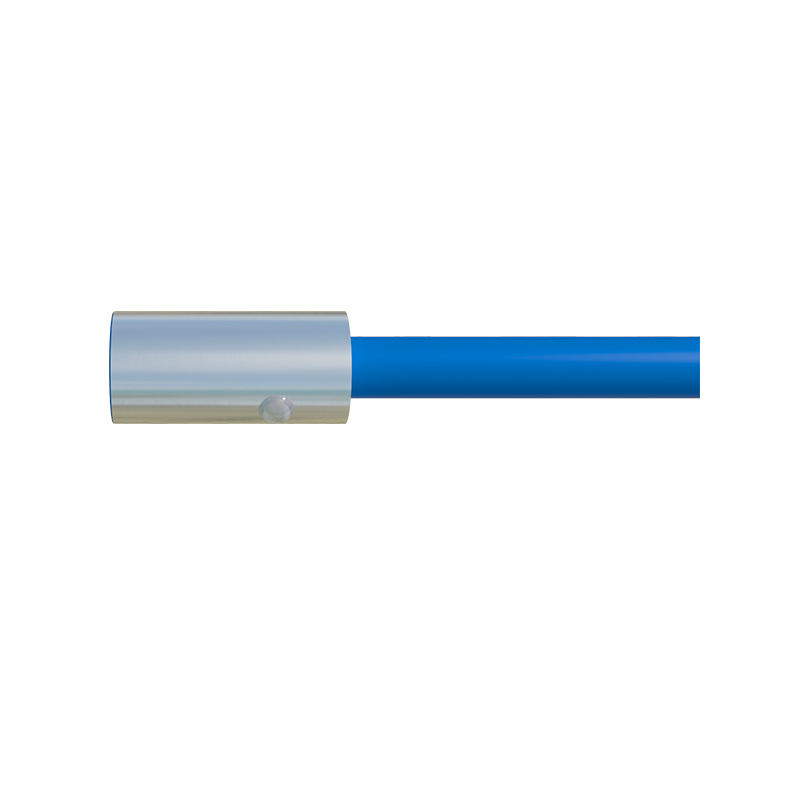
Ultrasonic sensors utilize sound waves beyond the human hearing range to detect objects and measure distance. They emit high-frequency sound pulses and calculate the time taken for the echo to return. This time-of-flight principle allows them to work reliably with objects of varying color, transparency, or material, including liquids. Intelligent ultrasonic sensors incorporate sophisticated signal processing to filter out acoustic noise and provide highly accurate, stable measurements. Key smart features include programmable switching windows, analog output for continuous distance measurement, and temperature compensation for changes in the speed of sound. IO-Link connectivity allows for easy configuration of complex multi-point switching logic. Typical applications involve bulk material level control, loop control in web handling, and collision avoidance in automated guided vehicles (AGVs).
Photoelectric Sensors
Photoelectric sensors use light beams to detect objects. They come in several main types: through-beam (separate emitter and receiver), retro-reflective (with a reflector), and diffuse (reflective), where the sensor emits light and detects what is reflected from the target. Smart photoelectric sensors excel in offering exceptional flexibility. Users can select from different operating modes, adjust sensing ranges, and set sensitivity via push-button or software. They provide diagnostic data such as received light intensity, which helps in alignment and indicates lens contamination. Advanced models with background suppression technology can reliably detect an object at a precise distance while ignoring objects beyond it. These sensors are ubiquitous in packaging, material handling for object counting, and conveyor line control.
Magnetic Proximity Sensors (Reed and Hall Effect)
Magnetic sensors detect the presence of a permanent magnet. Reed switch types use hermetically sealed ferromagnetic reeds that close in the presence of a magnetic field. Hall Effect sensors are solid-state devices that output a voltage proportional to magnetic field strength. The "smart" evolution here focuses on durability and diagnostic capabilities. Smart magnetic sensors, particularly those using Hall Effect technology, can provide information on magnetic field strength, which is useful for monitoring magnet degradation or misalignment in cylinder position sensing. They are extremely robust, resistant to shock, vibration, and environmental contaminants. Their primary application is in pneumatic cylinder position feedback, where the magnet is embedded in the piston, but they are also used in safety door monitoring and speed detection.
Key Smart Features and Communication Protocols
The defining characteristics of smart proximity sensors extend beyond mere detection. Integrated diagnostics monitor operating voltage, output load current