What Are Proximity Switches?
Proximity switches, also known as proximity sensors, are non-contact electronic devices designed to detect the presence or absence of an object within their sensing field without any physical contact. They are fundamental components in industrial automation, robotics, and safety systems. Operating on principles such as electromagnetic, capacitive, ultrasonic, or photoelectric effects, these sensors generate an output signal when a target object enters their detection zone. Their primary function is often binary: to indicate that an object is "near" or "not near," triggering actions like counting, positioning, or activating machinery. This on/off switching behavior is their core operational mode, which inherently differs from the continuous measurement provided by dedicated distance sensors.
The Core Function: Detection vs. Measurement
It is crucial to distinguish between detection and measurement. Proximity switches excel at detection. They are engineered to reliably sense when an object crosses a predefined threshold within their sensing range. This range is a fixed characteristic determined by the sensor's design and calibration. For instance, an inductive proximity switch might have a nominal sensing range of 10mm. Its internal circuitry is tuned to switch its output state when a standard metal object comes within that 10mm distance. However, it does not provide information on whether the object is at 2mm, 5mm, or 9mm; it simply confirms the object is within the ≤10mm zone. This binary output is ideal for applications requiring a go/no-go decision, such as verifying a part is in place before a machining operation or triggering a limit stop.
Types with Analog Output: The Exception for Distance
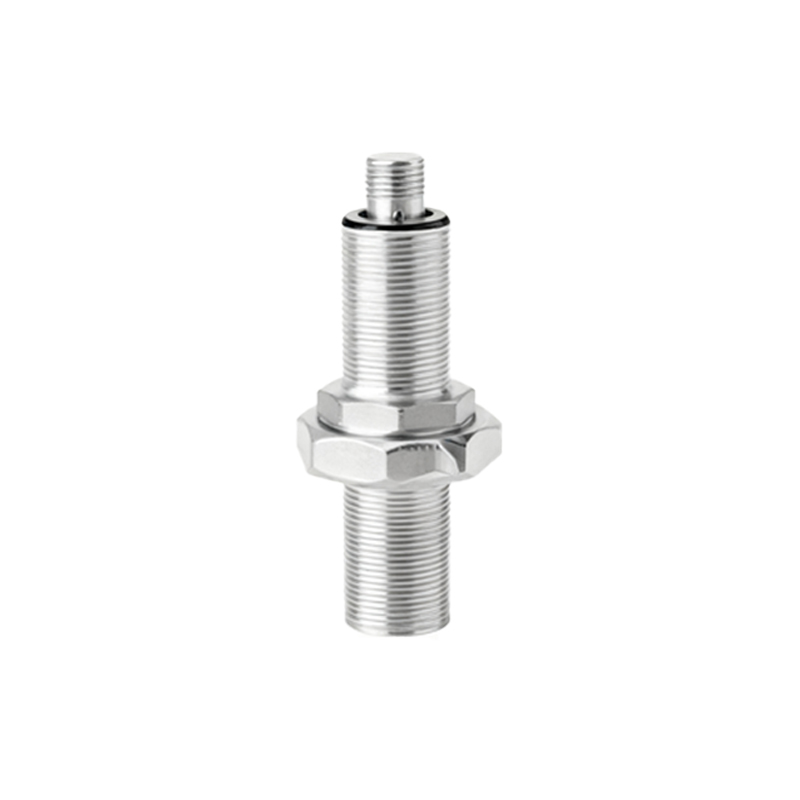
While standard proximity switches provide a digital (on/off) signal, a specific variant exists: analog-output proximity sensors. These sensors are equipped to provide a continuous signal—typically voltage (0-10V) or current (4-20mA)—that varies proportionally with the distance between the sensor and the target. An inductive analog sensor, for example, will output a current that decreases linearly as a metal object moves closer. This analog signal can be connected to a programmable logic controller (PLC) or other readout device to interpret the exact distance. Therefore, when asking if proximity switches can measure distance, the answer is nuanced: standard digital switches cannot, but analog-output proximity sensors are explicitly designed for this purpose. They bridge the gap between simple detection and precise ranging.
Factors Influencing Sensing Range and Accuracy
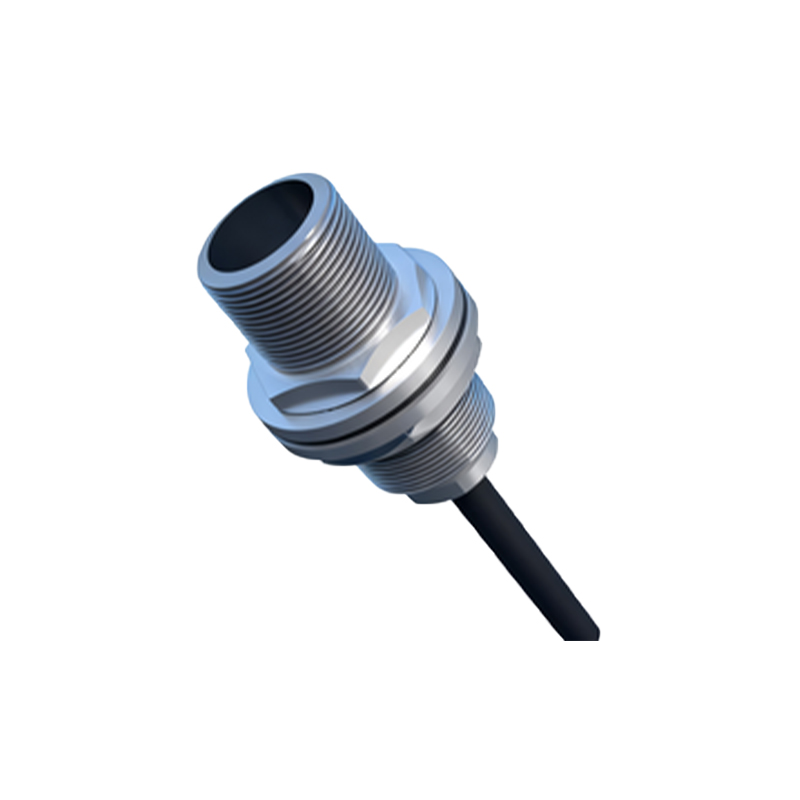
Whether used for detection or analog measurement, the performance of a proximity sensor is influenced by several key factors. For inductive sensors, the target material is paramount; ferrous metals like steel are detected at the nominal range, while non-ferrous metals like aluminum or copper have a reduced effective range. The size, shape, and orientation of the target object also significantly impact the sensing field. Environmental conditions such as temperature, humidity, and the presence of contaminants like oil or dust can affect reliability, especially for capacitive and optical sensors. For analog sensors claiming distance measurement, factors like linearity error, repeatability, and temperature drift define their accuracy. Calibration against known distances is often necessary for high-precision applications.
Comparison with Dedicated Distance Sensors
For applications requiring true, high-precision distance measurement, dedicated sensors are typically superior. Laser distance sensors and ultrasonic sensors offer much longer ranges—from centimeters to hundreds of meters—with high resolution and accuracy. They are designed explicitly for continuous ranging and profiling. Proximity sensors, even analog ones, are generally optimized for shorter ranges (millimeters to a few tens of millimeters) and are more robust in harsh industrial environments. The choice depends on the application's priority: if the need is for ultra-reliable, fast, short-range detection or rough distance estimation in a compact, rugged package, an analog proximity sensor may suffice. For precise dimensional measurement over longer distances, a dedicated laser or ultrasonic sensor is the appropriate tool.
Practical Applications and Selection Guidelines
Understanding this distinction guides proper sensor selection. Use standard digital proximity switches for: part presence verification on a conveyor, rotary speed sensing, or end-of-travel limit switching. Consider analog-output proximity sensors for applications like: monitoring the wear of a machine tool by measuring the position of a component, controlling the gap in a rolling mill, or providing feedback in a closed-loop positioning system for a pneumatic cylinder. When specifying a sensor, key parameters to evaluate include: sensing range (nominal and assured), output type (PNP/NPN digital or analog), target material, environmental protection rating (IP), response frequency, and mounting requirements. Always consult the manufacturer's datasheet for precise specifications regarding linearity and temperature compensation if distance measurement is required.