Introduction to Inductive Proximity Sensors
Inductive proximity sensors are fundamental components in industrial automation, renowned for their reliability in non-contact detection of metallic objects. Operating without physical touch, these sensors generate an electromagnetic field to sense the presence of conductive materials, primarily metals. Their robust construction, typically featuring a sensing face, coil, oscillator, and solid-state output, makes them ideal for harsh environments where dirt, oil, or vibrations are present. Unlike optical or capacitive sensors, their operation is unaffected by non-metallic substances, providing a distinct advantage in metal-dominant applications. The core principle hinges on electromagnetic induction, a concept discovered by Michael Faraday, which forms the bedrock of their detection capability.
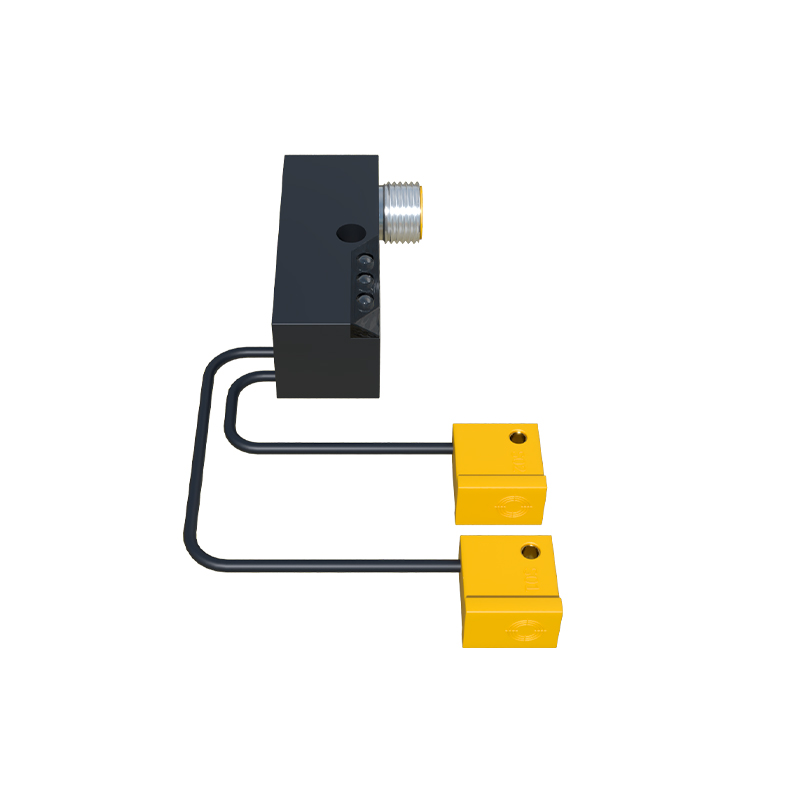
Core Working Principle and Components
The operation of an inductive proximity sensor begins with its internal oscillator circuit generating a high-frequency alternating electromagnetic field at the active face of the sensor. When a metallic target enters this field, eddy currents are induced on the surface of the target. These eddy currents draw energy from the oscillator, resulting in a reduction of the oscillation amplitude. A dedicated evaluation circuit within the sensor monitors this amplitude change. Once the amplitude drop reaches a predetermined threshold—corresponding to the sensor's specified sensing distance—the circuit triggers a switch in the output state. This output is typically a solid-state switch (PNP or NPN transistor) that can control a load such as a PLC input, relay, or indicator lamp. Key internal components include the ferrite core with the oscillator coil, the oscillator itself, the signal evaluator, and the output switching device, all housed in a rugged, often metal or polymer, casing.
Key Performance Characteristics and Specifications
Several critical parameters define the performance and suitability of an inductive sensor for a given task. The nominal sensing distance (Sn) is the theoretical operating distance under standardized conditions for a defined standard target. The effective sensing distance (Sr) is the actual operating range, which is typically 0.9 to 1.1 times Sn, accounting for manufacturing tolerances and temperature effects. Hysteresis is a crucial feature that prevents output chatter when a target is at the sensing edge; it is the difference between the switch-on and switch-off points. Repeat accuracy indicates the sensor's consistency in detecting the same target under identical conditions. Other vital specs include switching frequency (how many operations per second), temperature range, housing material (e.g., stainless steel for washdown areas), IP rating for ingress protection, and output configuration (e.g., normally open or closed, PNP sourcing, or NPN sinking).
Common Target Materials and Correction Factors
While inductive sensors detect metals, their effective sensing range varies significantly with the target material's properties. The sensor's nominal sensing distance is usually calibrated for mild steel (Fe360). Different materials affect the eddy current generation efficiency. For instance, stainless steel, due to its lower permeability, typically reduces the sensing range to about 0.7 to 0.9 times the nominal distance. Non-ferrous metals like aluminum, brass, or copper, being good conductors but non-magnetic, induce strong eddy currents but have a different field interaction, often resulting in a sensing range of 0.3 to 0.5 times the nominal distance. Engineers must apply these correction factors during system design to ensure reliable detection. It is also important to note that factors like target size, shape, and thickness (must be greater than the material's penetration depth) influence performance.
Major Application Areas in Industry
The applications for inductive proximity sensors are vast and span nearly every manufacturing sector. In automotive assembly, they count parts, verify piston position in engines, and detect end-of-travel on robotic arms. Packaging machinery uses them for label detection, cap presence verification, and product counting on high-speed conveyors. In metalworking and CNC machining, they serve as precise tool breakage detectors, part presence sensors in chucks, and limit switches for axis movement. Material handling systems rely on them for pallet positioning, elevator level control, and sorting gate actuation. Their robustness makes them perfect for harsh environments like foundries, steel mills, and pulp & paper plants, where they monitor valve positions, detect metal sheets, and control crane movements.
Advantages and Limitations
Inductive sensors offer compelling advantages: they are extremely durable with long service life due to the absence of moving parts and sealed construction; they provide high switching speeds and frequencies suitable for fast processes; they are resistant to environmental contaminants like dust, dirt, and moisture when properly rated; and they offer excellent repeatability and accuracy. Their primary limitation is their exclusive sensitivity to metals. They cannot detect plastics, glass, liquids, or other non-conductive materials