Laser distance sensors, often referred to as laser rangefinders or LIDAR sensors in specific configurations, represent a cornerstone of modern precision measurement. These devices operate on a fundamental principle: emitting a laser beam towards a target and calculating the distance by analyzing the light that returns. The most common method is the time-of-flight (ToF) principle. The sensor emits a short pulse of laser light. A high-speed clock measures the extremely brief time interval between the emission of the pulse and the detection of its reflection. Since the speed of light is a known constant (approximately 300,000 kilometers per second), the distance can be calculated with remarkable accuracy using the simple formula: Distance = (Speed of Light × Time of Flight) / 2. The division by two accounts for the round-trip journey of the light pulse.
Another prevalent technique is phase-shift measurement. Here, the sensor emits a continuous laser beam modulated at a specific frequency. The phase of the reflected beam is compared to the phase of the emitted beam. The shift in phase is directly proportional to the distance traveled. This method is often used for very high-precision measurements over shorter ranges. The choice between pulse and phase-shift methods depends on the required range, accuracy, and response time of the application.
The core components of a typical laser distance sensor include a laser diode (usually in the visible red or infrared spectrum for safety and cost), a transmitting optic to shape the beam, a receiving optic to collect the reflected light, a highly sensitive photodetector (like an avalanche photodiode), and a sophisticated signal processing unit. The quality of these components directly influences the sensor's performance metrics: measuring range, accuracy, resolution, and response speed.

The applications of laser distance sensors are vast and continually expanding. In industrial automation, they are indispensable for non-contact positioning, monitoring object heights on conveyor belts, measuring roll diameters, and controlling robotic arm trajectories. Their speed and precision ensure efficient and error-free production lines. The construction and surveying industries rely heavily on laser distance meters for quickly and accurately measuring rooms, land plots, and building facades, integrating this data into digital models.
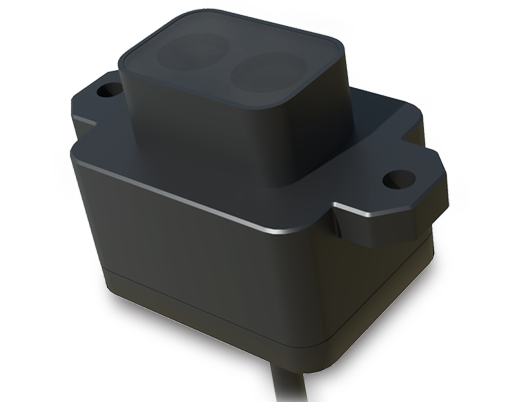
Perhaps one of the most visible advancements is in the automotive sector, where LIDAR sensors, a sophisticated form of laser scanning, are key enablers for advanced driver-assistance systems (ADAS) and autonomous vehicles. These sensors create real-time, high-resolution 3D maps of the vehicle's surroundings, detecting other cars, pedestrians, cyclists, and road boundaries with exceptional reliability, day or night. In consumer electronics, laser autofocus in smartphones and cameras uses miniature ToF sensors to achieve near-instantaneous focus by precisely measuring the distance to the subject.
Furthermore, laser distance sensors play critical roles in aerospace for docking and landing systems, in agriculture for monitoring crop growth and guiding machinery, and in logistics for warehouse automation and inventory management using mobile robots. Their ability to provide precise, real-time spatial data without physical contact makes them versatile tools across countless fields.
When selecting a laser distance sensor, several key specifications must be considered. The measuring range defines the minimum and maximum distances the device can handle. Accuracy indicates how close the measurement is to the true value, often stated as ± a few millimeters. Resolution is the smallest change in distance the sensor can detect. The laser class (typically Class 1 or Class 2 for most industrial sensors) is crucial for ensuring eye safety. Environmental factors like ambient light, dust, fog, and the target's surface properties (color, reflectivity, texture) can also affect performance, with many modern sensors featuring algorithms to compensate for these variables.
The future of laser distance sensing points towards even greater miniaturization, lower power consumption, and higher levels of integration. Solid-state LIDAR, which has no moving mechanical parts, is driving down costs and increasing durability for mass-market applications like robotics and smart infrastructure. Enhanced data fusion, where laser measurement data is combined with inputs from cameras and radar, will lead to more robust and intelligent perception systems. As the technology evolves, laser distance sensors will continue to be pivotal in shaping a more automated, efficient, and data-driven world, providing the essential "eyes" for machines to understand and interact with their environment.