In today's automated world, many devices seem to possess a subtle awareness of their surroundings. A smartphone screen dims when held to the ear, an automatic door slides open as you approach, and a factory assembly line safely halts when a hand comes too close. This unseen intelligence is often powered by a fundamental component: the proximity sensor.
At its core, a proximity sensor is a device that detects the presence or absence of a nearby object without any physical contact. It does this by emitting a field or beam of electromagnetic radiation, such as infrared light, or by using an electromagnetic field, and then looking for changes in the return signal or field. The object being detected is often referred to as the sensor's "target." The key advantage is non-contact operation, which eliminates mechanical wear and tear and allows for detection of fragile, soft, or hot objects that could be damaged by touch.
Several primary technologies enable this capability, each with its own strengths and ideal applications. Inductive proximity sensors are widely used in industrial settings. They generate an oscillating electromagnetic field. When a metallic target enters this field, it induces eddy currents within the metal, which dampens the oscillation of the sensor's own field. The sensor detects this damping and triggers a switch. These sensors are robust, resistant to dirt and moisture, and excel at detecting metals, but they do not work with non-metallic materials.
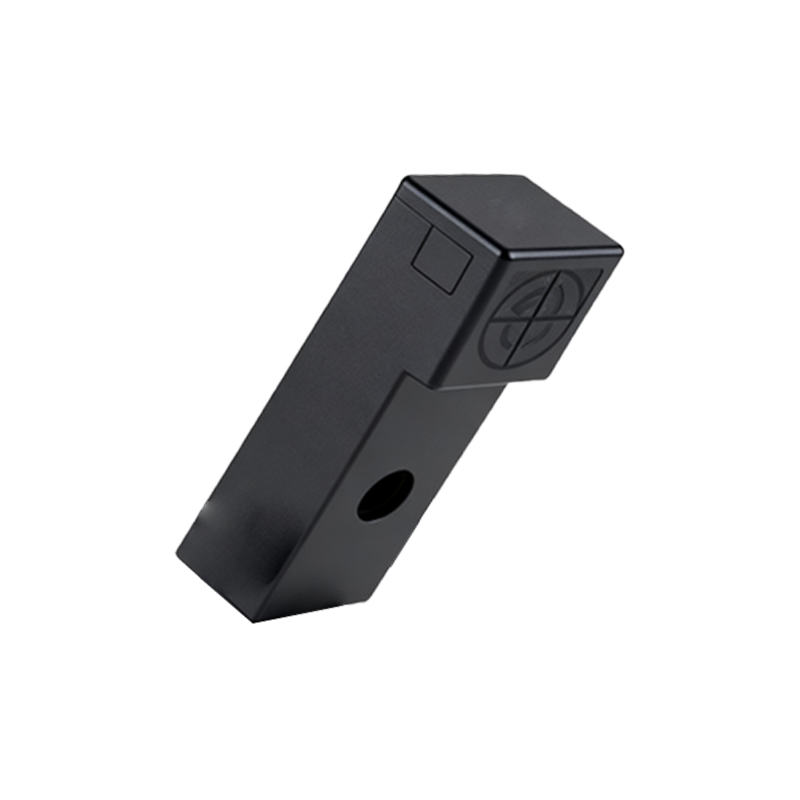
Capacitive proximity sensors, on the other hand, can detect both metallic and non-metallic materials, including liquids, powders, and plastics. They function by generating an electrostatic field. Any object that enters this field alters the capacitance of the sensor's circuit. This change is measured, and when it reaches a predetermined threshold, the sensor activates. This makes them perfect for applications like liquid level detection in tanks, material handling, and touch-sensitive interfaces.
For longer-range detection and precise distance measurement, photoelectric sensors are a common choice. These operate by emitting a beam of light (usually infrared, laser, or visible LED) and using a receiver to detect the reflected light. Variations include through-beam (where the receiver faces the emitter, detecting an interruption), retro-reflective (bouncing light off a reflector), and diffuse (reflecting light directly off the target). They are versatile and can detect objects of almost any material, but their performance can be affected by environmental factors like dust, fog, or highly reflective surfaces.
Ultrasonic sensors use sound waves beyond the range of human hearing. They emit high-frequency sound pulses and measure the time it takes for the echo to return. By calculating the time-of-flight, they can determine both the presence and the exact distance of an object. These sensors are excellent for detecting objects regardless of color, transparency, or material, and they perform well in challenging environments with dust or vapor. Common uses include parking assist systems, tank level monitoring, and robotics.
The applications of proximity sensors are vast and touch nearly every industry. In consumer electronics, they manage touchscreen behavior, disable displays during calls to save power and prevent accidental touches, and enable features like automatic screen rotation. The automotive sector relies on them for parking assistance, collision avoidance, and gesture control for infotainment systems. Industrial automation is perhaps the largest domain, where they are indispensable for object counting, position verification, machine safety guarding, and controlling robotic arms. They also play critical roles in aerospace, medical devices, and security systems.
When selecting a proximity sensor for an application, several factors must be considered. The nature of the target material (metal, plastic, liquid) dictates the sensor type. The required sensing range, from a few millimeters to several meters, narrows the options. Environmental conditions such as temperature, humidity, and the presence of contaminants are crucial. The output type needed, whether a simple digital on/off signal or an analog signal proportional to distance, also guides the choice. Finally, physical characteristics like size, shape, and mounting style must align with the installation space.
As technology advances, proximity sensors are becoming smaller, more energy-efficient, smarter, and more integrated. The development of MEMS (Micro-Electro-Mechanical Systems) technology allows for tiny sensors to be embedded in portable devices. Enhanced digital signal processing improves accuracy and noise immunity. Furthermore, the integration of sensors with IoT (Internet of Things) platforms enables predictive maintenance, where sensor data can forecast equipment failure before it occurs, minimizing downtime.
From the phone in your pocket to the most advanced manufacturing plant, proximity sensors provide a silent, reliable layer of environmental interaction. They are a foundational technology of automation, enabling machines to perceive and react to the physical world safely and efficiently. Their continued evolution will be central to the development of smarter, more responsive, and more intuitive systems across all facets of technology and industry.