Introduction to Sensing Technologies
In the realm of industrial automation, the ability to detect the presence, absence, or position of an object is fundamental. Two of the most prevalent and reliable technologies employed for this purpose are photoelectric sensors and proximity switches. While both serve the core function of non-contact detection, their underlying operating principles, capabilities, and ideal applications differ significantly. This article provides a detailed technical comparison to guide engineers and system integrators in selecting the optimal sensor for their specific application requirements. Understanding the distinct advantages and limitations of each technology is crucial for designing efficient, robust, and cost-effective automated systems.
Operating Principle of Photoelectric Sensors
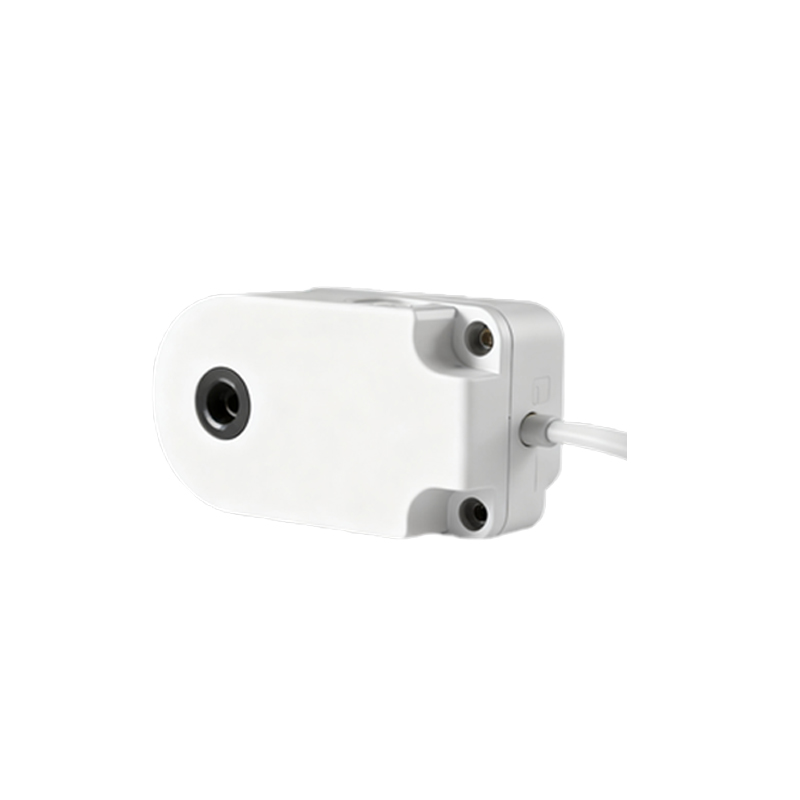
Photoelectric sensors operate on the principle of light transmission and reception. They consist of a light emitter (typically an LED, with laser diodes for specialized applications) and a receiver. The sensor detects changes in the received light beam. There are three primary sensing modes: through-beam, retro-reflective, and diffuse reflective. In through-beam mode, the emitter and receiver are separate units; an object is detected when it interrupts the light beam. Retro-reflective models use a single housing with both emitter and receiver, relying on a reflector to bounce the light back; detection occurs when the beam is blocked. Diffuse reflective sensors detect an object by measuring the light reflected directly from its surface. These sensors are highly versatile and can detect objects over considerable distances, from a few centimeters up to several hundred meters for specialized through-beam models.
Operating Principle of Proximity Switches
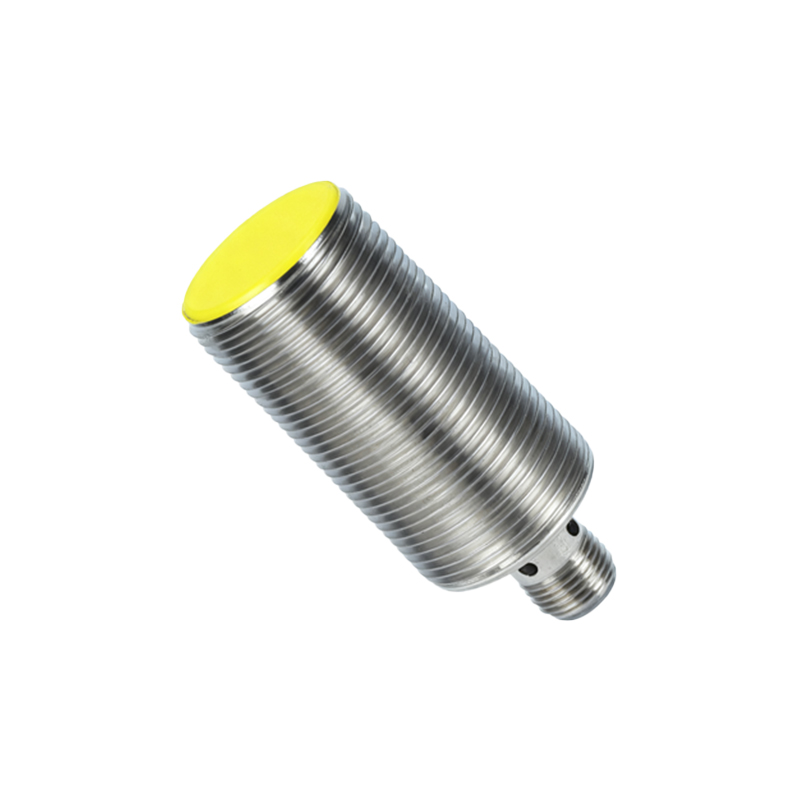
Proximity switches, specifically inductive and capacitive types, function by generating an electromagnetic field. Inductive proximity sensors are the most common type. They contain an oscillator circuit that creates a high-frequency alternating magnetic field around their active face. When a metallic object (the target) enters this field, eddy currents are induced on the object's surface. This causes a load on the oscillator, leading to a change in the oscillation amplitude. This change is detected by the sensor's circuitry, which triggers a solid-state output switch. Capacitive proximity sensors operate on a similar principle but can detect both metallic and non-metallic materials (plastics, wood, liquids, etc.) by sensing changes in capacitance caused by the target object entering the electrostatic field. Their sensing range is generally shorter than that of photoelectric sensors.
Key Performance Characteristics Comparison
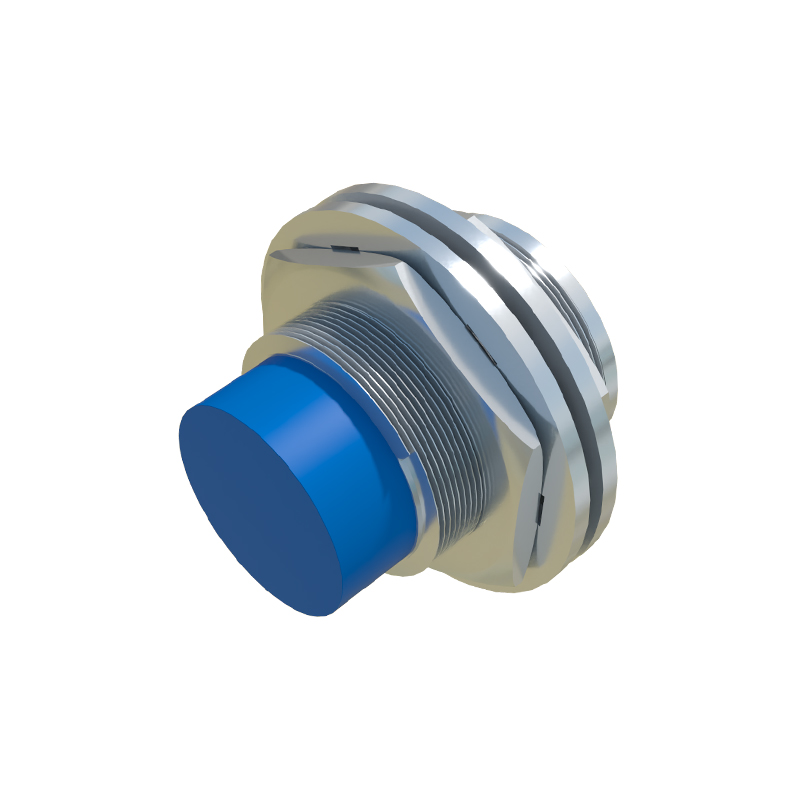
Several critical parameters differentiate these sensors. Sensing range is a primary distinction. Photoelectric sensors excel in long-range detection, while proximity switches are designed for short-range applications, typically from a few millimeters up to about 60 millimeters for inductive types. The nature of the target material is another key factor. Inductive proximity switches detect only metals, with different response characteristics for ferrous and non-ferrous metals. Capacitive switches detect a wider range of materials but are sensitive to environmental factors like humidity. Photoelectric sensors can detect virtually any material that interrupts or reflects light, including glass, plastic, and liquids, though performance is affected by the object's color, reflectivity, and transparency. Response speed for both technologies is very high, suitable for high-speed counting applications.
Environmental Considerations and Robustness
The operating environment heavily influences sensor selection. Inductive proximity switches are exceptionally robust. They are immune to dust, dirt, smoke, and ambient light interference. Their sealed housings make them ideal for harsh, dirty environments like machine tools or welding areas. Photoelectric sensors, while available in rugged housings, can be adversely affected by environmental factors. Dust, fog, or heavy condensation can scatter or attenuate the light beam, causing false triggers or loss of detection. Background light from sunlight or high-intensity lamps can also interfere with certain models. However, modern photoelectric sensors employ modulated infrared light and specialized filters to mitigate ambient light interference. For clean environments or where non-metallic detection is needed, photoelectric sensors are often the only choice.
Application-Specific Recommendations
Choosing between these technologies depends on the application's specific demands. Use inductive proximity switches for detecting metal parts at close range in dirty, oily, or wet industrial environments. Common applications include position sensing of machine tool slides, limit switching, and detecting metal presence on conveyors. Capacitive switches are ideal for detecting non-metallic materials, such as monitoring fill levels of liquids or granular solids in tanks, or detecting plastic caps on bottles. Photoelectric sensors are the superior choice for long-range detection, sensing transparent objects (like glass or clear films), color differentiation (using color sensors), or detecting small objects. They are ubiquitous in packaging, material handling, and assembly automation for tasks like object counting, web break detection, and registration control.
Installation and Alignment Factors
Installation complexity varies. Proxim