Introduction to Proximity Switch Controller Sensors
Proximity switch controller sensors are fundamental components in modern industrial automation, enabling non-contact detection of objects within a specified range. These devices operate by emitting an electromagnetic field or a beam of electromagnetic radiation, and then monitoring for changes in the field or return signal. When a target object enters the sensing zone, it disrupts the field, causing the sensor to trigger an output signal. This output is then used by a controller—such as a programmable logic controller (PLC) or a dedicated proximity switch controller—to initiate an action, like starting a motor, counting items, or activating a safety mechanism. Their ability to function without physical contact makes them exceptionally reliable, durable, and suitable for harsh environments where dirt, oil, or vibration would compromise mechanical switches. The core principle hinges on detecting the presence or absence of metallic or, in some types, non-metallic objects, providing a critical interface between the physical world and control systems.
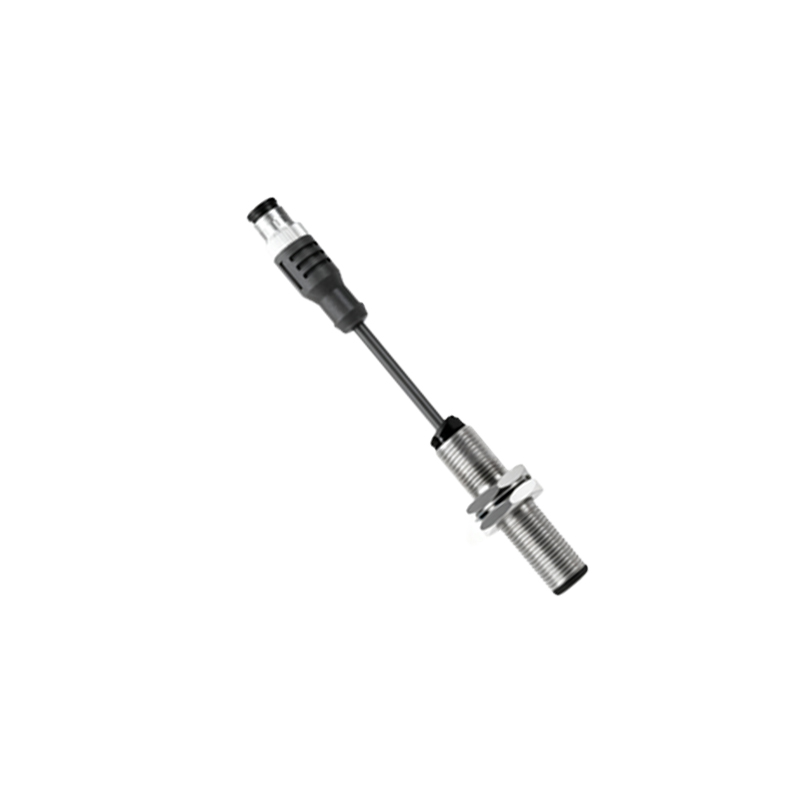
Core Operating Principles and Technologies
The functionality of proximity sensors is defined by their underlying technology. The three primary types are inductive, capacitive, and photoelectric. Inductive proximity sensors are the most common in industrial settings for detecting metallic objects. They generate an oscillating electromagnetic field from a coil. When a ferrous or non-ferrous metal object enters this field, it induces eddy currents, which dampen the oscillation. This damping is detected by the sensor's circuitry, prompting a switching action. Capacitive proximity sensors can detect both metallic and non-metallic materials, including liquids, powders, and plastics. They work by generating an electrostatic field. The presence of any material with a dielectric constant different from air alters the capacitance of the circuit, triggering the output. Photoelectric sensors use a light beam (often infrared, visible red, or laser) and detect objects by either the interruption of the beam (through-beam), reflection from the target (retro-reflective), or reflection from the object itself (diffuse). Each technology offers distinct advantages in terms of sensing range, target material, environmental immunity, and cost.
Integration with Control Systems
The true power of a proximity sensor is realized through its integration with a controller. A proximity switch controller acts as the brain, interpreting the sensor's discrete on/off signals. These controllers can range from simple relay-based units to sophisticated modules within a PLC rack. In a typical setup, the sensor's output wire (often PNP-sourcing or NPN-sinking) is connected to a digital input module on the PLC. The controller's program, written in ladder logic or another language, continuously scans this input's status. Based on the programmed logic—for instance, "IF Sensor_X is ON, THEN start Conveyor_Y"—the controller sends commands to output devices like motor starters, solenoids, or alarms. Modern smart sensors and controllers communicate via industrial networks like IO-Link, PROFINET, or EtherNet/IP, providing not just switch status but also diagnostic data such as operating temperature, signal strength, and device health, enabling predictive maintenance.
Key Selection Criteria for Application Success
Selecting the right proximity sensor and controller combination is critical for system reliability. Engineers must consider several factors. First is the sensing distance or range, which must be sufficient for the application while accounting for a safety margin. The target material dictates the sensor type: inductive for metals, capacitive for varied materials, and photoelectric for long-range or precise detection. Environmental conditions are paramount; sensors are rated with an Ingress Protection (IP) code for dust and water resistance and an NEMA rating for industrial enclosures. Factors like temperature extremes, chemical exposure, and electromagnetic interference must be evaluated. Electrical characteristics, including operating voltage (commonly 10-30V DC or 90-250V AC), output type (PNP/NPN/analog), and connection method (pre-wired or quick-disconnect), must match the controller's specifications. Finally, the physical form factor—barrel-style, rectangular, or ring-shaped—must fit the mechanical installation constraints.
Common Industrial Applications and Use Cases
Proximity switch controllers find ubiquitous application across all facets of manufacturing and processing. On assembly lines, they are used for precise object detection, part counting, and verifying the presence of components. In material handling, they control the positioning of pallets on conveyors, detect jams, and manage automated storage and retrieval systems. Machine tools rely on them for tool positioning, spindle orientation, and end-of-travel limit switching. Packaging machinery uses them to detect fill levels, cap presence, and label position. A critical safety application is in robotic work cells, where they form part of the safeguarding system